
TMJ and Cranial Chiropractic in Sea Girt, NJ | Serving Wall Township
TMJ and Cranial Chiropractor | Sea Girt, NJ
We find the source of your jaw symptoms by looking at the full system driving them.
If you have been dealing with jaw pain, clicking, clenching, headaches, ringing in the ears, snoring, or fatigue tied to jaw tension, you are in the right place. Most TMJ care focuses on the jaw alone, which is not what a TMJ chiropractor actually does. Our approach looks at the four systems that have to work together for the jaw to function normally: the TMJ and cranium, the upper cervical spine, the nervous system, and the pelvic floor. When one of those systems breaks down, the others compensate to cover for it. If several break down at once, the jaw becomes the place where all of that instability shows up. That is why so many patients stay stuck when only the jaw gets treated.
Your first visit includes thermography, surface EMG, and HRV neurological testing, a full cranial motion, palate, and soft tissue assessment, and motion X-rays of the upper cervical spine. Those X-rays show how your spine is actually moving and where it is restricted. They also show whether a steep T1 angle and forward head posture are loading your jaw from below. When the head drifts forward, the jaw shifts back, the shoulders round, and the upper back braces into the hump so many people recognize. That posture pattern shows up clearly on X-ray, and it tells us why your jaw is under so much pressure.
We also serve patients from Wall Township, Manasquan, Spring Lake, Belmar, Brielle, and Neptune. Two of the eleven Certified Pediatric Craniopaths (CSCPP) in the world practice here, and our team includes a Diplomate of the Academy Council of Chiropractic Pediatrics (DACCP), the highest certification in pediatric chiropractic.
Your first visit gathers everything we need across the cranium, the upper cervical spine, the nervous system, and the pelvic floor, so we can see how those systems are working together. Then we bring you back for a dedicated second visit, the Report of Findings, where we walk you through exactly what we found and the specific plan to correct it.
⭐⭐⭐⭐⭐ 1,200+ families helped across Monmouth & Ocean County
PX Docs · ICPA · Focus Academy Trained · Cranial & TMJ Expertise
⭐⭐⭐⭐⭐ 1,200+ families helped across Monmouth & Ocean County
PX Docs · ICPA · Focus Academy Trained · Cranial & TMJ Expertise
 Excellent
5.0432 reviews
5.0Excellent432 reviewsPosted on Google
 Llace Hickey973 days agoWe moved from out of state and let me tell you, trying to find a new chiropractor for my kids was hard. I was super worried about the transition, but Dr. Anthony and his staff are amazing! They are all great with kids, super gentle and above all they all listen! Dr. Anthony has gone above and beyond to listen to my concerns as a Mom as well as a patient myself. My pain and stiffness has decreased so much, I’m so glad I find this office. If you’re on the fence, definitely give this practice a try.Posted on Google
 ambra quinones690 days agoWe started seeing Absolute Chiropractic for my daughter’s colic after hearing that chiropractic care could help, and I’m happy to say we’ve noticed an improvement. The staff has been kind and welcoming, and they made me feel comfortable about trying this approach for her. Their technique is very gentle, especially since it’s tailored for babies, and they take the time to explain what they’re doing at each step. I appreciated how patient they were in answering all my questions as a first-time mom exploring this option. After a few sessions, my daughter’s colic episodes have noticeably decreased. She seems more comfortable overall, and her sleep has improved a bit as well, which has made things easier for our family. While I was hesitant about chiropractic care at first, the team at Absolute Chiropractic has been supportive throughout the process. If your baby is experiencing similar issues, this might be worth considering.Posted on Google
 Megan Doyle911 days agoAll the Doctors & staff at Absolute Chiropractic are AMAZING!!! They are so welcoming & make even the most nervous patient (me) feel so comfortable. I never wanted to go to a chiropractor, but once I met Dr. Anthony & Dr. Allie, I knew I was in the right place. My husband & I travel almost an hour just to see the team at Absolute Chiropractic.Posted on Google
 Kori Seyffart624 days agoCan’t say enough positive things about this place and the people that work there. First off, everyone there is so kind. They walk you through everything from the eval and the hat goals you’d like to achieve through the adjustments. I started going in late pregnancy with my second — I was in agony and desperate for any kind of relief. Within 2 appts I noticed a complete difference! Highly recommend Absolute to anyone and everyone 😊Posted on Google
 Maria DiToto280 days agoEvery visit is friendly, informative, gentle and releases tension and pain instantly. Service runs smoothly and efficiently. You’re in an out in under 15 minutes on adjustment days and scans and evaluations are 30 minutes of less. State of the art technology is used to scan and X-ray in minutes. Doctors are top notch providing information and care regarding every aspect of the nervous system. After every visit I feel physically and mentally better, calmer, more relaxed and flexible. In just a month of care I stopped grinding my teeth after doing it for almost 50 years. I can use my hands more efficiently without suffering severe arthritis pain. I haven’t had a migraine or even a headache since my first session. I noticed less fight or flight symptoms, breathing normally, less unconscious bracing, better digestion and overall mobility. I can’t say enough about how happy I am with the care I have received at Absolute Chiropractic. I look forward to more miracles moving forward.Posted on Google
 Makini Osson1037 days agoI instantly felt comfortable and well taken care of the very first moment I walked into the office. Very calming energy in there, the staff are wonderful. Dr. Anthony is genuinely passionate about this work. I searched specifically for a neuro-based chiropractor and Absolute Chiropractic was the stand out. There's no twisting or cracking; very different from my previous chiro experiences. Dr. Anthony uses a more modern, precise method that is very effective. I want to tell everyone to research what neuro-based Chiropractic can do for you, and visit Dr. Anthony. So many issues that are simply suppressed with meds can be healed by addressing the nervous system. 10/10, do recommend!Posted on Google
 Timber Talent Jason Parker792 days agoLike no other chiropractic experience. They are not setting bones but realigning your nervous system. Your bodies systems that were not working properly correct themselves. As a result of their treatment, I stopped taking my GERD medicine and anxiety medicine. My nervous system has come out of a dysregulated state and my body and mind feel the difference. I also had a partially dislocated SC joint (collar bone area) which was causing me pain and preventing me from sleeping. Slowly but surely Dr. Allie has put that bad boy back in place! I am very glad I invested in myself. The health benefits of coming to this practice out weigh the cost. Everyone at this practice is great, but Dr Allie shines as bright as the sun.Posted on Google
 Virginia Sellman694 days agoThe staff at Absolute Chiropractic is so friendly and always welcoming. I was skeptical of going to a chiropractor as I have had bad experiences in the past. Absolute Chiropractic not only cured my issues but helped with spinal alignment and how to alleviate lower back pain from sitting at my computer all day. Highly recommend!Posted on Google
 Cassy Craig715 days agoThis is a fabulous place that I feel I can trust with my child. The chiropractors are wonderful, welcoming, and knowledgeable. Being in healthcare myself I am happy to find a place that exudes excitement to educate and help others of all ages.Posted on Google
 Lily Drake758 days agoI cannot say enough good about this office. The doctors, staff and their philosophy are amazing. They are changing lives one at a time and I was lucky enough to find them in my 50's. The knowledge that I have gained in their care has helped me understand how to allow myself to heal, cutting edge results with gentle, noninvasive care: game changing! Angelina HardimanLoad moreVerified by TrustindexTrustindex verified badge is the Universal Symbol of Trust. Only the greatest companies can get the verified badge who has a review score above 4.5, based on customer reviews over the past 12 months. Read more
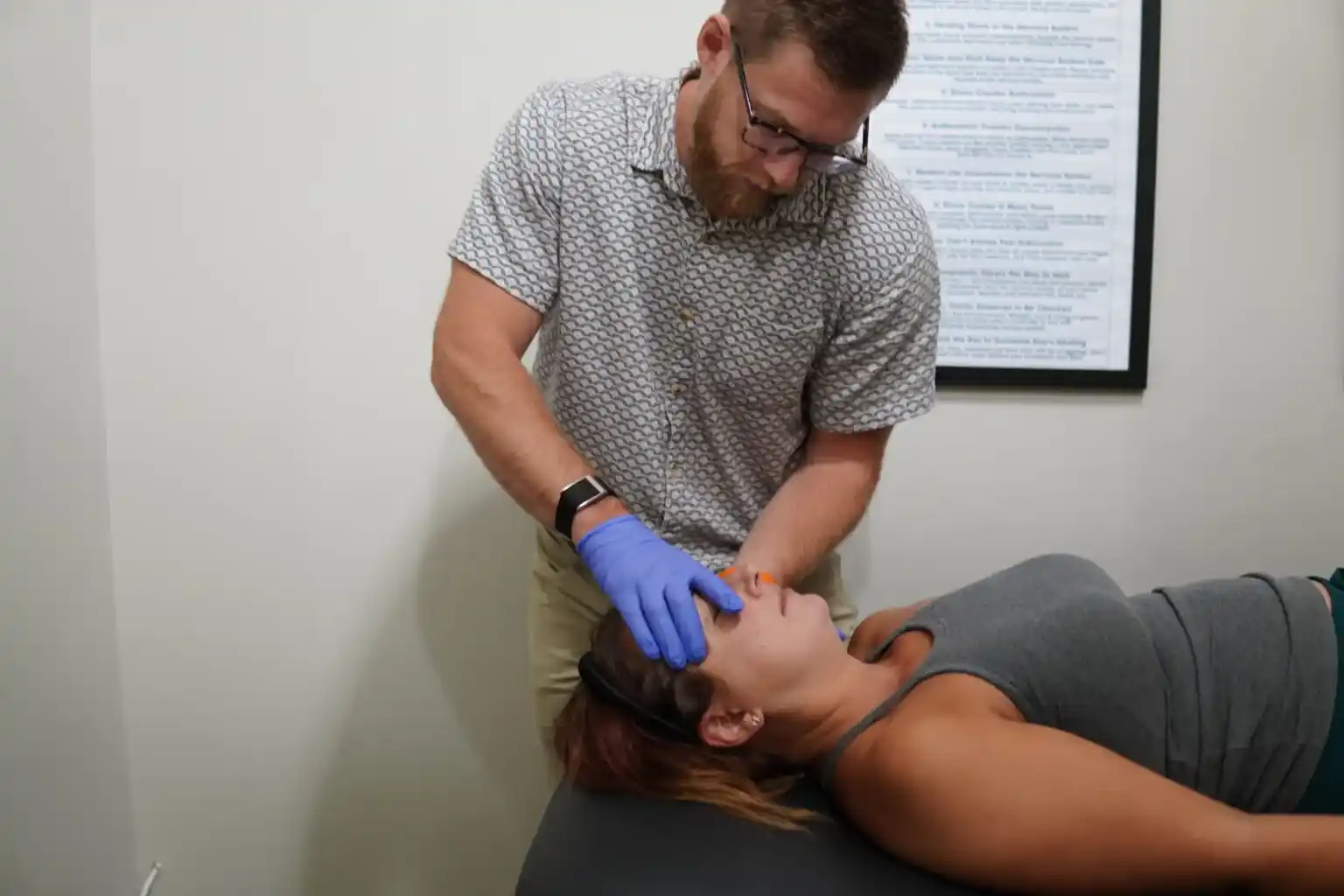
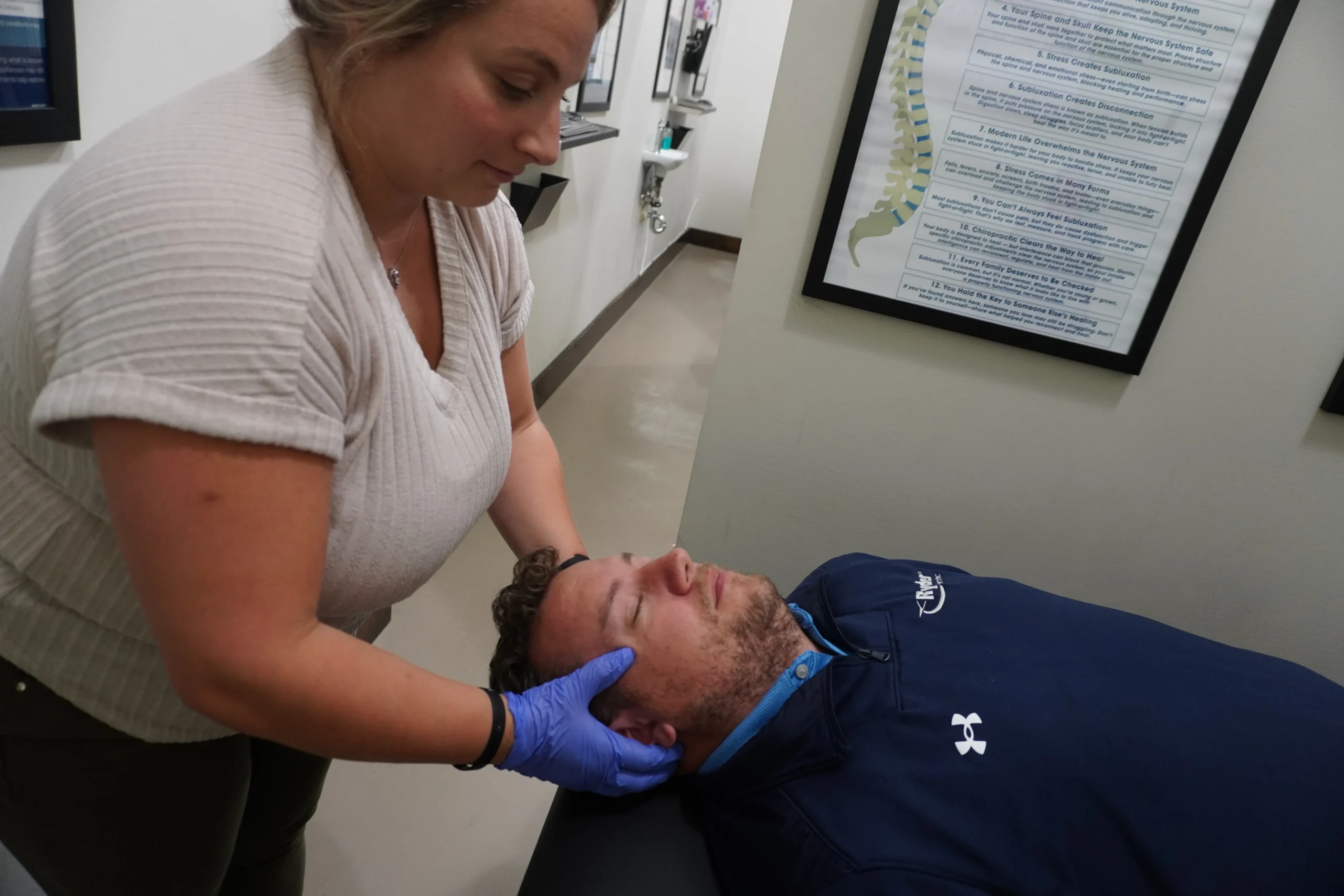
This is also why we work on the jaw and the spine together. When a steep T1 angle or a restriction in the upper cervical spine is loading the jaw, treating the jaw alone leaves that driver in place, and treating the spine alone leaves the symptom in place. Working on both at the same time is how we reach what is actually causing the pattern.
Start Here
Choose the path that matches what you’re dealing with:
Sound familiar? You don’t have to keep managing this.
When Your Jaw or Head Has Felt Off, There Is Usually a Reason
When TMJ or cranial tension shows up, it affects everything.
The headaches. The pressure behind your eyes. The jaw clicking. The clenching you notice every night (or every morning). The neck tension that never fully releases. The feeling like something just isn’t moving the way it should.
If you’re here searching for a TMJ chiropractor, cranial chiropractor, or craniosacral therapy near me, you’re probably tired of chasing temporary relief — and ready for answers that actually make sense.
The headaches. The pressure behind your eyes. The jaw clicking. The clenching you notice every night (or every morning). The neck tension that never fully releases. The feeling like something just isn’t moving the way it should.
If you’re here searching for a TMJ chiropractor, cranial chiropractor, or craniosacral therapy near me, you’re probably tired of chasing temporary relief — and ready for answers that actually make sense.
What Our TMJ Patients Stop Dealing With
Jaw Clicking and Popping
The clicking on every yawn, every meal, every morning. Once the cranial and TMJ pattern driving it is corrected, patients consistently report this reducing or resolving.
Clenching, Grinding, and Morning Jaw Pain
Waking up with a sore jaw, tight temples, or a headache you cannot explain. We address the tension patterns keeping your system locked so the jaw can stop working overtime.
Headaches Tied to Your Jaw
Pressure behind the eyes, temple tightness, and headaches your dentist and doctor have not connected to your jaw. We specialize in exactly this link.
Ringing in the Ears and Ear Pressure
Tinnitus and a full or blocked feeling in the ears often travel with jaw and cranial tension. The structures involved sit right next to each other, which is why these symptoms show up together so often.
Snoring and Disrupted Sleep
Years of clenching and cranial compression can narrow the palate and the airway. For many patients, the snoring and broken sleep they have lived with are part of the same pattern driving their jaw.
Tension and Fatigue You Never Connected to Your Jaw
Neck and shoulder tightness, facial asymmetry, and ongoing fatigue. Most patients never linked these to their jaw, and years of grinding can even reshape the face and palate. We show you these patterns directly on your exam.
Not sure whether your symptoms are coming from the muscles or the joint? We broke down the differences here: is my jaw pain muscular or TMJ
Ringing, buzzing, or a sense of fullness in the ears can travel with jaw tension too. Here is how the jaw and the ear connect: tinnitus and TMJ.
Why Families Trust Absolute Chiropractic
Posted on Google IsaiahIt I amzingPosted on Google
 Lauren MegillI went for my evaluation today and everyone is sooooooo nice. At just 33 my back has been messed up for more then 2/3 of my life and they really understand and want to help. I'm excited to go back and get some relief from the almost constant pain that I'm in. Highly recommend!Posted on Google
 Enna DuarteGreat team after almost 3 weeks l start to see the difference thank you.Posted on Google
 Janet StephensComing back for regular tune ups after a six month hiatus, I already feel better what... The team is always welcoming, always professional and always effectivePosted on Google
 Dwight DeLizStaff was kind and very informativePosted on Google
 Ni TanAmazing Staff.🌟🌟🌟🌟🌟🌟Posted on Google
 kristen larsen (OilyWays)I came to Absolute Chiropractic to delve deeper than treating symptoms and to find and treat the cause so that my symptoms are alleviated. After my 1st assessment visit, I feel this will happen.Posted on Google
 Christina RanuroImpressed with the initial consultation. Love that they did a thorough evaluation on my TMJ. Looking forward to seeing what they can do to help me. Very friendly staff.Verified by TrustindexTrustindex verified badge is the Universal Symbol of Trust. Only the greatest companies can get the verified badge who has a review score above 4.5, based on customer reviews over the past 12 months. Read more
Why TMJ Problems Don’t Stay in the Jaw
Your jaw does not work in isolation, and it rarely creates these problems on its own. The muscles that move your jaw are driven by cranial nerves, and the tension patterns behind clenching, grinding, and clicking often start in the cranium, the upper neck, and the nervous system long before the jaw starts to hurt.
Three cranial nerves matter most here. The trigeminal nerve drives the muscles that close and brace the jaw. The glossopharyngeal and vagus nerves run through a narrow opening at the base of the cranium called the jugular foramen, which sits at the suture between the occiput and the temporal bone. When that area is compressed or restricted, those nerves become sensitized, and the jaw responds by clamping down. In many patients this pattern traces back to a cranial subluxation that has been present since childhood, often showing up first as feeding difficulty or a strong gag reflex in infancy.
This is why mouthguards, ice, anti-inflammatories, and stretching tend to give only short-term help. They manage the symptom while the driver upstream keeps the jaw locked. Our job is to find that driver so your jaw finally gets to relax.
If you want the full clinical picture of how this pattern develops, read TMJ Clenching, the Gag Reflex, and Why It Started Long Before Your Jaw Hurt.
Why Choose Us
Gentle, Nervous-System-Focused Care That Helps Your Family Truly Heal

TMJ and Cranial Expertise
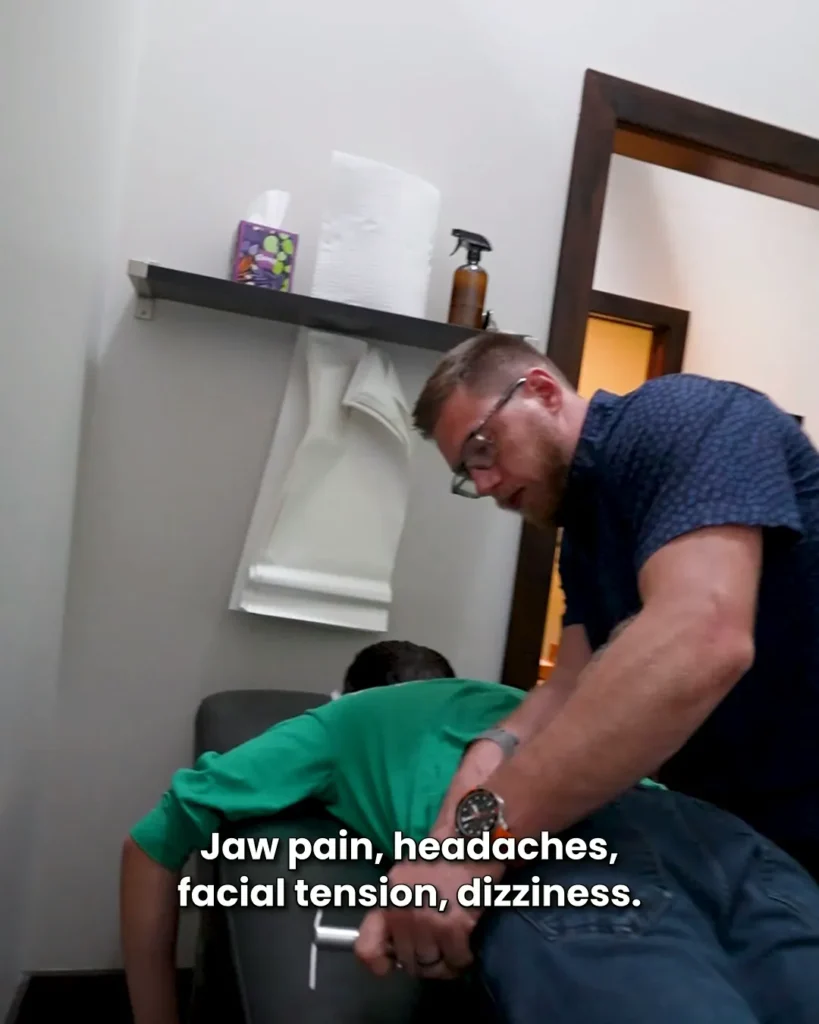
Trained in advanced cranial, TMJ, and upper cervical techniques. Our team focuses on the jaw, cranium, and nervous system patterns that drive TMJ pain, clicking, clenching, and headaches. Every visit is calm, gentle, and specific to your pattern.

Clarity Over Guesswork
Through a detailed assessment — including neurological testing and a hands-on cranial + spinal exam — we show you what’s actually happening inside your body. No confusion, no scare tactics. Just clear answers and a plan that finally makes sense.

A Circle of Care That Supports You
We collaborate with OBs, pediatricians, lactation consultants, dentists, and other providers to make sure you have a connected, whole-person approach. You’re not navigating this alone — you have a team behind you.
Why Choose Us
WHAT MAKES OUR APPROACH DIFFERENT
We look at the entire system that controls jaw stability, and we assess the same structures on every patient so nothing gets missed.
Pelvic floor and core stability.
We check the pelvic floor on every TMJ patient. When the pelvic floor is unstable, the brain looks for stability higher up, and the spine and jaw tighten to provide it. A jaw that clenches all day is often compensating for instability that starts far below it.
Upper cervical spine and posture.
On motion X-rays we look for a steep T1 angle, forward head posture, and restriction in the upper cervical spine. These findings show why the jaw is under strain, because a head that sits forward changes how the jaw loads and tracks.
Cranial and temporal bone motion.
We assess the motion and position of the cranial bones, with particular attention to the occiput and temporal bones. Restriction here directly affects the nerves that guide jaw movement and muscle tone.
Jaw mechanics and muscle tension.
We measure jaw range of motion through opening, lateral excursion, and protrusion, and we note any deviation or asymmetry in the path the jaw tracks. We palpate the masseter, temporalis, and pterygoid muscles for tension patterns and compare left to right.
Airway and palate.
We look at the palate and airway, because clenching and cranial compression over many years can narrow the palate. In long-standing cases we often see ridging along the intermaxillary suture, a sign of years of grinding and clenching load.
There is no cracking and no forceful twisting. The adjustments are gentle and specific, and they help your brain and body communicate the way they should. This is why patients searching for a TMJ specialist near me, a TMJ doctor, or a jaw pain doctor find our office after other treatments have not worked.
FAQ's
TMJ and Jaw Pain Questions Answered
Wondering how gentle, nervous system-focused chiropractic care can help you or your family? Below are answers to the most common questions our patients ask. These FAQs cover infant care, TMJ relief, cranial adjustments, and family chiropractic services in Sea Girt and Wall NJ.
Dentists and chiropractors approach TMJ from different angles, and both matter. A dentist looks at your bite, your teeth, and whether a guard or splint might help protect the joint. We look at the jaw as part of a larger system, including the upper neck, cranial tension patterns, breathing, and how your nervous system is regulating stress through the body. When people have tried dental-only approaches and still feel stuck, it’s often because the jaw is bracing for reasons outside the mouth. Many of our TMJ patients work with both their dentist and our office at the same time. Learn how cranial chiropractic compares to a dental splint here.
Yes. We use gentle, specific techniques that work directly with the jaw, the cranial bones, and the upper neck without any twisting or aggressive cracking. A lot of people who come to us with jaw issues have had bad experiences with forceful adjustments elsewhere, so we take our time and explain each step. The goal is to calm the tension patterns driving the clicking, not to force the joint into a new position. Most patients are surprised how light the work feels, especially considering how much can shift over a few visits.
A night guard is good at protecting your teeth from grinding damage, and some people get real relief from wearing one. What a guard usually does not do is change the reason your jaw is bracing in the first place. If your jaw clenches during sleep, that is your nervous system holding a stress pattern. The jaw, the upper neck, and the cranial bones work together to stabilize a system that is under load, and the guard sits on top of that pattern without changing it. That is why many people wear a guard for years and still wake up tight, still clench, and still get tension headaches. We look at the whole system to find what is driving the clench so the jaw no longer needs to work so hard. Some patients keep using their guard alongside care. Others find they no longer need it.
It depends on how long the pattern has been there and how much it’s tied into the rest of your system. Some people with recent jaw issues notice changes within a few weeks. Long-standing TMJ, especially when it’s paired with headaches, neck tension, or grinding history, usually takes several months of consistent care to really shift. We build your care plan around your specific exam findings and history, not a generic package. At your Report of Findings, we walk you through what we found and give you an honest picture of what the timeline looks like for your situation.
Yes, and we see a lot of them. Teens with jaw clicking, headaches, grinding, or clenching often also have posture issues, screen-heavy days, orthodontic history, or high stress loads, and all of that feeds the jaw. Catching TMJ patterns in the teenage years is powerful because the system is still developing and responsive. Parents often bring in a teen who’s been complaining about their jaw or head for months, thinking it’s just stress or growing pains, and we’re able to show them specific tension patterns they didn’t know were there. Care is gentle and age-appropriate.
Jaw and head pain often travel together, and separating them can actually make things harder. The muscles that move the jaw connect into the temples, the base of the skull, and the upper neck. When the jaw is bracing all day, those areas take a hit. A lot of patients come in thinking they have a headache problem, and it turns out the jaw is driving most of it. Others come in for jaw pain and realize the headaches they’ve been ignoring are part of the same picture. We look at both together so nothing gets missed.
A dentist who treats TMJ usually focuses on the teeth, the bite, and dental appliances like splints. They look at TMJ as a structural-mechanical problem that can be addressed through the mouth. A chiropractor with cranial training looks at TMJ as part of a larger system: the jaw, the upper neck, the cranial bones, and the nervous system. We do not adjust your bite. We work with the patterns of tension that drive your jaw to brace in the first place. Both approaches can be valuable. Some patients benefit from both at the same time. Our role is to give you clarity on what is driving your specific pattern and recommend the next step.
Yes. TMJ patterns often begin in childhood as the jaw, palate, and airway develop, even if symptoms show up later in adulthood. Learn more about how TMJ pain can start in childhood.
See an ENT first if the ringing is new, only in one ear, or comes with dizziness or hearing loss. If your ears check out and the ringing gets louder when you clench, chew or wake up with a sore jaw, see a chiropractor trained in TMJ and cranial work, because the jaw and the muscles around it are often part of it. Most people who find us have already been to the dentist, the ENT, or both, and heard that everything looks fine. That is frustrating when your jaw still clicks and your ears still ring, and it is the pattern our doctors look for.
Your first visit includes a hands-on exam of your jaw and cranial bones, motion X-rays of your upper neck, and surface EMG and thermography to show where your muscles and nervous system are holding tension. Then we correct what is loading the jaw, with gentle, specific adjustments to the cranial bones, the jaw and the upper neck, and work on how your head sits over your shoulders and on the pelvic floor when they are part of your pattern. We work on the jaw and the spine together because a restriction in the upper neck can keep pulling on the jaw even after the jaw itself settles. If we think someone else should see you first, we will tell you. Here is more on how ringing in the ears and TMJ are connected.
Want a deeper understanding of TMJ symptoms, causes, and care? Full TMJ FAQ
Areas We Serve
Serving families across
Wall Township
Sea Girt
Spring Lake
Manasquan
Brielle
Belmar
Neptune
Brick
Asbury Park
Ocean Township
Tinton Falls
Colts Neck
Point Pleasant
Our Location
Find Your Way to Relief See Us on the Map
Absolute Chiropractic
Sea Girt Square, 2100 NJ-35, Sea Girt, NJ 08750, United States
Serving Monmouth and Ocean County Families
Absolute Chiropractic serves families in Wall Township and nearby towns including Sea Girt, Spring Lake, Manasquan, Brick Township, Howell Township, Neptune Township, Tinton Falls, Middletown Township, Jackson Township, and Ocean Township. If you are searching for neurologically-based care close to home, you’re in the right place.
Explore our care options: Pediatric Chiropractic, TMJ and Canial Care, TMJ chiropractic care in New Jersey, and Prenatal Chiropractic. When you’re ready, use our Book an Appointment page to schedule.
Explore our care options: Pediatric Chiropractic, TMJ and Canial Care, TMJ chiropractic care in New Jersey, and Prenatal Chiropractic. When you’re ready, use our Book an Appointment page to schedule.