TMJ Clenching, the Gag Reflex, and Why It Started Long Before Your Jaw Hurt

Jaw Clenching, Neck Tightness, and a Strong Gag Reflex Often Arrive Together

If you clench your jaw, carry chronic tightness in your trapezius and neck, and have always had a stronger-than-average gag reflex, those three things are probably not coincidences. They share a common anatomical origin at the base of the skull. Understanding that connection is what changes the outcome for patients who have tried everything else.

Most TMJ patients we see have already been through the standard progression. The dentist noticed the jaw deviation or the wear pattern on the teeth. A night guard was recommended. The guard may have helped with headaches or protected the teeth, but the bracing pattern continued. Some patients have also done physical therapy or had dental work to address the occlusion. The pattern kept reasserting itself because the jaw is not the origin of the problem. It is the compensation.

This page explains where the pattern comes from, what we look for in the exam, and why addressing only the jaw while the underlying cranial and nervous system pattern remains will not produce lasting results.
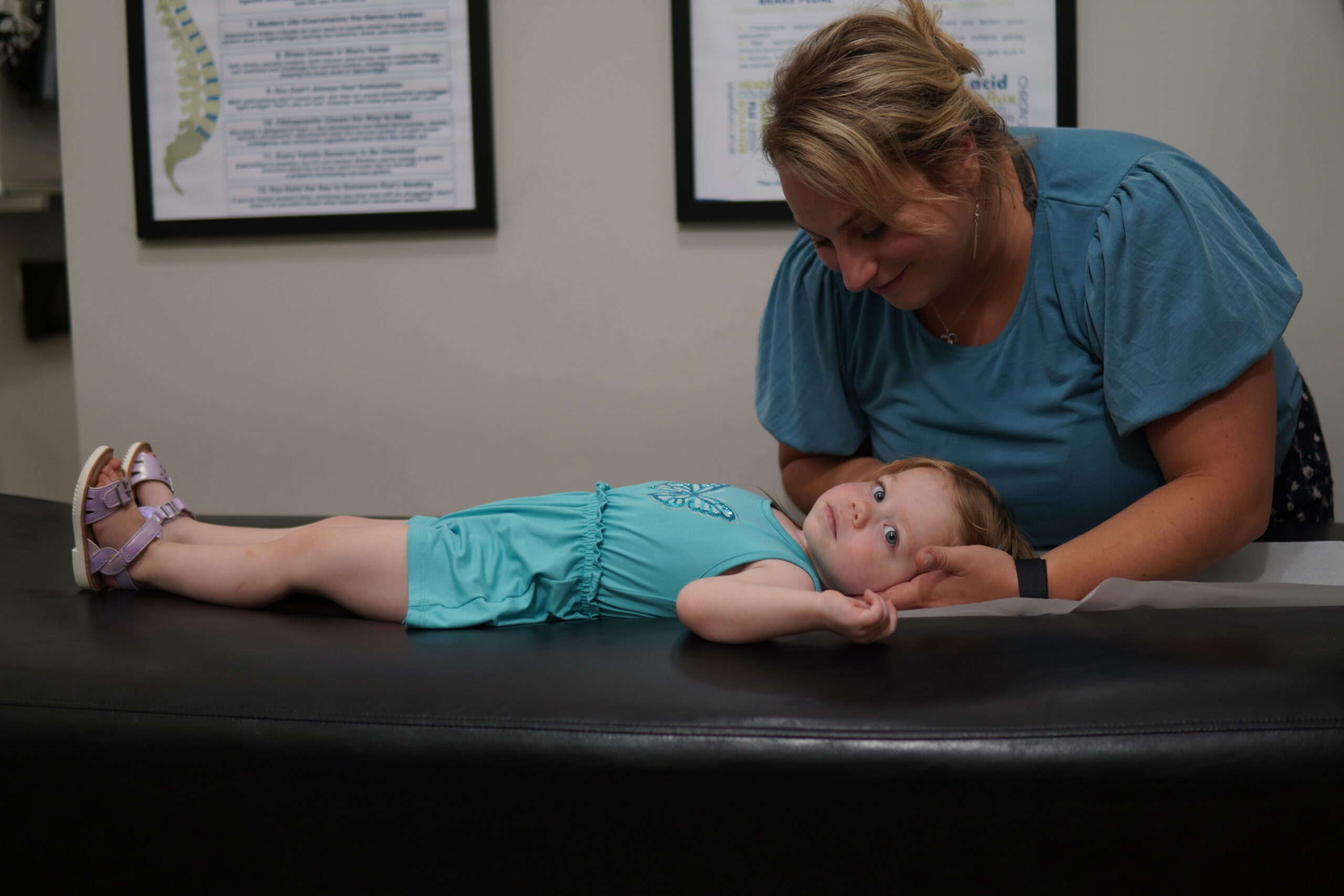
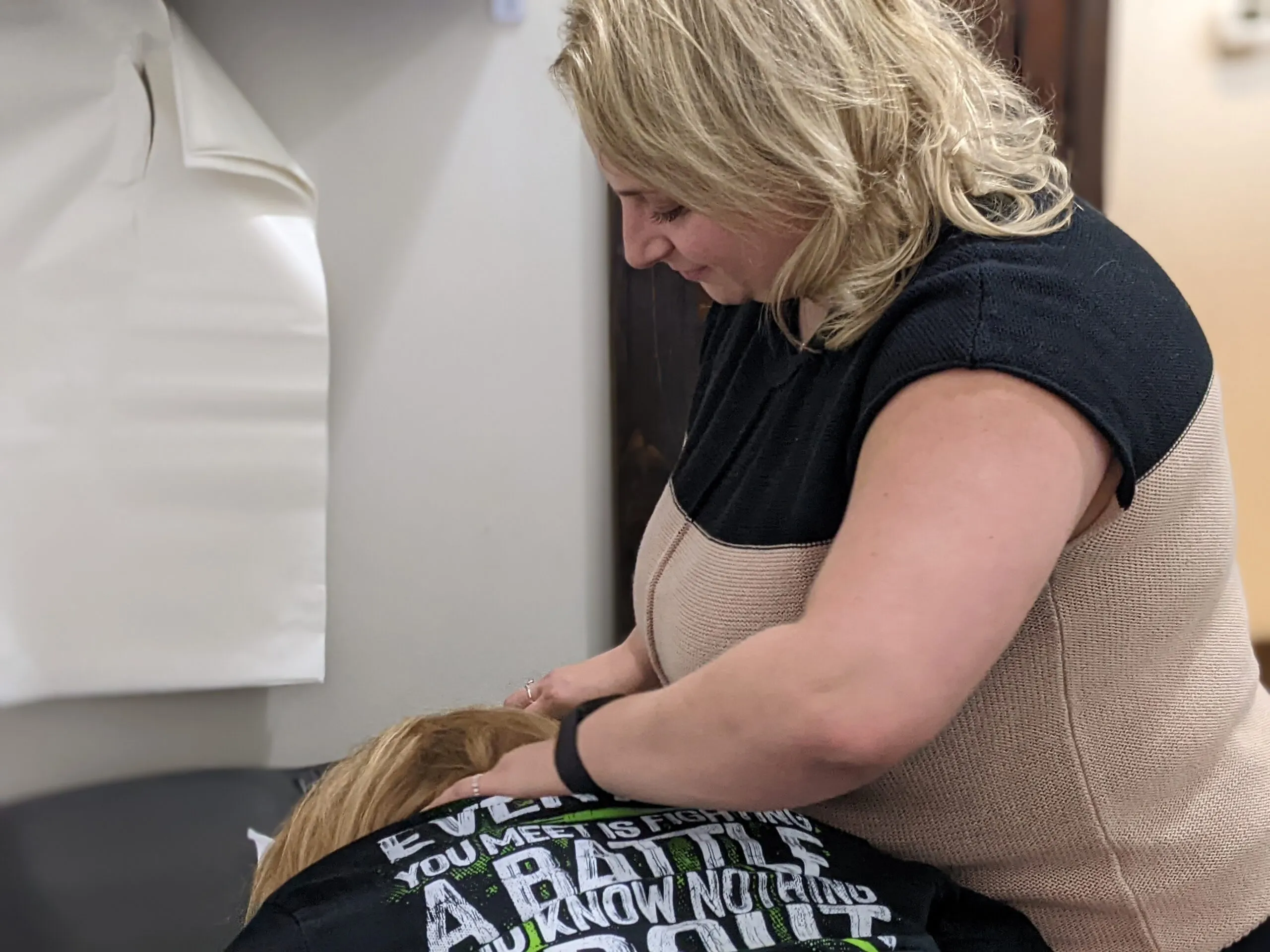
child receiving gentle chiropractic care for ADHD
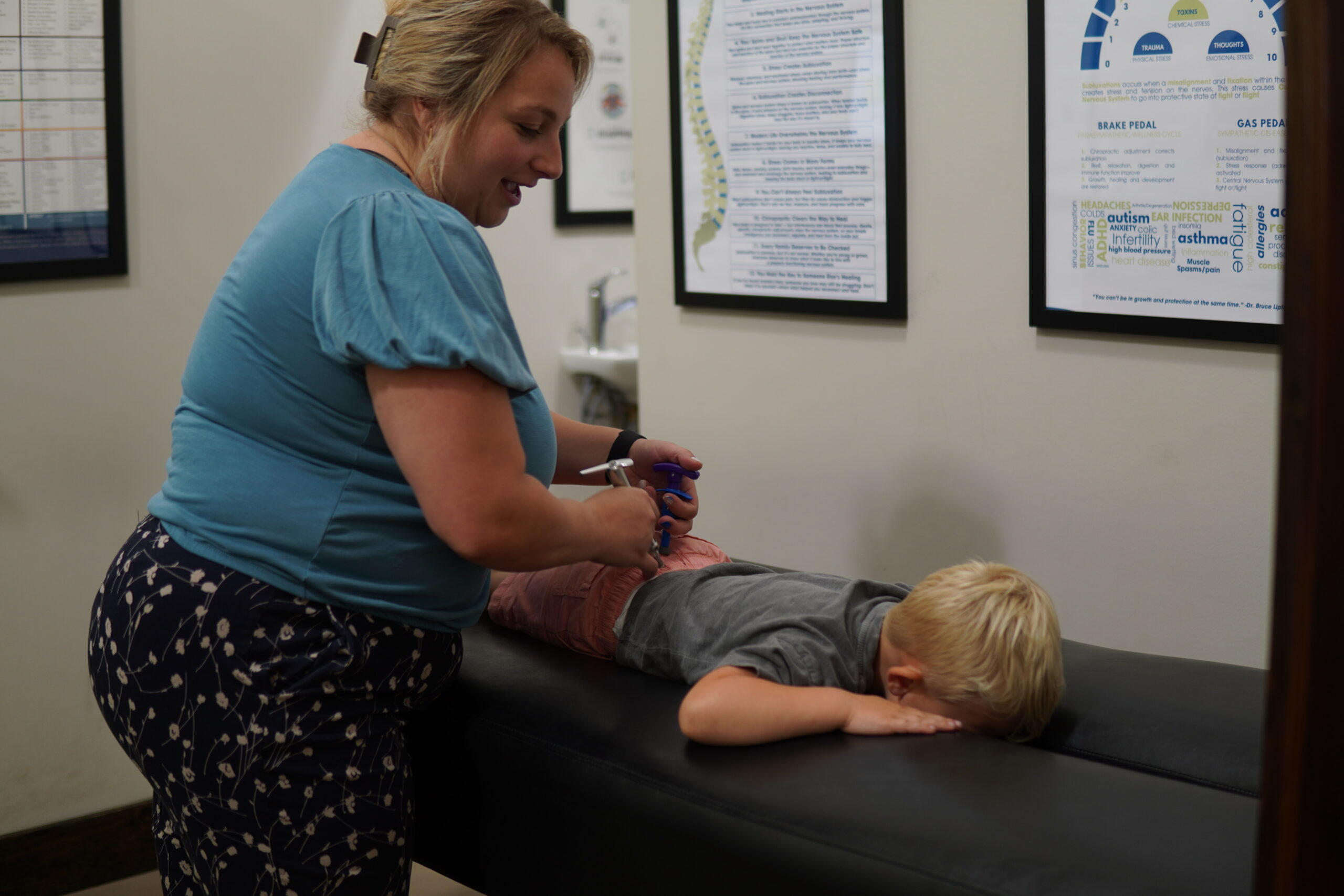
nervous system care for baby reflux

Why the Jaw Keeps Bracing

The jaw clenching in TMJ patients is not random tension. It is a nervous system compensation driven by a specific mechanism.
The gag reflex is controlled by two cranial nerves: the vagus nerve and the glossopharyngeal nerve. When those nerves are sensitized, the brain interprets unpredictable stimulation in the mouth and throat as a potential choking threat. The nervous system then looks for a way to reduce that trigger. One of the most common compensations is jaw bracing. By keeping the muscles of the jaw and throat in a state of constant tension, the brain creates predictability. A jaw that never fully relaxes is a jaw that is less likely to be caught off guard.
Patients clench during the day, clench during sleep, and often have no awareness of it until the cumulative damage to the joint becomes painful enough to force the issue. By the time they arrive in our office, they have often been clenching for years or decades.
The night guard protects the teeth from the mechanical consequences of that clenching. It does not change the nervous system signal that is driving the bracing. That is why the tension persists even in patients who are disciplined about wearing it.

The Anatomy Behind the Nerve Sensitization
The vagus nerve, the glossopharyngeal nerve, the jugular vein, and the spinal accessory nerve all pass through the same opening at the base of the skull. That opening is called the jugular foramen, and it sits at the junction of the occipital and temporal bones, at what is called the occipitomastoidal suture.
When the occiput and temporal bones lose their normal position and motion relative to each other, a state called subluxation, that foramen narrows. The structures passing through it are compressed. Compressed nerves become sensitized nerves. Sensitized nerves fire more easily, with less provocation, and with greater intensity than they should. The vagus and glossopharyngeal nerves then interpret ordinary stimulation in the mouth and throat as a threat, which drives the gag reflex sensitivity and the jaw bracing that follows.
This compression pattern most commonly originates at birth. The occipitoatlantal junction, where the skull meets the first cervical vertebra, is the most mechanically vulnerable point in the spine during delivery. Interventional deliveries, prolonged labor, and the compressive and rotational forces of the birth canal all concentrate stress at the occipital base and temporal bones. The result is a cranial subluxation pattern that sensitizes those nerves from the beginning of life, often before the person has any conscious awareness that anything is different.

The Trapezius and SCM Connection

The spinal accessory nerve, cranial nerve XI, exits through the jugular foramen alongside the vagus and glossopharyngeal nerves. It innervates two muscles: the sternocleidomastoid (SCM) and the trapezius.
When jugular foramen compression is present, the spinal accessory nerve is irritated alongside the others. Patients feel this as severe and chronic tightness in the trapezius and SCM. They describe a vice-like sensation at the base of the skull, tension that runs across the tops of both shoulders, and a neck that never fully loosens regardless of how much massage, stretching, or physical therapy they have done.
In infants, this same nerve irritation produces torticollis, a condition where the infant tilts and holds the head to one side and resists turning in the other direction. The SCM on the affected side is in a state of chronic tension driven by nerve irritation, not simply muscle tightness from positioning. Torticollis in infancy is an early marker of the same cranial subluxation pattern that later contributes to the TMJ presentation in adults. Parents of our adult TMJ patients frequently recognize this history when we describe it.
chiropractic for tmj.webp

How the Temporal Bone Drives Jaw Deviation

The temporal bone houses the temporomandibular joint. When the temporal bone subluxates, it typically rotates in a specific direction depending on the strain pattern present. In many adult patients, the temporal bone rotates externally, and the temporalis muscle goes into spasm in response.
That rotation physically repositions the joint socket. The mandible no longer closes along a straight vertical path. Patients and their dentists notice jaw deviation on closing, asymmetrical tooth wear, and occlusal problems that have not fully resolved with orthodontic work or dental appliances. The dentist is observing real findings. The source of those findings is the temporal bone position, not the teeth themselves.
Patients with a specific presentation we call a veno-inferential pattern, which relates to how jugular foramen compression affects venous drainage from the skull, tend to present with difficulty fully opening the jaw rather than deviation on closing. The specific pattern varies based on the direction and degree of temporal bone rotation, which is why exam findings drive our clinical decisions rather than symptom descriptions alone.

Why This Pattern Often Traces Back to Birth

The occipitoatlantal junction is the most mechanically vulnerable area of the spine at delivery. Forces applied during birth, whether from traction, vacuum or forceps use, or the natural compressive and rotational forces of the birth canal, concentrate at the base of the skull and upper cervical spine.
When that junction subluxates, the occiput and temporal bones lose their normal motion relative to each other and to the atlas. The jugular foramen narrows. The cranial nerves are sensitized. The infant cannot report this, but the body communicates it through recognizable patterns.
Parents of our adult TMJ patients often recognize this history when we walk through it. Their child had difficulty latching. They had a strong gag reflex when solid foods were introduced. There was an early torticollis diagnosis or a persistent preference for turning the head one direction. These are all the same underlying pattern presenting at different stages of development.
The body compensates across years and decades. The infant manages the breastfeeding difficulty. The toddler manages the gag. The child and adolescent develop jaw bracing as an unconscious protective response. By adulthood, the jaw is painful and the origin story has largely been forgotten.
The occipitoatlantal junction is the most mechanically vulnerable area of the spine at delivery. Forces applied during birth, whether from traction, vacuum or forceps use, or the natural compressive and rotational forces of the birth canal, concentrate at the base of the skull and upper cervical spine.
When that junction subluxates, the occiput and temporal bones lose their normal motion relative to each other and to the atlas. The jugular foramen narrows. The cranial nerves are sensitized. The infant cannot report this, but the body communicates it through recognizable patterns.
Parents of our adult TMJ patients often recognize this history when we walk through it. Their child had difficulty latching. They had a strong gag reflex when solid foods were introduced. There was an early torticollis diagnosis or a persistent preference for turning the head one direction. These are all the same underlying pattern presenting at different stages of development.
The body compensates across years and decades. The infant manages the breastfeeding difficulty. The toddler manages the gag. The child and adolescent develop jaw bracing as an unconscious protective response. By adulthood, the jaw is painful and the origin story has largely been forgotten.
Gentle chiropractic care for migraines and autoimmune support in Sea Girt & Wall NJ

What We Look for in the Exam

Our exam for TMJ patients extends well beyond the jaw because the pattern involves the occiput, temporal bones, and upper cervical spine together.
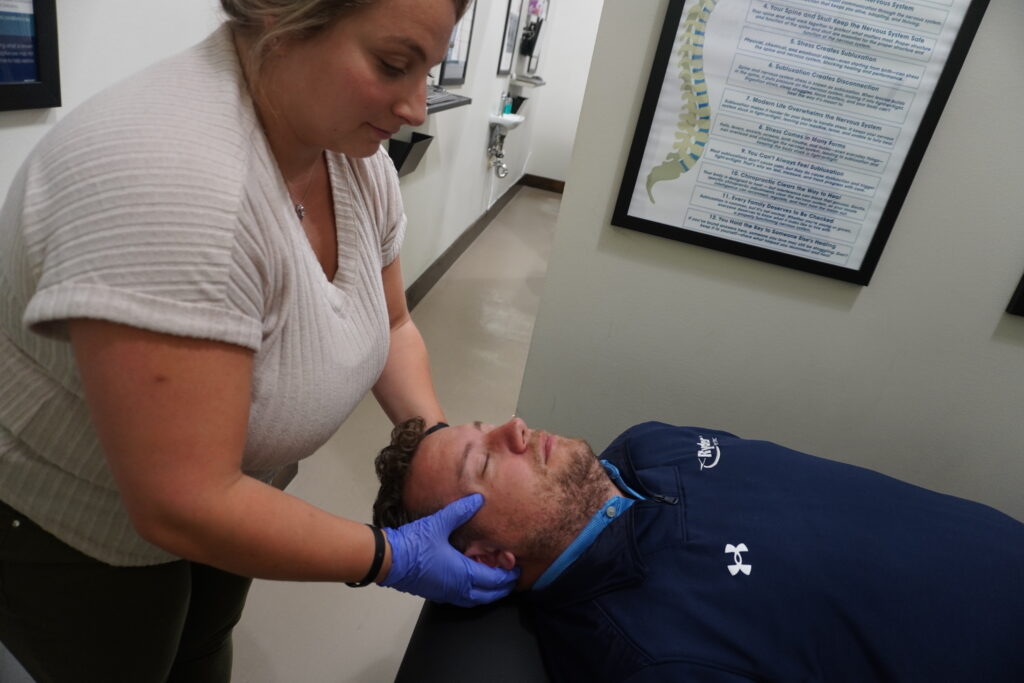
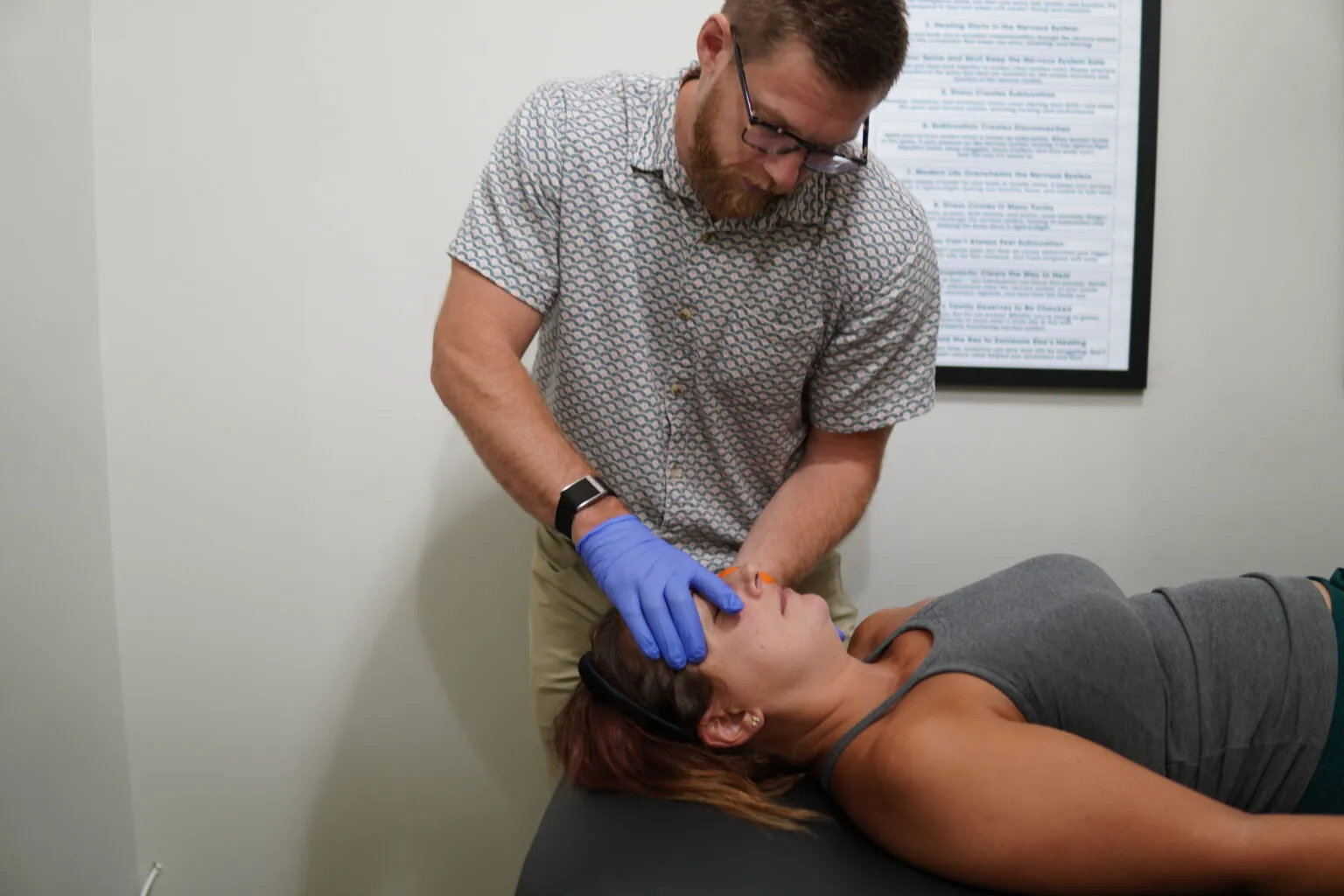
On palpation, we assess the temporal bone for restriction and rotation and feel for ridging along the temporal bone, which indicates loss of normal sutural motion. We assess temporalis tone and look for unilateral spasm patterns. We evaluate occipital motion relative to the atlas and check for restriction at the occipitoatlantal junction. We assess SCM and trapezius tension bilaterally and note whether the tension pattern is consistent with the temporal bone findings. We observe jaw deviation on opening and closing, noting direction and degree.
These findings together tell us which structures are driving the pattern and in what direction. That determines what we address and in what sequence.

Why We Address the Full Cranial Pattern

1

Adjusting only the jaw, or only the cervical spine, while the cranial subluxation remains in place will not resolve the underlying pattern. The temporal bone rotation contributing to jaw deviation is still present. The jugular foramen compression sensitizing the vagus and glossopharyngeal nerves is still present. The bracing pattern continues because the signal driving it has not changed.

2

At Absolute Chiropractic, we address the occiput, the temporal bones, and the upper cervical spine as a connected system. When the temporal bone regains its normal motion, the joint socket repositions. When jugular foramen compression resolves, the vagus and glossopharyngeal nerves can quiet down. When the spinal accessory nerve is no longer irritated, the SCM and trapezius begin to release. The jaw bracing pattern that developed as a compensation no longer has the same driver.

3

This is a more involved process than a night guard fitting, and patients who have lived with this pattern for years should expect that unwinding it takes time. It is also a more complete approach because it addresses why the jaw is bracing, not just the surface consequences of that bracing.
bedwetting.png (2)

Schedule a TMJ Evaluation

If you have been told your TMJ symptoms are structural, stress-related, or something to manage rather than resolve, we want to look more closely. Dr. Anthony Pellegrino is one of nine Certified Pediatric Craniopaths in the world and has built his clinical practice around the cranial and nervous system patterns described on this page.
A TMJ evaluation at Absolute Chiropractic in Sea Girt, NJ gives you a clear picture of what your exam findings show, what is driving your specific pattern, and whether our approach is the right fit. You will leave with a real explanation and a specific plan.

If you’ve had bad chiropractic experiences in the past, this work doesn’t look like that. If you’re nervous about having someone work on your head, that’s understandable, and we walk you through it before we start.