TMJ Chiropractor Serving All of New Jersey

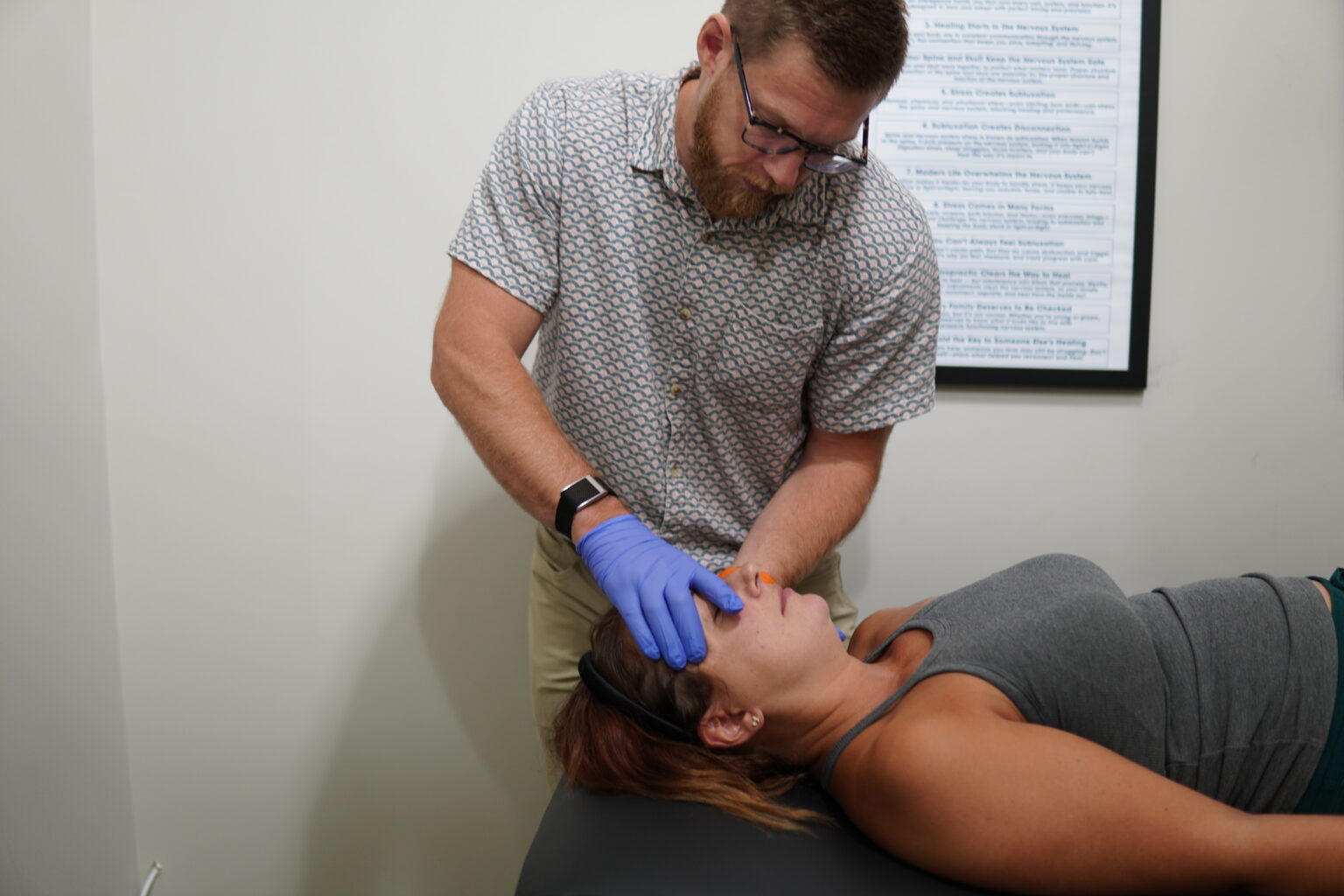
We evaluate the jaw, upper neck, and cranial system together with a neurological evaluation, TMJ evaluation, and motion X-rays.

If Your Jaw Clicks, Locks, or Aches, You Are Not Imagining It

You hear it every morning. A click when you open your mouth. A grinding sound you try to ignore. Tightness in your jaw that spreads into your temples, your ears, the base of your skull. Maybe it started small and got louder. Maybe you wake up with your teeth clenched so hard your whole face feels sore before your day even starts.
These patterns are real. Jaw clicking, clenching, grinding at night, headaches that wrap around from the jaw to the temples, difficulty chewing on one side, ear pressure that your ENT cannot explain. They add up. And most people who find this page have been dealing with them for months or years before they start looking for a chiropractor who actually focuses on TMJ.

At Absolute Chiropractic in Wall Township, NJ, TMJ is one of the conditions we see most often. We evaluate the jaw, upper neck, and cranial system together because these three areas work as a unit.
Learn more about TMJ and cranial care at our Wall Township office. When one part is stuck in a tension pattern, the others follow. That is the cycle most people feel but have never had anyone explain.

If you have been searching for a TMJ chiropractor in New Jersey, this page will walk you through what we look for, how we approach it, and what to expect if you decide to come in for an evaluation.

Why People Start Looking for a TMJ Chiropractor

Most people do not start with a chiropractor. They start with their dentist. They get a night guard. They might try a course of physical therapy, muscle relaxants, or Botox injections. Some get told to manage their stress. And for many people, those options help with part of the problem but not all of it.
The jaw does not work in isolation. It is connected to the upper cervical spine, the cranial bones, and the nervous system that controls muscle tension throughout the head and neck. When the upper neck is misaligned or the cranial system is under strain, the jaw compensates. It tightens, braces, and locks. A night guard protects the enamel, but it does not calm the clenching pattern that drives the tension in the first place.

That is what brings most people to a TMJ chiropractor. Many of our patients have benefited from TMJ care at Absolute Chiropractic.They have tried the dental approach and the muscular approach, and the symptoms keep cycling back. They are looking for someone who checks the parts of the system that other providers typically do not assess.

If that sounds familiar, you are in the right place. Our patients frequently tell us they wish they had found this type of care sooner.

What TMJ Symptoms Usually Mean

TMJ stands for temporomandibular joint, but the symptoms that go with it are rarely just about the joint itself. Clicking, popping, grinding, clenching, jaw locking, headaches near the ears and temples, ear fullness, neck stiffness on one side. These symptoms often cluster together because the jaw is acting as a stabilizer for a bigger pattern.

When the nervous system is stuck in a stress response, the muscles around the jaw tighten. Your jaw becomes like a stress vice. The upper neck stiffens. The cranial bones lose their normal subtle motion. The body braces, and the jaw takes the hit this is exactly why stress makes your jaw click and clench.

This is why relaxation exercises and bite splints can help the surface symptoms but do not always resolve the deeper pattern. The clenching itself is a signal that the upper neck, jaw, and cranial system are stuck in a protection mode. Muscles only do what your nerves tell them to do. When the nervous system is running hot, the jaw does not know how to let go.
Understanding this connection is the first step. Once you see that your jaw tension is part of a nervous system pattern and not just a dental problem, the path forward starts to make more sense.

What a TMJ Chiropractor Checks That a Dentist Does Not

A dentist evaluates the teeth, the bite, and the joint itself. That assessment is valuable and it is part of the picture. But the jaw sits at the intersection of several systems that dentists are not typically trained to evaluate in the same way.
A TMJ chiropractor trained in upper cervical and cranial work looks at how the jaw tracks when it opens and closes, where it deviates, and what structures are pulling it off center. We assess the upper cervical spine, specifically the atlas and axis, because misalignment in the upper neck directly affects jaw mechanics. We evaluate cranial tension patterns, checking whether the temporal bones and sphenoid are moving properly or are locked in strain.
We also look at nervous system tone. Is the body running in a stress pattern? Are the muscles around the jaw, neck, and head stuck in a guarding mode? These are the questions that help us understand why the jaw is doing what it is doing, not just what it looks like on imaging.

This type of evaluation does not replace dental care. It complements it. Many of our TMJ patients still wear their night guard while we work on the underlying pattern. Over time, as the nervous system settles and the upper neck and cranial system start functioning better, many patients find they rely on the guard less and less this is all part of our TMJ and cranial evaluation process.

Our Approach to TMJ at Absolute Chiropractic

When you come in for a TMJ evaluation at Absolute Chiropractic, we start by listening. We want to know what your symptoms are, how long you have had them, what makes them better or worse, and what you have already tried. That conversation matters because TMJ patterns vary from person to person.
Your first visit includes a focused evaluation of three areas: jaw motion, upper neck alignment, and cranial tension. We check how the jaw tracks and where it deviates. We assess the upper cervical spine with motion X-rays to see exactly where the misalignment is. And we evaluate the cranial system for strain patterns that may be contributing to the tension.
From there, we build a care plan. Our TMJ-specific work includes cranial adjustments, upper cervical corrections, and soft tissue work around the jaw and neck. Most people need more than one visit because we are changing a pattern over time, not chasing one symptom. We map a clear plan so you know what to expect at each stage.

Patients regularly tell us that they notice more than just jaw relief. They start sleeping better. Their headaches ease. Their whole body feels calmer. That is the nervous system settling. When the upper neck, cranial system, and jaw start working together instead of fighting each other, the body can finally let go of the tension it has been holding.

If you want to take the first step, schedule your TMJ evaluation today.

Common TMJ Questions We Hear Every Week

People searching for a TMJ chiropractor in NJ tend to have very specific questions. How long will this take? Will it hurt? Can you actually help with this? Here are the answers we give most often.
Most patients notice a change in their symptoms within the first few visits, though the full pattern usually takes several weeks to shift. The timeline depends on how long the pattern has been building and how many layers are involved. We give you a clear plan up front so there are no surprises.
The adjustments we use for TMJ are gentle. Cranial work and upper cervical corrections are precise and low-force. Most patients describe the experience as a relief, not something uncomfortable. If you have had rough chiropractic experiences in the past, this is a very different approach.

We also hear from a lot of people who are not sure whether their symptoms are actually TMJ. If your jaw clicks, your temples ache, you wake up with a sore jaw, or you have headaches that wrap around from the base of your skull to your forehead, those are all patterns worth evaluating. Often, the real confusion comes from trying to separate a true joint issue from simple facial fatigue; looking closely at TMJ vs muscle tension usually gives patients the clarity they need. You do not need a TMJ diagnosis from your dentist before coming in. We can assess the full picture.

Who Is a Good Fit for TMJ Chiropractic Care

You do not need to have tried everything before you come in. But many of our TMJ patients have. They have worn the night guard. They have done the jaw stretches. They have been to the dentist, the ENT, and sometimes the neurologist. The symptoms improved partially or temporarily, and then they came back.
If that describes you, TMJ chiropractic care may be the piece you have been missing. Our ideal patient is someone who senses that there is more going on than just a jaw problem. Someone who wants real answers and a plan that makes sense.
We also see patients who are earlier in their TMJ experience. Maybe the clicking just started, or the clenching is new, or the headaches have shifted to include the jaw area. Catching the pattern early often means fewer visits and a faster resolution.

Whether you are at the beginning of this or deep into it, we will walk you through every step of the way. The first visit is designed to give you clarity, not to pressure you into anything. Come in and start with a TMJ evaluation so we can evaluate what is happening and tell you honestly what we think.

Night Guards: Helpful but Not Always the Full Answer

Night guards are one of the most commonly recommended treatments for TMJ. And they can help. A well-fitted guard protects your enamel and can reduce the force of clenching while you sleep. If your dentist recommended one, that was a reasonable step.

Where it gets incomplete is when the night guard becomes the only strategy. Protecting the teeth is not the same as fixing the pattern. The guard does not calm the clench reflex that is driving the tension. It does not address the upper neck strain or the cranial tension that keeps the nervous system in protection mode. Learn more about how stress drives the clenching pattern.

A lot of people wear their night guard faithfully and still wake up with jaw soreness, temple headaches, and neck stiffness. That is because the pattern is still running. The nervous system is still telling the jaw to brace. The guard absorbs the force, but it does not change the signal.
We work alongside your dental care. Many of our patients continue wearing their guard during the early stages of care while we address the underlying tension. As the nervous system calms and the upper neck and cranial system start moving properly, most patients find that the clenching decreases on its own.

TMJ in Teens: What Parents Should Know

TMJ is not just an adult problem. We see a growing number of teenagers with jaw clicking, clenching, and headaches. The pattern often starts during periods of stress, heavy screen use, orthodontic work, or growth spurts that shift the alignment of the upper neck and cranial system.
Parents often notice the signs before the teen does. Grinding sounds at night. Complaints about headaches that do not respond to ibuprofen. Jaw pain after eating. Difficulty concentrating in school because of head and face tension.
Teen TMJ responds well to the same approach we use for adults, and often resolves faster because the patterns have not had years to entrench. Cranial adjustments and upper cervical corrections are gentle and safe for adolescents. We explain everything to both the parent and the teen so everyone understands the plan.

If your teenager is dealing with jaw tension, headaches, or clenching, a TMJ evaluation can help you understand whether the jaw, upper neck, and cranial system are part of what is going on. Early intervention can make a meaningful difference before the pattern becomes chronic.Learn more about cranial chiropractic for kids and teens.

Located in Wall Township, Serving All of New Jersey

Absolute Chiropractic is located in Wall Township, NJ, minutes from Sea Girt, Spring Lake, Manasquan, and Brielle. We are part of the Monmouth County community, and we also serve patients from Ocean County, Middlesex County, and beyond.
Because TMJ-focused chiropractic care with cranial and upper cervical training is specialized, many of our patients travel from across New Jersey to see us. We regularly see patients from Toms River, Red Bank, Freehold, Asbury Park, Point Pleasant, Brick, Howell, Marlboro, and communities throughout the central and northern parts of the state.
If you have been searching for a TMJ chiropractor in NJ and have not found someone who evaluates the jaw, upper neck, and cranial system together, we may be worth the drive. Our patients tell us that finding a practice that understands this connection was a turning point for them.

We are easy to get to from the Garden State Parkway and Route 18. If you are coming from a distance, our team can help you plan your visits so you get the most out of each appointment. Learn more about our Wall Township chiropractic office or get directions to Absolute Chiropractic.

Frequently Asked Questions

Can a chiropractor help with TMJ?
Yes. A chiropractor trained in upper cervical and cranial work can evaluate the jaw, upper neck, and cranial system to identify the structural patterns that contribute to TMJ symptoms. Chiropractic care for TMJ focuses on the areas that dentists and physical therapists do not typically assess, including upper cervical alignment, cranial motion, and nervous system tone. Many patients experience significant improvement in jaw clicking, clenching, headaches, and overall tension.
A TMJ dentist focuses on the bite, the teeth, and the joint itself. They may recommend night guards, bite adjustments, or oral appliances. A TMJ chiropractor evaluates the biomechanics of the jaw in relation to the upper neck and cranial system. Both approaches have value. The chiropractic approach tends to address the underlying structural and nervous system patterns that keep the jaw tension cycling back, while the dental approach manages the symptoms at the joint and tooth level.
Most patients notice changes in their symptoms within the first few visits. The full care plan depends on how long the pattern has been building and how many areas are involved. Typical TMJ cases involve several weeks of consistent care to shift the pattern, followed by a maintenance phase. We map a clear plan at your first visit so you know what to expect.
No. The adjustments used for TMJ care at our office are gentle and precise. Cranial work involves light, sustained contact on the bones of the skull. Upper cervical corrections are low-force and specific. Most patients describe the experience as relieving, and many feel noticeably different after their first session.
Yes. TMJ symptoms frequently include headaches near the temples and ears, neck stiffness, and tension that wraps from the jaw into the base of the skull. The jaw, upper neck, and cranial system work together. When the jaw is stuck in a clenching or bracing pattern, the neck and head often follow. Addressing all three areas together is the most effective way to resolve the full symptom picture.
Yes. Cranial adjustments and upper cervical corrections are gentle and safe for adolescents. We see a growing number of teens with jaw clicking, clenching, and headaches. Teen TMJ often responds quickly to care because the patterns have not had years to build up. We explain every step to both the teen and the parent so everyone is comfortable with the plan.

If you have been looking for real answers about your jaw pain, clicking, clenching, or headaches, we are here to help. Schedule a TMJ evaluation and we will walk you through every step of the way.

OFFICE HOURS

Monday

Tuesday

Wednesday

Thursday

Friday

Saturday

Sunday

chiropractic wall township nj absolute chiropractic sb