
Help for Jaw Clenching and Teeth Grinding
You wake up and your jaw is already tired. Maybe your partner hears the grinding at night, or your dentist pointed out the wear on your molars before you noticed anything yourself. Maybe you catch yourself at 3pm with your teeth pressed together and no idea how long they have been that way.
Most people are handed a night guard and told to manage stress. That protects your teeth, which matters. It does not tell you why your jaw is bracing in the first place.
We look at that part.

What Clenching and Grinding Actually Feel Like
Patients describe it to us in pretty consistent ways:
- A jaw that feels tired or heavy first thing in the morning
- Headaches at the temples that are worst before noon
- Teeth that feel sensitive to cold with no cavity to explain it
- Flattened or chipped edges your dentist noticed first
- Aching that spreads into the cheeks, the ear, or the side of the neck
- Catching yourself clenching during traffic, email, or a hard conversation
Some people clench mostly at night. Some do it all day without knowing. Plenty of people do both, and the daytime habit is usually the one nobody has mentioned to them.
Why the Jaw Braces
Your jaw muscles are some of the strongest in your body for their size, and they are wired to respond fast. When your nervous system is running hot, they are one of the first places that tightens and one of the last places that lets go.
That bracing pattern gets reinforced by a few things we look for:
- Tension at the top of the neck, where the nerves that guide jaw movement originate
- Restricted motion in the cranial bones around the joint itself
- An airway that is working harder than it should at night, which can drive nighttime clenching
- Old injuries, dental work, or long stretches of stress that taught the jaw to guard
This is why clenching so often travels with headaches, ear pressure, and neck stiffness. It is one system, and the jaw is where a lot of people feel it first.
Beyond the Night Guard
A night guard is a good piece of equipment. It puts a barrier between your teeth so grinding does less damage.
What it does not do is change how hard you are clenching, or why. Many of our patients arrive wearing one faithfully and still waking up sore, still getting the morning headaches, still watching the wear continue on the guard itself.
If that is you, the guard is not failing. It is doing its one job. The clenching just needs a different kind of attention.
What Our Evaluation Checks
We start by listening. Before anything else, we want your history: when it started, what your dentist has seen, how you sleep, what your stress has looked like this past year.
Then we look at:
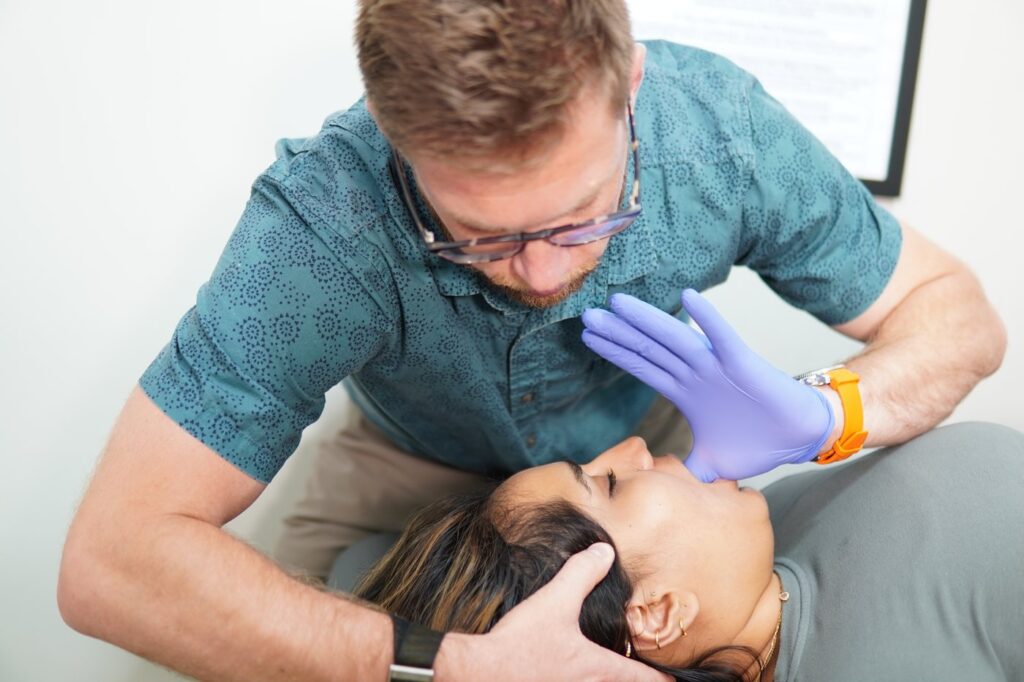
- How your jaw opens, and whether it tracks evenly or drifts to one side
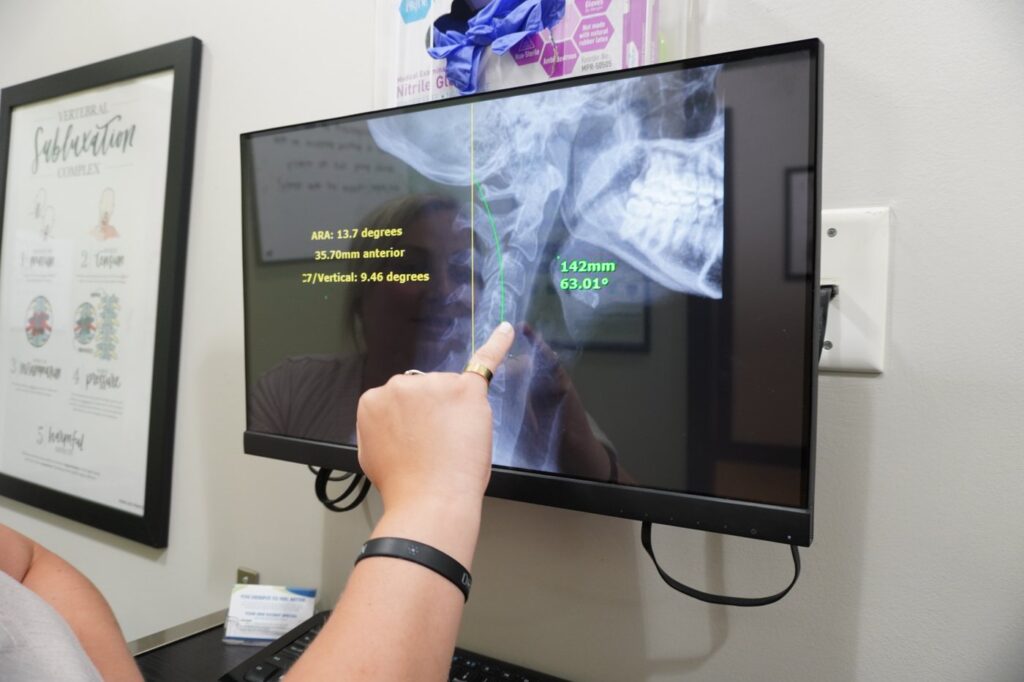
- Motion and tension in the upper neck
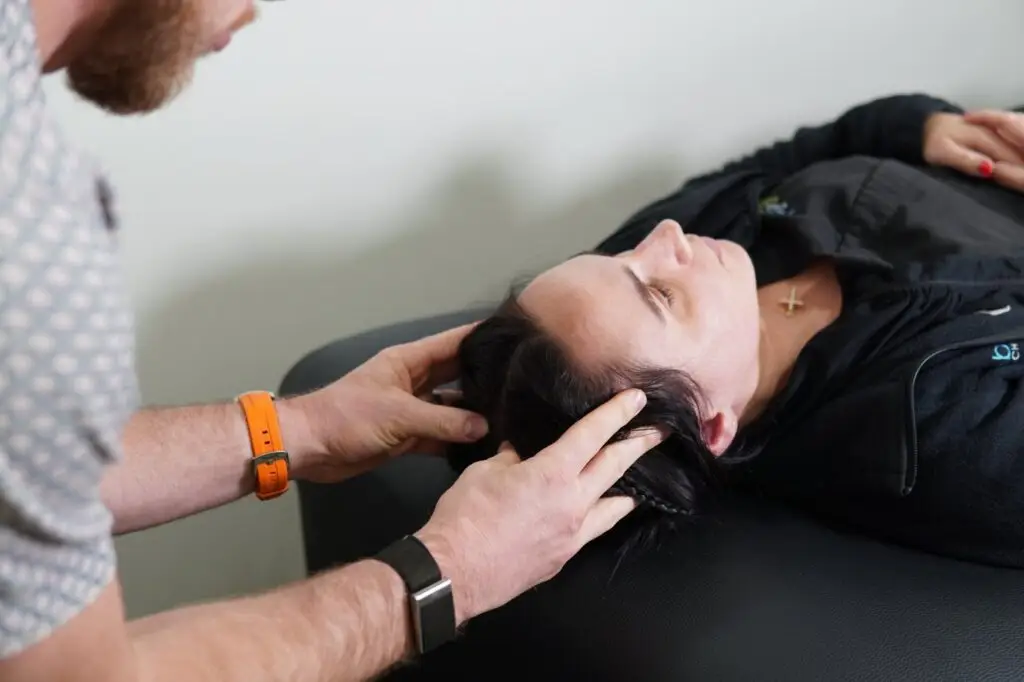
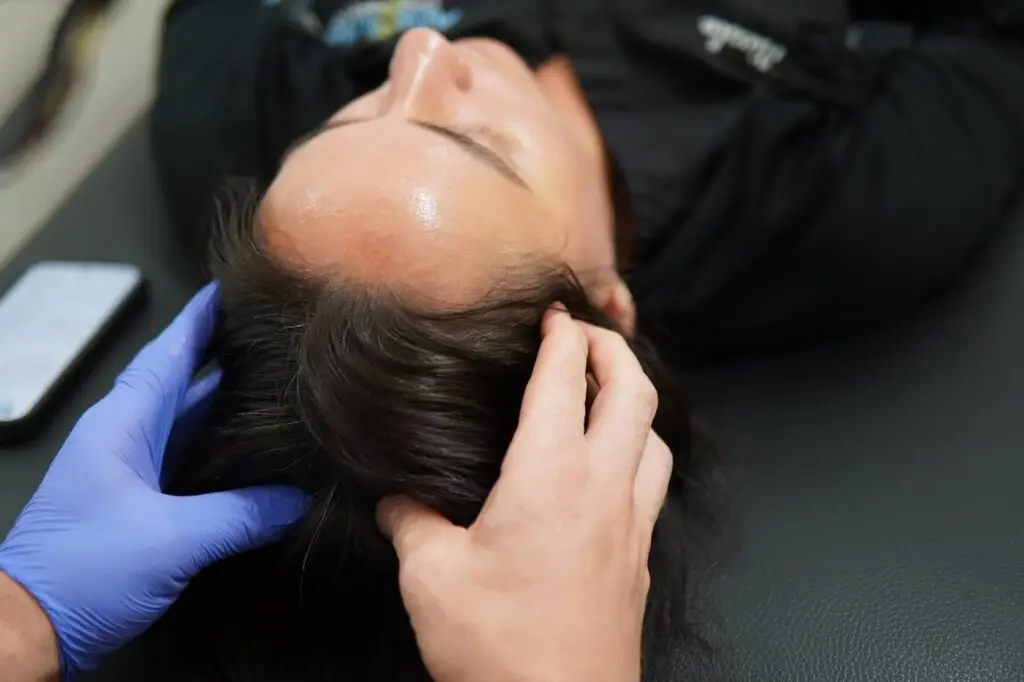
- Cranial motion around the temporomandibular joint
- Which jaw muscles are guarding and how hard
- Signs that your airway is contributing to nighttime clenching
Then we explain what we found in plain language. You will understand why your jaw is doing this before we talk about any plan, and you will never feel rushed through that conversation. If you are weighing your options, here is what a TMJ chiropractor actually does, how to tell muscular jaw pain from joint TMJ, and how stress drives jaw tension.
Next Steps
If you are grinding, clenching, or waking up with a jaw that never fully rests, we can tell you what is driving it.
Care here is gentle. No forceful cracking, no wrenching the jaw open. Precise work on the upper neck, the cranial system, and the muscles that have been guarding, so your jaw can stop holding on.
Frequently asked questions
1. Is jaw clenching the same thing as TMJ?
Not quite. Clenching and grinding are things you do. TMJ, or more precisely TMD, describes a problem in the joint itself. They overlap constantly, because sustained clenching loads the joint and an irritated joint makes the muscles guard harder. Most people we see have some of both.
2. My dentist gave me a night guard. Why would I need anything else?
A night guard protects your teeth from the force. It does not reduce the force. If you are still waking with a sore jaw or morning headaches while wearing one, that is a sign the clenching itself has not changed. Keep wearing the guard, and let us look at why the jaw is bracing.
3. Can you help if I clench during the day and not at night?
Yes, and daytime clenching is more common than most people think. It is often the pattern nobody has named for you. The evaluation is the same, and the daytime habit usually responds quickly once the underlying tension eases.
4. Does this have anything to do with my headaches?
Often, yes. The muscles that close your jaw attach to the side of your skull, and the nerves that guide jaw movement come from the upper neck. Headaches at the temples that are worst in the morning are one of the most common things patients mention alongside clenching.
5. Is the care gentle? I do not want my neck cracked.
It is gentle. We use precise, low-force work on the upper neck and cranial system. Nothing is forced, and we walk you through what we are doing before we do it. Patients who have had bad experiences elsewhere tell us this is what they notice first.
6. How long before I notice a difference?
Most people notice the morning tightness easing before anything else, often within the first few weeks. Wear patterns on your teeth and long-standing joint changes take longer. We will give you a realistic timeline after the evaluation rather than a generic one now.
7. Why does my jaw hurt on one side in the morning?
Most often because you clench or grind on that side at night, or sleep with that side of your face pressed into the pillow. Night clenching works the chewing muscles for hours, and if your jaw, neck or bite is a little uneven, one side takes most of the load, so you wake with an ache in the cheek or in front of the ear that eases as the day goes on. A night guard protects your teeth, but it does not change why the clenching happens. Our exam checks how your jaw opens, closes and tracks and the muscles on each side, with motion X-rays of the upper neck and surface EMG and thermography to see how hard those muscles work at rest. Care is gentle adjustments to the cranial bones, the jaw and the upper neck, with posture and the pelvic floor when they are part of the pattern.
8. Does TMJ ever go away on its own?
Sometimes. A flare-up from a stressful stretch, a long dental visit or a hard chew often settles within a few weeks once the strain stops. When the pain, clicking or clenching keeps coming back for months, there is usually a driver that has not changed, such as night clenching, an uneven bite or tension in the upper neck, and waiting tends to mean more flare-ups. If your jaw locks open or shut, see your dentist or doctor right away. Our exam looks for that driver with a hands-on check of the jaw, motion X-rays of the upper neck, and surface EMG and thermography, and care is gentle adjustments to the cranial bones, the jaw and the upper neck.