What Is a
TMJ Chiropractor?
A TMJ chiropractor is a chiropractor with advanced training in the jaw, cranial bones, and upper neck. They evaluate and treat jaw pain, clicking, popping, clenching, and related headaches by working on the structures and nerves that control jaw function. They do not adjust the bite, fit splints, or perform injections.
What a TMJ chiropractor evaluates
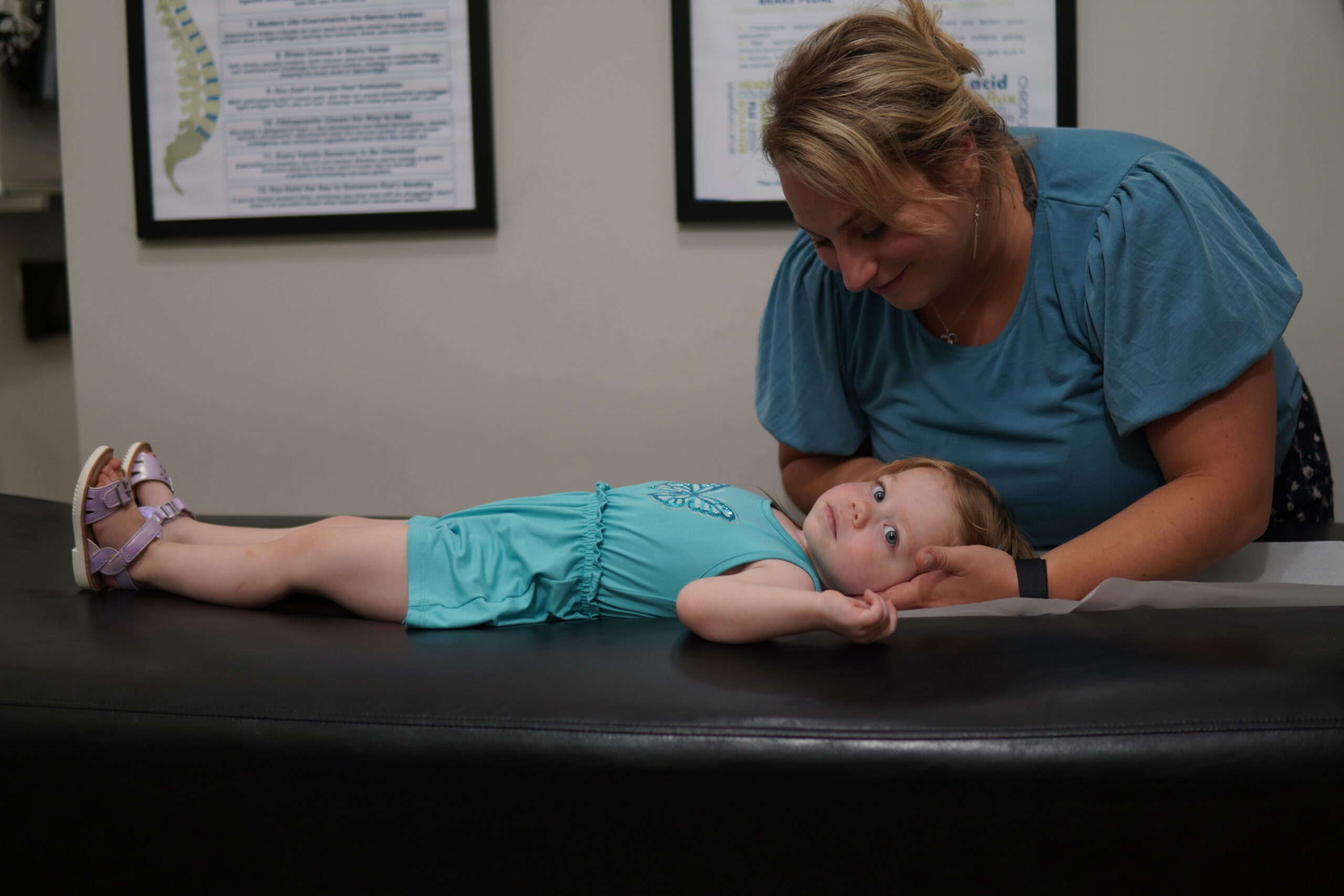
A TMJ chiropractor looks at the jaw as part of a connected system. The exam typically includes:

Cranial bones, especially the temporal bones where the jaw connects

The temporomandibular joint itself, including how it opens, closes, deviates, and clicks

The upper neck, especially the C0 to C2 region, which has direct neurological influence on jaw muscle tone

Posture and how the head sits over the shoulders

Nervous system tone and patterns of muscle bracing throughout the head, neck, and face
The reason for evaluating all of this together is simple. The jaw doesn’t work in isolation. When the cranial bones are tense, the upper neck is bracing, or the nervous system is stuck in a pattern of guarding, the jaw responds by holding tension. A good TMJ chiropractor finds where the input is coming from and works on that, not just on the jaw itself.
What a TMJ chiropractor does NOT do
This is worth being clear about, because there’s overlap with dental care and people sometimes expect things that fall outside of chiropractic scope.
Does not adjust the bite.
We don’t grind down teeth, file them, or change how the upper and lower teeth meet. That’s dentistry.

Does not fit splints or night guards.
Custom occlusal appliances are made by dentists.

Does not perform injections
Botox for jaw muscles, trigger point injections, and steroid injections into the joint are done by physicians or dentists with that scope.

Does not perform jaw surgery, manage work, or write prescriptions.
If your case needs any of those things, we’ll tell you and help you find the right provider.

What we do is work on the cranial bones, the jaw joint, the upper neck, and the nervous system inputs that drive jaw tension. That’s the lane. Knowing what’s in our lane and what isn’t is part of giving you a useful evaluation.
How TMJ chiropractic compares to other TMJ treatments
Most adults with TMJ symptoms have already tried something before they look into chiropractic. The most common path is a dental splint or night guard, sometimes physical therapy, sometimes muscle relaxers, sometimes Botox. Each of these does something different. A splint protects the teeth and can reduce some grinding. Physical therapy works on jaw muscle activation and range of motion. Muscle relaxers and Botox reduce muscle tone chemically. TMJ chiropractic addresses the cranial, upper neck, and nervous system inputs that drive the jaw to brace in the first place. For some people, one approach is enough. For others, the right answer is a combination, especially when there’s heavy grinding alongside daytime tension and headaches. If you’re deciding between approaches, you can compare TMJ chiropractic to dental splints.
What a first visit looks like
A first visit at Absolute usually takes about an hour.
01
We start with a conversation.
We want to understand what your jaw is doing, when it started, what makes it better or worse, what you’ve already tried, and what’s brought you in now. This part isn’t rushed.
02
Then we evaluate.
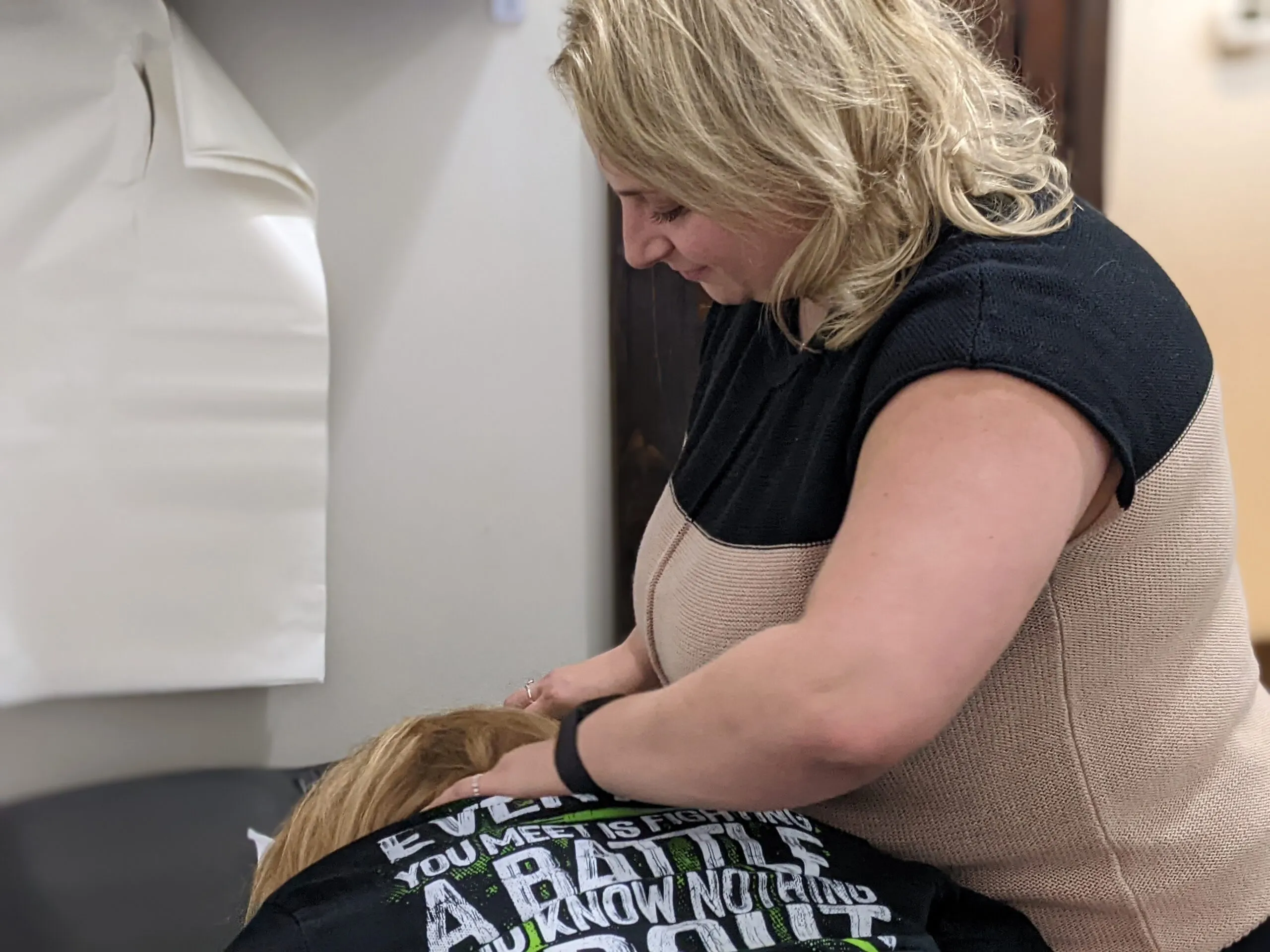
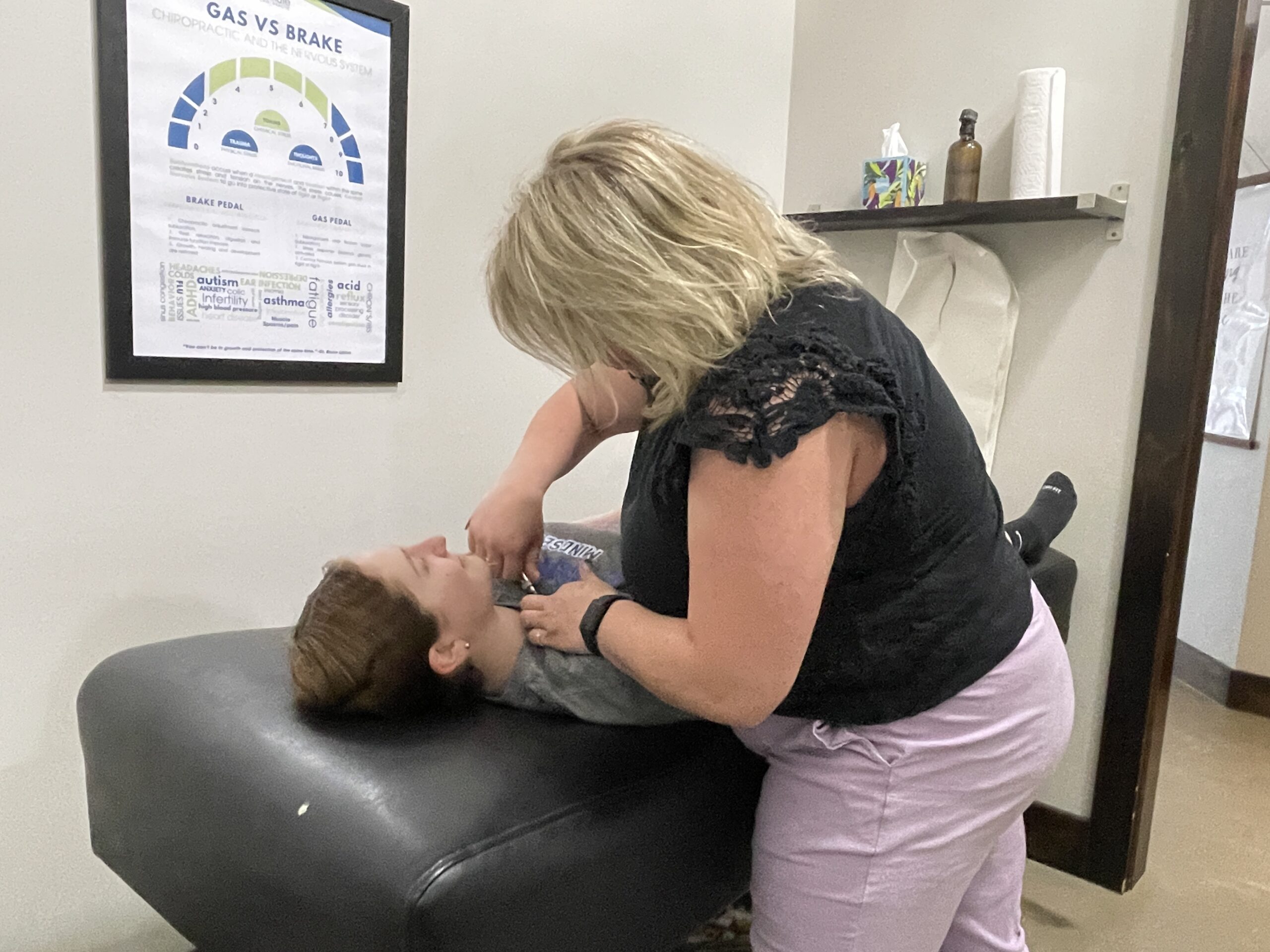
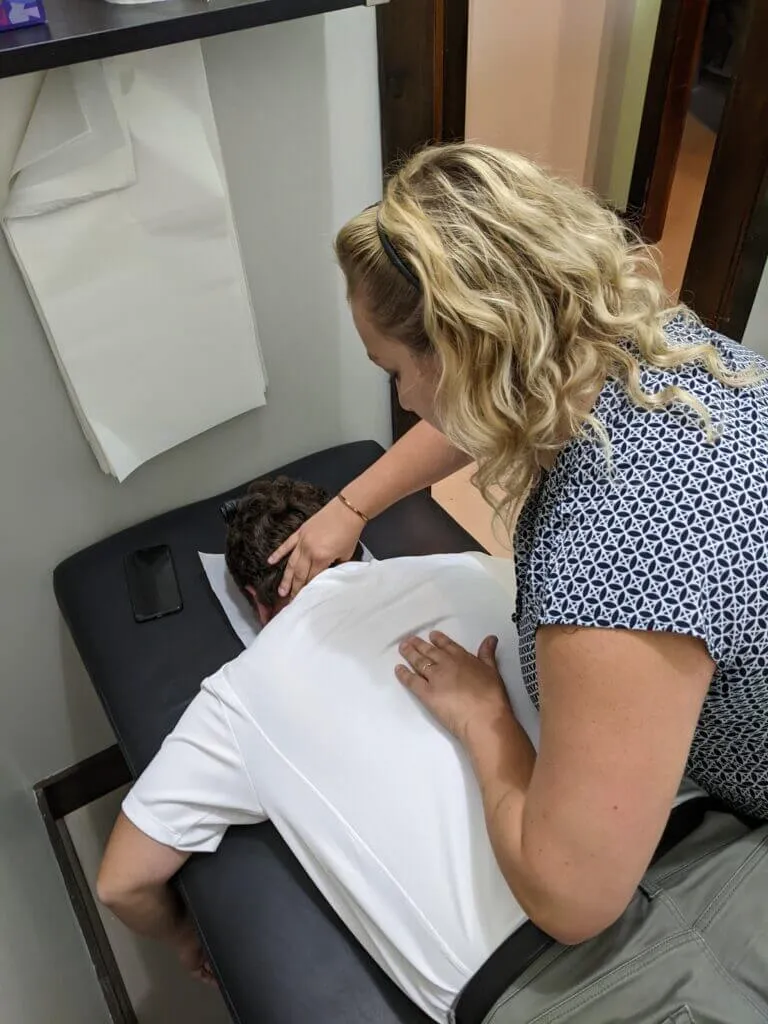
The exam is hands-on and includes how your jaw opens and closes, where it clicks or deviates, how the upper neck is moving, how the cranial bones are sitting, and how your nervous system is regulating muscle tension in the area. Depending on what we find, we may also do basic neurological screening and look at posture.
03
We explain what we find in plain language.
You’ll know what we see, what we think is driving it, what care would look like, and how our approach would help, including the cranial chiropractic methodology we use. If another provider would add something, we’ll tell you and work with them.
Who typically sees a TMJ chiropractor
If several of these sound familiar, a TMJ chiropractor is worth considering:

Jaw clicking, popping, or grinding sounds when you open and close

Headaches that travel between the jaw, temples, and behind the eyes

Jaw deviation (the jaw shifts to one side when you open)

Upper neck tension that seems linked to your jaw symptoms

Clenching during the day or grinding at night

A history of dental appliances that helped partially but didn’t change the pattern

Morning jaw fatigue or soreness

Tried multiple things and still feel like something underneath isn’t being addressed
This isn’t a diagnostic checklist. It’s a pattern-recognition list. The more of these you have, the more likely a TMJ chiropractor can help. If you’re unsure what you’re experiencing, here’s how to tell muscle tension from TMJ.
Credentials to look for in a TMJ chiropractor
Not every chiropractor is trained to work on the jaw and cranial system. The standard chiropractic education covers the spine in depth and touches on cranial and TMJ work briefly. Doing this well takes additional post-doctoral training.
When you’re looking for a TMJ chiropractor, ask about:
Cranial chiropractic training (sometimes called craniopathy or sacro-occipital technique)
Specific TMJ training and continuing education
Whether they routinely treat TMJ as part of their practice or only occasionally
Whether they coordinate with dentists in the area
If a chiropractor describes themselves as a TMJ chiropractor but doesn’t have any specific cranial or TMJ-focused training, that’s a flag worth asking about. At Absolute, all of our doctors are trained and certified in craniopathy, with additional certifications in the pediatric population. TMJ care is one of the core specialties of the practice. You can also schedule a TMJ evaluation in Wall, NJ if you’d like to discuss your symptoms in person.
Common Questions About TMJ Chiropractic
No. A regular chiropractic education focuses primarily on the spine. A TMJ chiropractor has additional post-doctoral training in cranial work, the temporomandibular joint, and the upper neck. The exam is different, the techniques are different, and the focus is different. Most chiropractors are not trained to do TMJ-specific work, which is why finding one with the right credentials matters.
No. The work is light, specific, and based on the exam findings. There's no cracking, twisting, or forceful movement on the jaw or the head. Most patients describe the adjustments as relaxing and are surprised at how subtle the work feels compared to what they expected.
It depends on the case. For straightforward TMJ patterns, many people see meaningful changes in the first two to four weeks. Long-standing patterns or cases involving heavy clenching, history of trauma, or complex headache patterns typically take longer. We do a re-exam at a planned point so we can compare what's actually changed in the joint and tissue, not just how you feel.
For many people, yes. A lot of chronic headaches involve cranial tension, upper cervical patterns, and jaw input feeding into each other. When we address those inputs together, the headache pattern often changes in a way that medication and stretching alone don't reach. If your headaches are new, sudden, or severe, see a medical doctor first to rule out anything urgent.
For adults, yes. There are specific spinal patterns we expect to see in TMJ cases, especially in the upper neck, and x-rays let us look at them directly. They serve two purposes. First, they help us rule out anything else going on that needs to be addressed before we touch the area. Second, they show us whether the patterns we'd expect to see in someone we can help are actually present. If the imaging shows something outside our scope, we'll tell you and point you toward the right provider. If it shows what we expect, we have a clear baseline to work from.
For kids, x-rays are not routine. We only image when something specific in the exam tells us we need to.
Yes, when performed by a chiropractor with the right training. Cranial and TMJ work uses light, specific contact rather than the high-velocity adjustments people associate with traditional chiropractic. We screen for any reason a particular technique wouldn't be appropriate before we do anything. If you've had bad chiropractic experiences in the past or you're nervous about having someone work on your head and jaw, tell us. We walk you through everything.
Yes. Kids and teens with jaw clicking, headaches, mouth breathing, or grinding patterns often respond well to cranial and TMJ work. Pediatric care is one of the specialties at our practice, and the work is even gentler than what we do with adults.
Look for someone with specific cranial chiropractic training (craniopathy, sacro-occipital technique, or equivalent), who routinely treats TMJ as part of their practice, and who can clearly explain what they do and what they don't do. Ask about their training before you book. A few minutes of due diligence saves you from ending up with someone who treats TMJ as an afterthought.