TMJ FAQ Wall Township, NJ

TMJ Questions, Answered Plainly

This page is for people who have questions about TMJ and want clear answers before they book anything. Whether you are dealing with jaw clicking, clenching, headaches that feel connected to your jaw, or tension that will not settle down, you probably have questions that your dentist or general doctor has not fully answered. That is normal. Most people with TMJ symptoms have been bounced between providers and given pieces of an explanation.
Below are the twelve questions we hear most often in our office. Each answer is written to be useful on its own, so feel free to skim to the one that matches your situation. If you already know you want to stop guessing and get a full evaluation, you can learn more about our TMJ and cranial approach in Wall Township here.

TMJ Questions, Answered Plainly

This page is for people who have questions about TMJ and want clear answers before they book anything. Whether you are dealing with jaw clicking, clenching, headaches that feel connected to your jaw, or tension that will not settle down, you probably have questions that your dentist or general doctor has not fully answered. That is normal. Most people with TMJ symptoms have been bounced between providers and given pieces of an explanation.
Below are the twelve questions we hear most often in our office. Each answer is written to be useful on its own, so feel free to skim to the one that matches your situation. If you already know you want to stop guessing and get a full evaluation, you can learn more about our TMJ and cranial approach in Wall Township here.
Gentle pediatric chiropractic care for infants and children in Sea Girt & Wall NJ

Is TMJ the same as TMD?

People use these terms interchangeably, but they are slightly different. TMJ refers to the temporomandibular joint itself, which is the hinge that connects your jaw to your skull. TMD stands for temporomandibular disorder, which describes what happens when that joint and the muscles around it are not working well together. So when someone says “I have TMJ,” what they usually mean is they have TMD. In our office we use TMJ because that is the language most people recognize. What matters is not the label. What matters is understanding why the joint is irritated, what patterns are driving it, and what to do next.
TMJ pain usually has more than one driver. The jaw is a stabilizer, and when the system is under stress, the jaw often starts bracing. That bracing shows up as clenching, grinding, clicking, or tightness. Common contributors include upper neck tension, cranial tension patterns, poor tongue posture, mouth breathing, past dental work, stress, and nervous system overload. Trauma to the head or neck can also leave lasting patterns in the jaw. The reason two people with the same symptoms need different care is that the underlying drivers are often different. A thorough evaluation is how you figure out which ones apply to you.
Yes, but it depends on the chiropractor and the approach. A general adjustment to the neck can help some TMJ cases, but most jaw issues involve cranial tension, upper cervical mechanics, and nervous system patterns that need a more specific approach. At Absolute, we focus on the jaw within the larger system. That means we look at the cranium, upper neck, breathing patterns, and how the nervous system is regulating tension overall. Gentle, specific care is usually more effective for TMJ than forceful adjustments. If you have seen a chiropractor before and it did not help your jaw, it does not mean chiropractic cannot help. It usually means the approach was not specific enough.
A dentist is looking at your teeth, your bite, and how the joint functions mechanically. A chiropractor with cranial and TMJ training is looking at the joint in the context of your whole system, including your neck, skull, breathing, and nervous system tone. Both perspectives are useful, and we work well alongside dentists. A night guard from a dentist can protect your teeth from grinding, and that is valuable. What it does not do is change the reason your jaw is bracing in the first place. Our role is to find the driving patterns so the jaw has a reason to relax, not just a reason to be protected while it keeps clenching.
A night guard is a protective tool. It keeps your teeth from wearing down and can reduce morning jaw soreness. What it is not designed to do is change the pattern that is causing you to clench. If you wear a guard and still wake up with a tight jaw, headaches, or facial fatigue, that is a sign the underlying pattern is still active. Many of our patients have used guards for years with partial relief. A guard can be part of your overall plan, and we often recommend keeping it while we address the drivers of the clenching. The goal is to get to a place where your jaw has less reason to brace at night.
Timelines vary because the drivers vary. Someone with a recent flare-up from stress and a few weeks of tight sleep might feel significant change in a handful of visits. Someone who has had chronic clenching, past trauma, or longstanding neck and cranial patterns usually needs a longer plan to unwind everything. After your evaluation, we give you a specific estimate based on what we find. We are not going to tell you six visits will fix ten years of bracing. We will be honest about what we see, what we think is reasonable, and how we will measure progress along the way so you know whether it is working.
TMJ symptoms can be long-lasting, but in most cases they are not permanent. The jaw has the capacity to settle when the patterns driving the tension are addressed. That said, some cases involve joint changes, disc displacement, or structural issues that shape what recovery looks like. An honest evaluation tells you which category you are in. Even in more complex cases, people usually see meaningful improvement once the system around the jaw is calmer. What we avoid is promising a cure. What we commit to is finding the pattern, explaining it clearly, and giving you a real plan. Most people with TMJ symptoms have more capacity for change than they have been told.
Yes, both are common. The jaw shares nerve pathways and muscle attachments with the head, neck, and ear region. Clenching and jaw tension often show up as tension headaches, pressure behind the eyes, or pain at the temples. Some people also experience ear fullness, ringing (tinnitus), or a sense that their ear is clogged even though it is not. These symptoms can come from the same muscles and joints involved in TMJ. Not every headache or ear symptom is from the jaw, which is why a thorough evaluation matters. When we find a clear jaw connection, addressing the TMJ patterns often resolves the headaches and ear symptoms along with the jaw pain.
Yes. Teen TMJ is more common than most parents realize, and it often gets overlooked. We see teens with jaw clicking, clenching, headaches, neck tension, and stress-related bracing patterns. Orthodontic history, mouth breathing, sleep disruption, and posture all play a role. Teen cases often respond well because the patterns have not been locked in for decades. The key is catching it early and looking at the whole picture, including airway, cranial development, and nervous system regulation. If you are a parent who has noticed your teen rubbing their jaw, complaining of headaches, or grinding at night, it is worth having them evaluated. We work with teens regularly and make the visit comfortable for them.
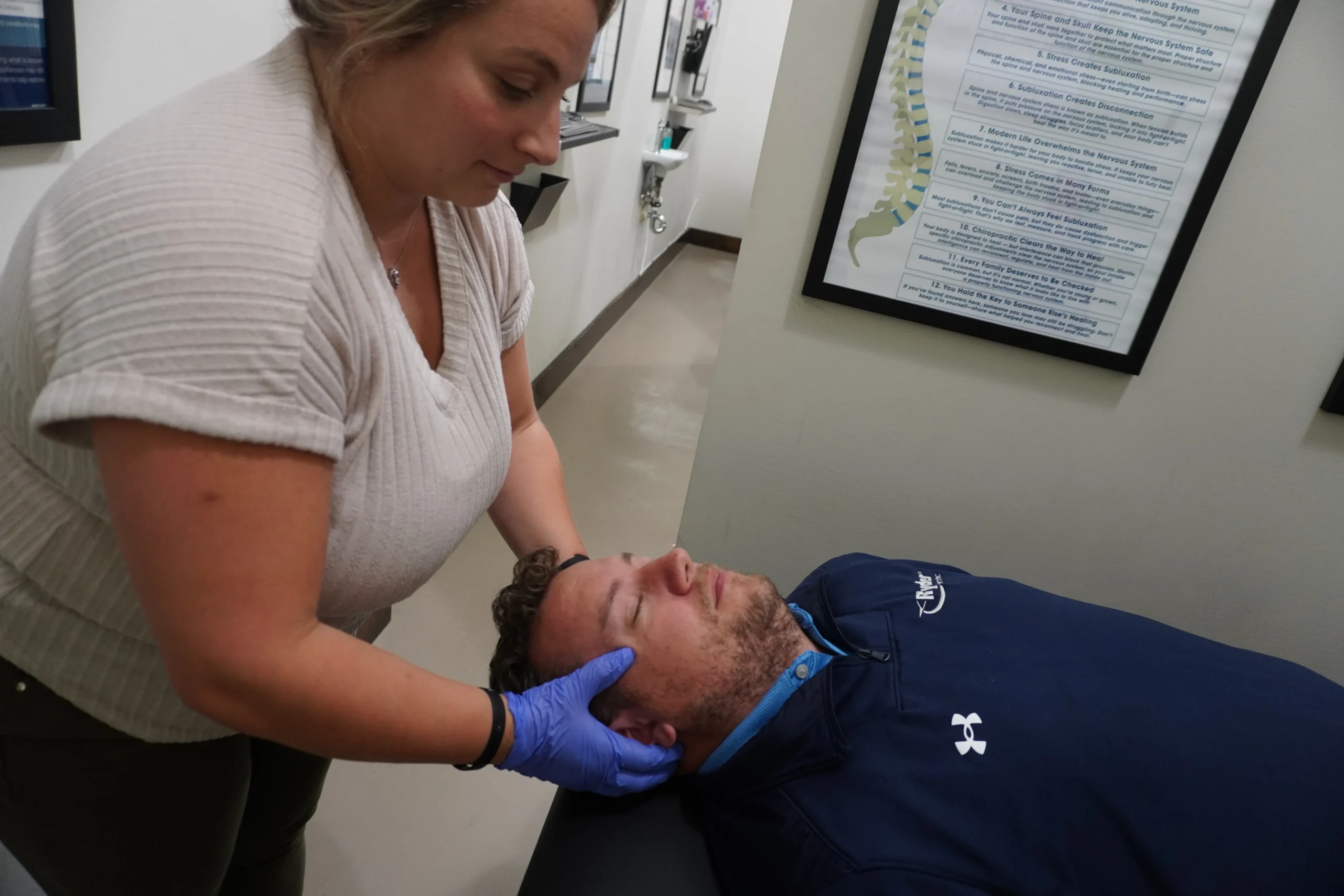
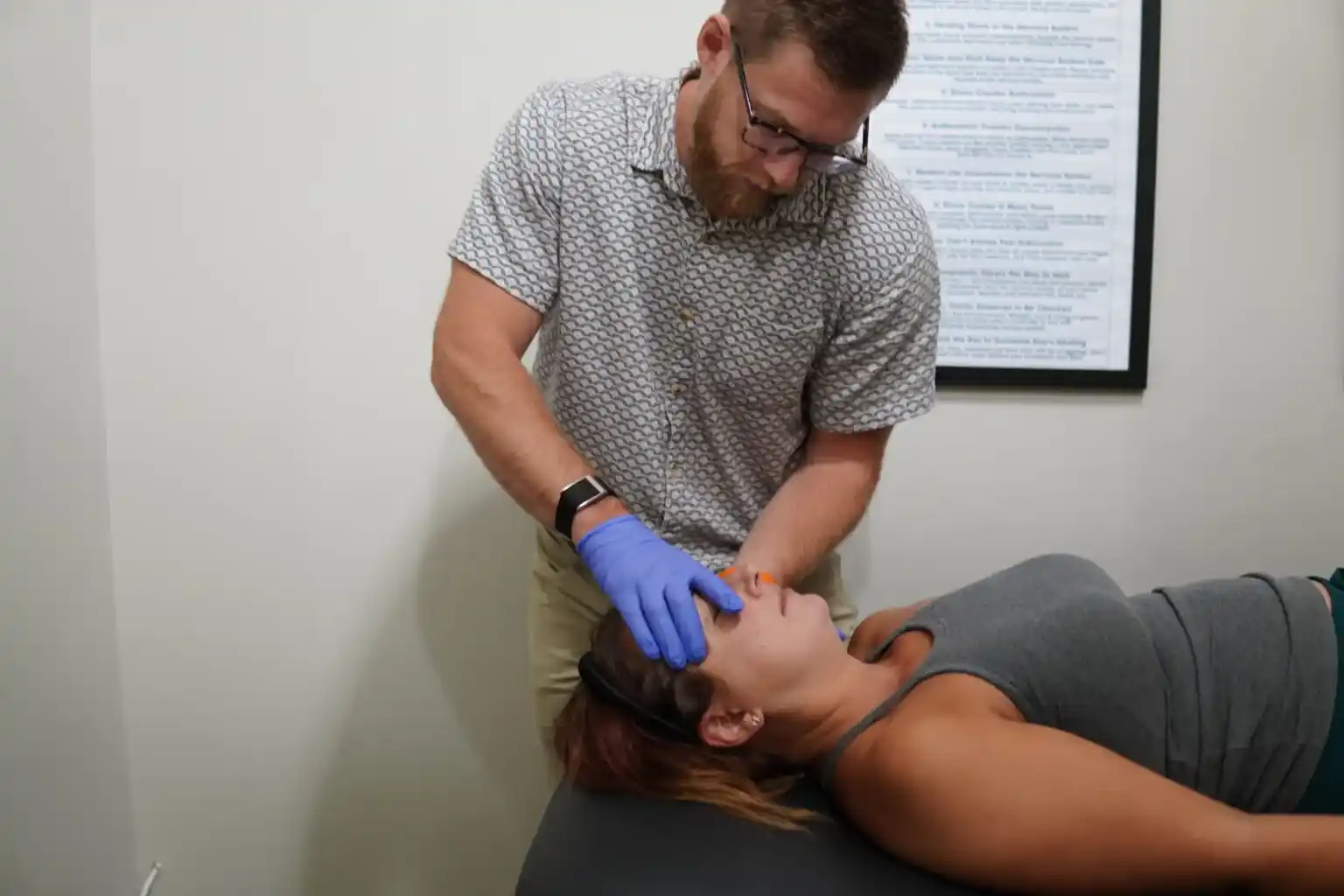
A TMJ evaluation starts with a real conversation about your history, symptoms, and what you have already tried. From there we do a hands-on assessment of the jaw itself, including how it opens, closes, and tracks. We also assess the upper neck, cranial tension patterns, breathing, tongue posture, and nervous system tone. The goal is to give you a clear picture of what is driving the symptoms and whether our approach is a good fit for you. You leave knowing what we see, what it likely means, what a plan would look like, and the estimated timeline. If we do not think we can help, we will tell you and point you in a better direction.
We do a complimentary benefits check at your first visit so you know where you stand before any decisions are made. For patients whose plans include chiropractic benefits, we can often provide a superbill for reimbursement. TMJ-specific coverage varies widely by plan, and most medical insurance does not cover chiropractic TMJ care the way it covers dental work. We are upfront about cost so there are no surprises. If cost is a concern, tell us at your visit and we will walk through your options clearly. What matters most is that you understand what you are signing up for and feel confident about the plan before starting care.
Painless clicking is still information. It usually means the joint is not tracking smoothly, often because of muscle imbalance, disc positioning, or tension patterns in the surrounding structures. Many people live with clicking for years before it becomes painful. Some never develop pain, and some do. There is no way to predict which category you fall into without an evaluation. If the clicking has been stable for a long time and is not bothering you, it may not require care right now. If it is getting louder, more frequent, or starting to feel different, that is worth looking at. A short evaluation can tell you whether the joint is stable or whether the pattern is worth addressing early.

If You Recognize Yourself in These Questions

If you recognize yourself in these questions, you are in good company. Most people who walk through our door have been dealing with jaw symptoms for months or years and have been told some combination of “wear this guard,” “manage your stress,” or “it’s just TMJ.” Those answers are incomplete, and you probably already know that.

What we offer is a full evaluation that looks at your jaw, your neck, your cranial patterns, your breathing, and your nervous system together. You leave with a clear explanation of what is driving your symptoms and whether our approach is a fit for you. No pressure. No vague answers. Just clarity and a real plan.

For a complete breakdown of how we help patients find lasting relief, see our full TMJ care page.

If you are ready to stop guessing, the next step is a scheduled TMJ evaluation. You can book your appointment here and our team will confirm your time.