
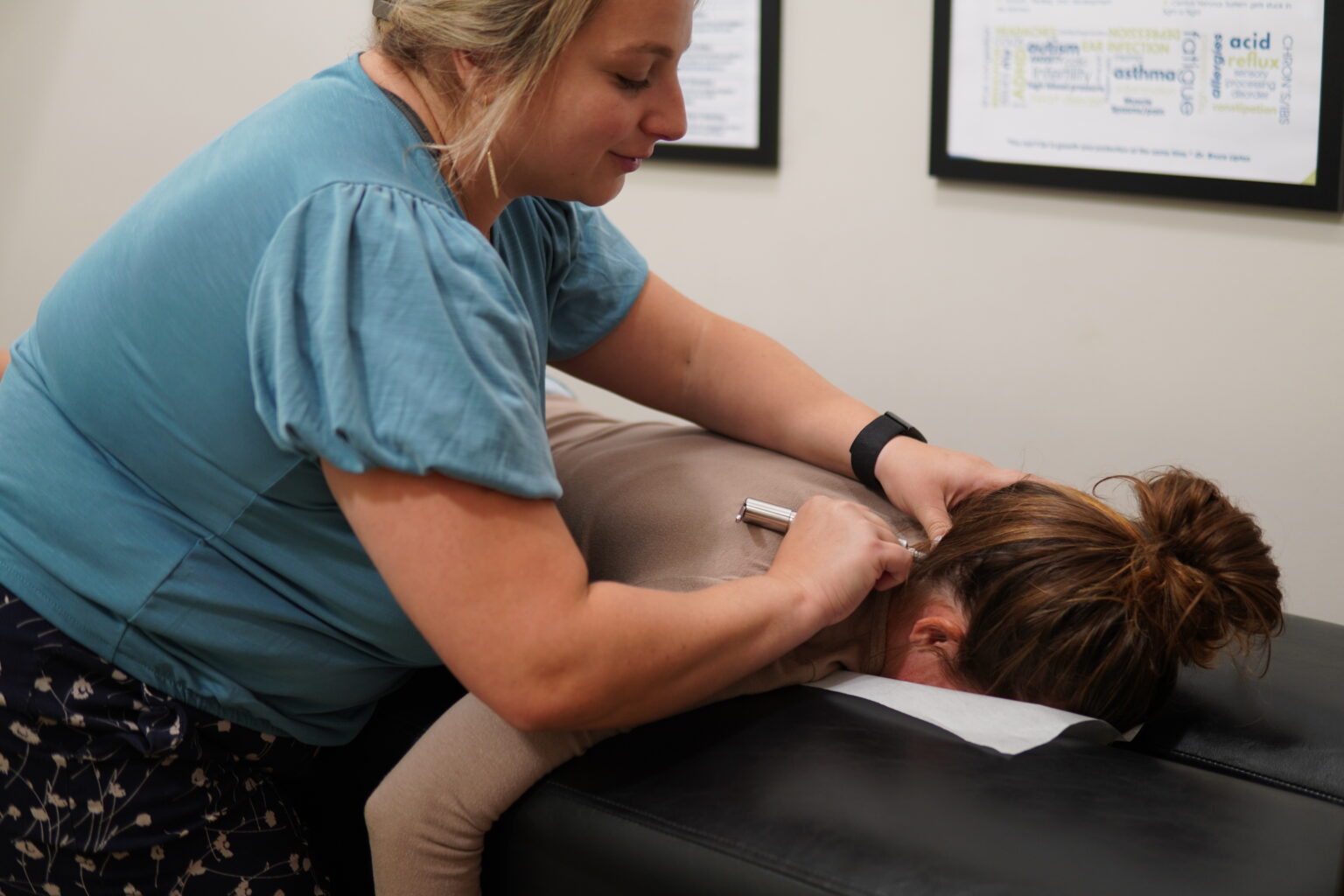
What Is Nervous System Based Chiropractic Care?
Most people think of chiropractic as back cracking and spinal adjustments. Nervous system based chiropractic starts from a different place. The focus is on how well the brain and body are communicating through the spine, brainstem, and cranial system. When that communication breaks down, you see patterns: tension that does not resolve, sleep that never feels deep enough, a jaw that will not stop clenching, a baby who cannot settle. Instead of chasing individual symptoms, we look at the nervous system as a whole and identify where the interference is. The adjustment is gentle, specific, and designed to reduce that interference so the body can regulate on its own.
How Does the Nervous System Connect to Pain and Symptoms?
The nervous system controls every function in the body. When it is stuck in a stress response, the body braces. You feel it as pain, tension, fatigue, poor sleep, digestive issues, or emotional reactivity. This is not a character flaw or something you need to push through. It is a physiological pattern. The brainstem and upper cervical spine are especially vulnerable to tension because they sit at the crossroads of communication between the brain and body. Learn more about our chiropractic technique. When stress accumulates there, the body compensates. Symptoms start stacking. Our job is to find where the system is stuck and help it shift out of that stress pattern.
How Does Nervous System Care Help TMJ and Jaw Pain?
The jaw is one of the first places the body braces when the nervous system is under stress. Clenching, grinding, clicking, popping, and jaw deviation are common signs. A night guard can protect your teeth, but it does not change the reason your jaw is bracing. We look at the jaw alongside the upper neck, cranial bones, and overall nervous system tone. In many cases, the jaw is not the problem. It is the stabilizer. Once the nervous system calms down and the cranial and cervical tension patterns release, the jaw often follows. That is why our TMJ evalations look at the full picture, not just the joint itself.
How Does Nervous System Care Help Babies and Children?
Babies and children cannot tell you what is wrong, but their nervous system shows it. Colic, difficulty latching, poor sleep, sensory overwhelm, chronic mouth breathing, and emotional dysregulation are all signs that the nervous system may be stuck in a stress pattern. Birth itself is physically demanding, and tension in the cranial bones, upper neck, and brainstem can affect how a baby feeds, breathes, and settles. Pediatric nervous system care is extremely gentle. There is no cracking or forceful adjustment. We assess the cranial system, tongue function, and nervous system tone to find what is driving the pattern. Parents often notice shifts in sleep, feeding, and behavior within the first few visits.
What Is the Connection Between the Nervous System and Airway?
Breathing is a nervous system function. When the brainstem is under stress, it can affect how a child breathes, how the palate develops, and whether the airway stays open during sleep. Chronic mouth breathing in children is not a habit. It is a sign that something in the system is not working the way it should. Palate shape, tongue posture, and nasal airway patency are all connected to cranial bone position and nervous system regulation. We evaluate these patterns together. When we address the cranial tension and nervous system stress driving the pattern, breathing often improves alongside sleep, focus, and behavior.
What Does a Nervous System Evaluation Look Like?
Your first visit is not a quick adjustment. It is a thorough evaluation designed to give you clarity. We look at how your nervous system is functioning, where tension patterns live in the spine and cranial system, and what your body is telling us about stress and compensation. For adults, this often includes an upper cervical and cranial assessment, a look at jaw mechanics, and a conversation about what you have been experiencing. For kids, we assess cranial bone motion, tongue function, and nervous system tone using gentle hands-on evaluation. You leave the first visit understanding what we found, what it means, and what the plan looks like. Still comparing offices? Read how to choose a chiropractor.
Who Benefits from Nervous System Chiropractic?
Families come to us at all stages. Adults dealing with TMJ, jaw pain, headaches, neck tension, anxiety, and poor sleep. Parents looking for answers about their baby’s feeding, sleep, or developmental concerns. Teens with jaw clicking, headaches, stress, and breathing issues. It is common for one family member to start care and the rest to follow once they see the results. We work with people who are done guessing and ready for someone to connect the dots. This is not a quick fix. It is a partnership built on clarity, education, and consistent care. Book an appointment.
How Is This Different from Traditional Chiropractic?
Traditional chiropractic often focuses on spinal alignment, posture correction, and symptom management. Nervous system based chiropractic focuses on how the brain and body communicate. The adjustments are gentle. There is no twisting, popping, or forceful manipulation. We use cranial and upper cervical techniques that work with the body, not against it. Many of our patients have tried traditional chiropractic and found temporary relief but no lasting change. The difference is in what we are looking at. We are not just addressing where it hurts. We are finding where the nervous system is stuck and helping it regulate again.
