What Parents of Kids With Focus and Sensory Struggles Need to Know About the Nervous System

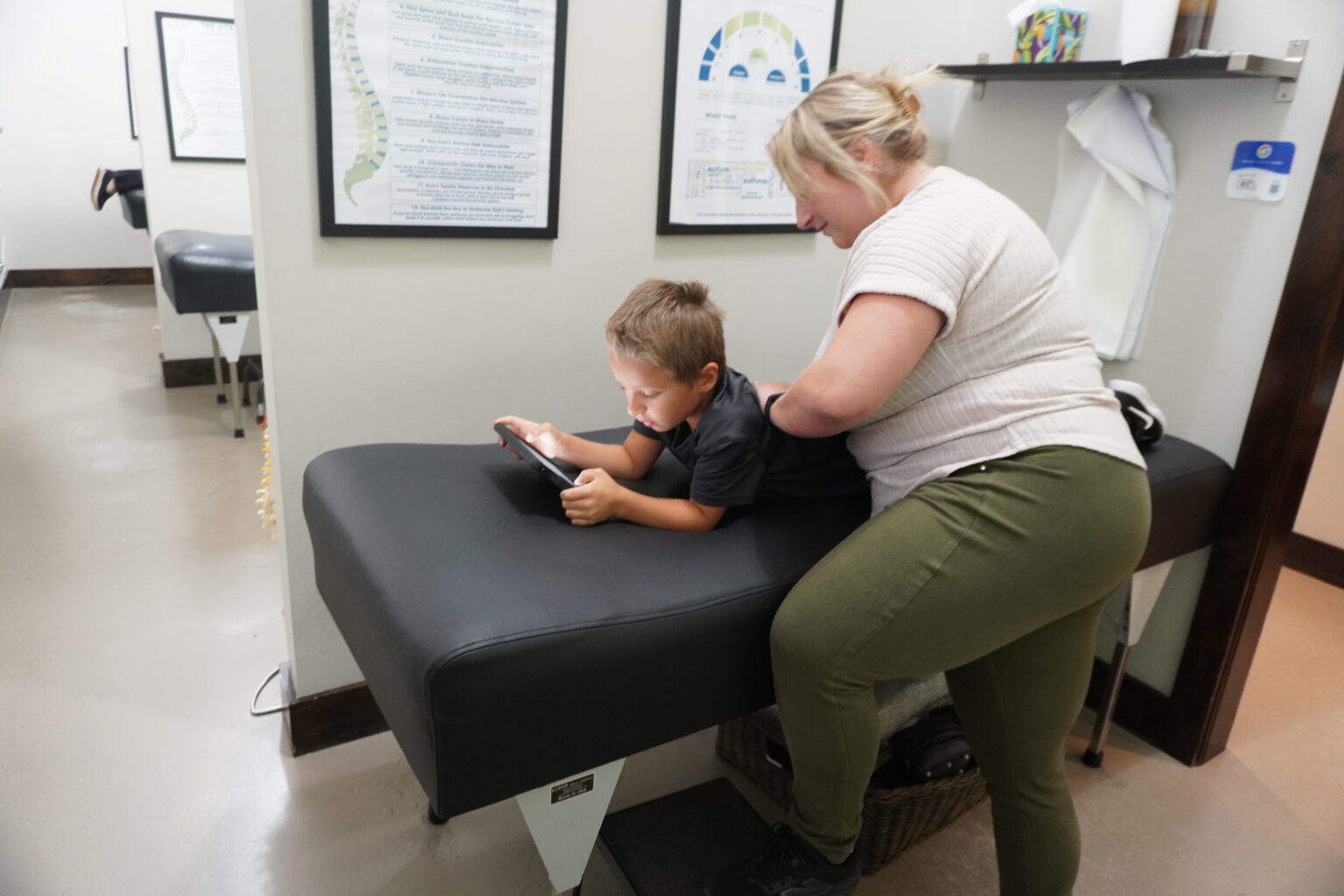
Parent comforting child with sensory and focus struggles

What Is Nervous System Regulation, and Why Do Some Kids Struggle With It?

Nervous system regulation is the body’s ability to shift between calm and active states and recover from stress without getting stuck. For children in Sea Girt, NJ and the surrounding area, this shows up in ways parents recognize: the child who falls apart after school, the one who cannot wind down at bedtime, the one who melts down over a sound or a food texture that does not seem to bother anyone else.
When the nervous system is stuck in overdrive, kids have a harder time focusing, filtering sensory input, and managing their reactions. That is not a behavior problem. It is the nervous system doing its best under load.

This is why understanding nervous system regulation in children can help parents see these challenges from a different perspective.

At Absolute Chiropractic, we assess how the nervous system is functioning and whether structural tension patterns in the cranium and upper cervical spine may be contributing to how hard it is working.

Can a Chiropractor Help a Child With Sensory Processing or Attention Challenges?

We do not diagnose or treat ADHD or sensory processing disorder as medical conditions. What we do is evaluate the nervous system from a structural and neurological standpoint. When the brainstem and upper cervical spine are functioning under tension, it can affect how well the body processes and responds to its environment.
Some children referred to us for focus, regulation, or sensory sensitivity also show cranial tension patterns, restricted upper cervical movement, or signs of chronic mouth breathing. These are structural findings, and they are worth addressing on their own terms regardless of any diagnosis a child carries.

We are transparent about what we can and cannot offer. We work alongside pediatricians, occupational therapists, and developmental specialists, not instead of them. For parents who want to better understand our approach to pediatric chiropractic care in NJ, we explain how gentle structural care may support children at different stages of development.

What Does a Pediatric Chiropractic Evaluation Actually Look Like?

The first visit starts with a full history. We ask about birth, early feeding, sleep, development, and what patterns you have been noticing. We do not rush through it.

The physical exam is gentle and non-invasive. We assess cranial bone movement, upper cervical alignment, and how the nervous system is responding to postural and stress loads. For children where it is clinically relevant, we also screen for airway and palate development in children because both affect nervous system tone.

You leave the first visit with a clear explanation of what we found, what we think it means, and whether we believe our approach is a good fit. If you want a better idea of the process before coming in, you can learn more about what to expect at your first visit.

Why Families With Complex Kids Find Us After Other Approaches Have Stalled

Occupational therapy builds skills and strategies. What it does not always address is why regulation is difficult at the structural level. Families often come to us when OT is helping but something still feels stuck, or when a child is doing everything right and still struggling more than makes sense.
We are not a replacement for any of those providers. What we add is an evaluation of the nervous system from a cranial and upper cervical standpoint. That layer is easy to miss in a standard pediatric workup, and it makes a difference for some children.

Dr. Pellegrino and Dr. Allie Zoda are two of only nine Certified Pediatric Craniopaths in the world. Both practice at Absolute Chiropractic in Sea Girt, NJ. Learn more about our clinical credentials and approach

Is Chiropractic Care Safe for Children With Sensory Sensitivity?

Yes. Care for children uses light fingertip pressure, not the adjusting force used with adults. Technique and intensity are adjusted for every child based on age, size, and what they are comfortable with. Children who are sensitive to touch or sensory input do well here because we move slowly and explain every step before we do it.
We have worked with children as young as newborns. The exam itself is non-invasive. Nothing is done without the parent understanding it first.

Common Questions

We do not treat ADHD as a medical condition and we make no claims about changing a diagnosis. What we do is assess nervous system function. Some children with attention and focus challenges also show cranial and upper cervical tension patterns. When those patterns are addressed, some families notice changes in how their child regulates. We are honest about what we can and cannot offer, and we work alongside the other providers a family is already seeing.
Emotional regulation is partly a nervous system function. When the brainstem and upper cervical spine are working under structural tension, the body stays closer to a stress response than it should. That makes it harder to shift out of big emotions, recover from frustration, or settle down after stimulation. We assess whether structural tension patterns are contributing to that difficulty.
We do not diagnose or treat sensory processing disorder. We evaluate the nervous system for structural tension patterns that can affect how well the body filters and responds to sensory input. For some children, addressing cranial and upper cervical tension changes how they experience sensory load. We explain honestly what we find and what we think it means before recommending any care.
Yes, with the right approach. We work slowly. We explain each step before doing anything. The pressure used with children is very light, often just fingertip contact. Children who are touch-sensitive do well here because we follow their lead and never force anything. Parents are present for every visit.
Occupational therapy works on skills, sensory strategies, and functional tasks. What we assess is the structural and neurological layer underneath: cranial bone movement, upper cervical alignment, and brainstem communication patterns. The two approaches address different pieces of the same picture. We do not discourage OT. Many of the children we see are getting more out of their OT work after the structural layer is addressed.
If your child has been struggling with focus, emotional regulation, sensory sensitivity, or sleep, and the usual explanations have not fully fit, a nervous system evaluation is worth considering. You do not need a referral. The first step is an evaluation where we look at what is happening structurally and give you a clear explanation of what we find.
If you have been trying to piece together why your child is struggling and the answers have not fully lined up, this is worth checking. We will look at what is happening in the nervous system, explain what we find in plain language, and tell you honestly whether we think we can help.

OFFICE HOURS

Monday

Tuesday

Wednesday

Thursday

Friday

Saturday

Sunday

chiropractic wall township nj absolute chiropractic sb