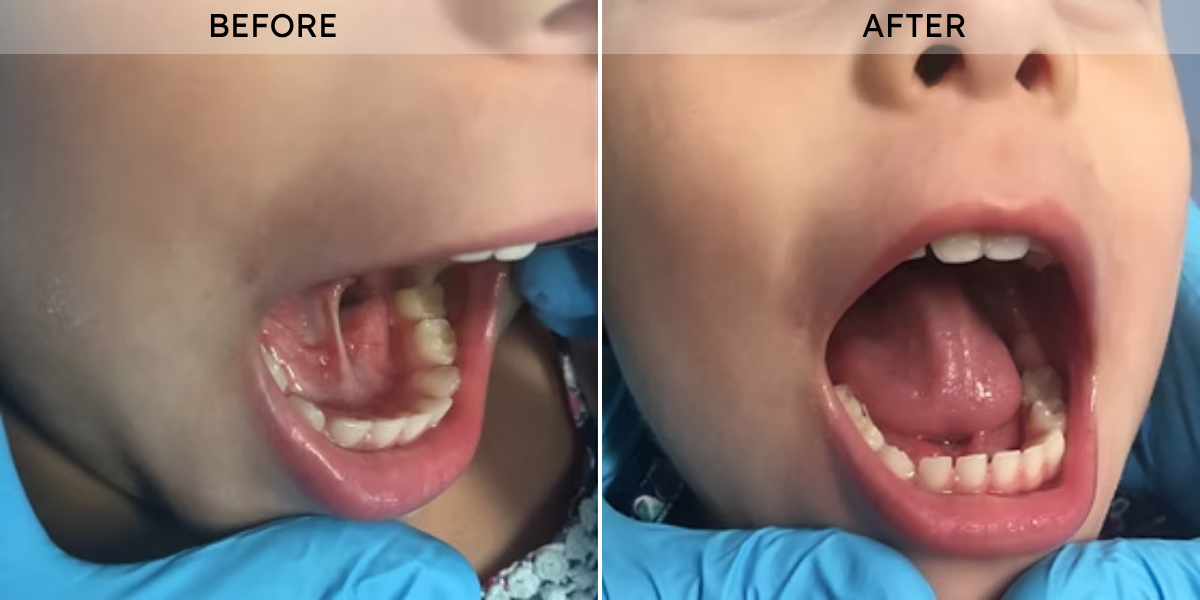
The short version: a tongue tie isn’t only about the tongue. It affects how the entire cranial-spinal system has been organizing itself since birth, sometimes earlier. The release frees the tongue. Chiropractic care helps the rest of the system learn how to use it. Without that piece, the surgery treats the structural issue but leaves the compensations in place.
The short version: a tongue tie isn’t only about the tongue. It affects how the entire cranial-spinal system has been organizing itself since birth, sometimes earlier. The release frees the tongue. Chiropractic care helps the rest of the system learn how to use it. Without that piece, the surgery treats the structural issue but leaves the compensations in place.
This post explains what chiropractic adds before and after a tongue tie release, when to schedule, and how the work fits alongside your IBCLC, pediatric dentist, and ENT.
A tongue tie restricts how the tongue moves. Babies with significant ties often can’t lift the tongue to the palate, can’t extend it past the lower gum line, or can’t move it side to side well. To feed, sleep, breathe, and develop, the baby compensates. Those compensations show up throughout the whole system.
The cranial bones get pulled into asymmetric patterns by the way the tongue and jaw are working. The upper neck holds tension to stabilize the head while the baby fights to feed. The chest and shoulders stay tight from the postural strain of compensating. The nervous system stays in a low-grade bracing state because feeding never fully calms it down the way it should.
When the release happens, the tongue is suddenly free to move in ways it couldn’t before. But the rest of the body still has the compensations baked in. The cranial bones are still pulled the same way. The upper neck is still tight. The patterns the baby has been using to feed for weeks or months don’t disappear because the tissue was released. They have to be unwound.
Care before the release lowers the tension the surgeon is working against, which often makes the procedure easier on your baby. Care after the release helps your baby let go of old compensations and learn the new pattern. The lactation consultants and pediatric dentists who recommend it consistently see better outcomes when chiropractic care is part of the plan.
The tongue is connected to the floor of the mouth, the hyoid bone, the jaw, and through fascial connections, to the upper neck and the rest of the cranial-spinal system. When the tongue is tied, that whole chain is under tension all the time, not only when the baby is feeding.
We see consistent patterns in babies with significant ties. The cranial bones tend to show tension at the temporal bones and the occiput. The upper neck (especially C1 and C2) is often guarded and limited in motion. The jaw deviates slightly to one side. The shoulders and ribs are held higher than they should be. The nervous system runs hot, with sleep that’s restless and feeds that don’t fully settle the baby.
What chiropractic doesPre-release visits have two purposes. The first is to release as much accumulated tension as we can before the procedure. The cranial bones, the upper neck, and the soft tissue patterns around the jaw and throat have been holding for weeks or months. The more we can settle that tension before the release, the cleaner the post-release recovery tends to be.BEFORE the release
The second purpose is to make the procedure itself easier. Babies with significant cranial and upper neck tension often can’t comfortably stay in the position the provider needs them in for the release. They cry harder, they stiffen, and the procedure becomes more stressful for everyone. Care before the release helps the baby tolerate the position better and reduces the muscular guarding that can make the release feel more reactive than it needs to be.
The second purpose is to make the procedure itself easier. Babies with significant cranial and upper neck tension often can’t comfortably stay in the position the provider needs them in for the release. They cry harder, they stiffen, and the procedure becomes more stressful for everyone. Care before the release helps the baby tolerate the position better and reduces the muscular guarding that can make the release feel more reactive than it needs to be.
Post-release work is where the most visible changes happen. Once the tongue is free, the cranial-spinal system has to reorganize. That reorganization is where our care matters most.
In the first few visits after the release, we focus on releasing the compensations that built up while the tie was restricting things. The cranial bones often shift noticeably as the constant tongue tension comes off. The upper neck softens. The jaw deviation often resolves quickly once the structural input changes. We’re not forcing any of this. We’re creating space for the system to reorganize, and then we’re letting the baby’s nervous system do the work.
We also support the new feeding pattern. The tongue can suddenly do things it couldn’t before, but the baby has to learn how to use it. Coordination, suck pattern, and the nervous system’s ability to stay calm during feeds all need to settle into a new normal. Chiropractic care supports that transition. So does working with your IBCLC, who is the right person to assess the actual feeding mechanics post-release.
Sleep often improves dramatically in the first few weeks post-release with chiropractic care. So does general regulation. Parents frequently tell us their baby seems like a different baby once everything settles. That’s the system finally not having to brace anymore.
The standard timeline we recommend, and the one most local IBCLCs and dentists are aligned on:
Pre-release: One visit one to two weeks before the procedure. Two visits if the baby has significant tension or there’s time before the release.
Post-release first visit: Within 24 to 72 hours after the release. This is the highest-leverage window. The system is actively reorganizing and care at this point makes the most difference.
Post-release follow-up visits: Two to four more visits over the next four to six weeks, spaced based on what we see. Most babies are settled and discharged from active care within six weeks of the release.
Some babies need fewer visits. Some need a few more, especially if there were significant feeding issues or other patterns alongside the tie. We re-evaluate at each visit and tell you what we’re seeing.
Latch and feeding are mechanical and neurological. Mechanically, the tongue, jaw, lips, and palate all have to work together. Neurologically, the baby’s nervous system has to be calm enough to coordinate the suck, swallow, and breathe pattern without bracing.
The release addresses the mechanical restriction at the tongue. Chiropractic care addresses the surrounding mechanics (cranial bones, upper neck, jaw deviation) and the nervous system piece. Your IBCLC addresses the actual feeding skill, latch position, and milk transfer. All three pieces working together is what produces the strongest outcomes.
We work with several of the local providers who do tongue tie releases and lactation support. We’re not trying to replace their work. We’re trying to fit cleanly alongside it.
If you’re already working with an IBCLC, bring us into the conversation. We can communicate with them directly about what we’re seeing structurally and what they’re seeing mechanically. The same goes for your pediatric dentist or ENT. Most of them are happy to coordinate, and the families benefit when everyone is on the same page.
If you don’t have all the pieces in place yet, we can help connect you. We have a short list of local providers we trust for releases, lactation support, and the rare cases that need ENT involvement. We’ll never tell you which provider to use, but we’ll make sure you have options.