
Most postpartum information centers on the body’s recovery: pelvic floor, abdominal separation, posture from feeding and carrying a baby, sleep deprivation. The jaw rarely comes up. And yet a meaningful number of new moms are clenching their way through the first year without knowing what is driving it.
If you are noticing tension in your jaw, headaches starting at the base of your skull, ear fullness, neck pain that travels up into your face, or you are waking with a sore jaw, postpartum TMJ may be the throughline.
WHY POSTPARTUM TMJ IS MORE COMMON THAN IT GETS CREDIT FOR
Pregnancy and birth shift cranial and spinal mechanics significantly. The pelvis adapts. The thoracic spine adapts. The cervical spine and cranium adapt. Most of those adaptations do not fully reverse on their own. They need movement, time, and sometimes care to integrate.
Then add what comes after birth. Round-the-clock feeding postures, whether breastfeeding or bottle, concentrate strain in the upper cervical spine and jaw. Sleep deprivation runs the nervous system in a chronic alert state, which feeds clenching. Postpartum hormones affect ligamentous tension in ways that can leave the jaw and upper neck more reactive.
And the postpartum mental load: the worry, the planning, the not-quite-ever-resting. Many women carry that load in their jaw. That is not a personal failing. It is what happens when the system is managing too much at once.
WHAT TMJ LOOKS LIKE IN POSTPARTUM MOMS
Classic TMJ descriptions emphasize jaw clicking and pain with chewing. Postpartum TMJ often shows up differently:
- Waking with a sore jaw or sore base of skull
- Headaches starting behind the eyes or at the back of the neck
- A jaw that clicks when chewing, yawning, or talking
- Ear fullness, ringing, or pressure that does not feel like an ear infection
- Tension that does not release even when the baby finally sleeps
- Tightness that builds through the day and peaks at night
- Neck pain that gets attributed to carrying the baby wrong
- Clenching during stressful moments, sometimes audible to a partner
If you have caught yourself with your teeth pressed tightly together while not chewing, that pattern is worth paying attention to.
WHY CHIROPRACTIC CARE CAN HELP, AND WHY POSTPARTUM-SPECIFIC MATTERS
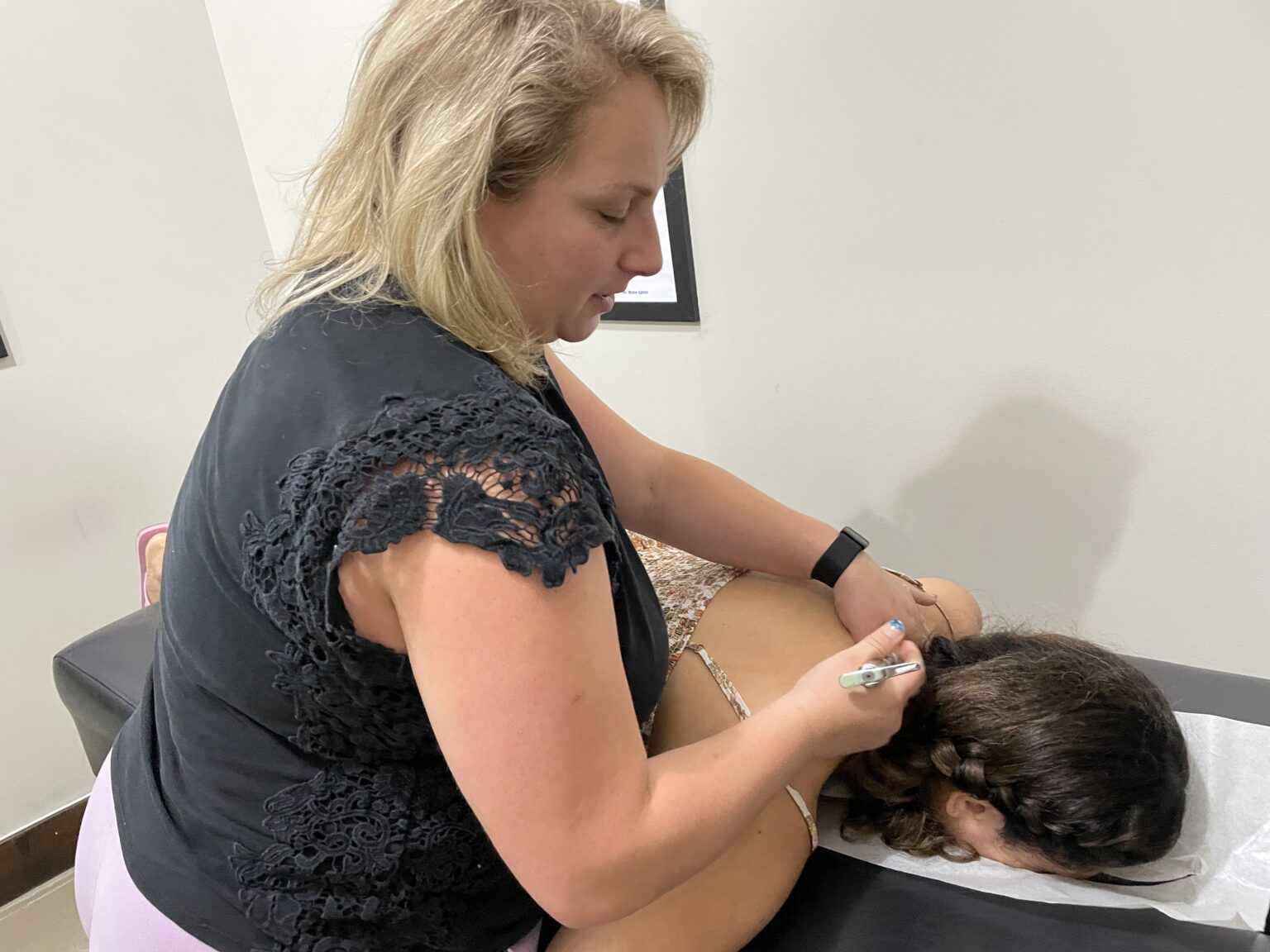
Postpartum care needs to be gentle. Specific, low-force, neurologically-based care used in our TMJ chiropractic approach addresses the upper cervical spine, jaw mechanics, and cranial system together, because these are one connected system. It also helps the nervous system move out of the chronic alert pattern that is reinforcing the clenching.
When relevant, we coordinate with pelvic floor PTs, postpartum mental health providers, and IBCLCs. Postpartum recovery is rarely a single-discipline thing.
Practically: our postpartum chiropractic care in Wall Township, NJ is designed to accommodate new motherhood. Babies are welcome. Schedules work around naps. Care plans account for the fact that recovery takes longer than a month and should be approached that way.
WHEN POSTPARTUM TMJ NEEDS ATTENTION
- TMJ symptoms have been building for weeks or months postpartum
- Jaw clicking, locking, or asymmetry is showing up
- Headaches are increasing in frequency or intensity
- You are avoiding certain foods because of jaw discomfort
- Sleep quality is worsening even when the baby sleeps
- You catch yourself clenched throughout the day
MOVING FORWARD
Postpartum TMJ responds well when it is treated as part of recovery, not as a separate problem. If any of the patterns above sound like you, an evaluation will tell you what is driving it and what to do, gently, specifically, and on your timeline.
Common Questions
Is TMJ during postpartum normal?
Common, but not something to just accept. The combination of birth-related cranial and spinal changes, feeding postures, sleep deprivation, and postpartum hormones creates conditions where TMJ patterns develop easily. They respond well to care when addressed early.
Will postpartum TMJ resolve on its own?
Sometimes, especially if sleep improves and feeding postures change. More often, the patterns lock in if not addressed and continue past the early postpartum period. If symptoms have been building for more than a few weeks, professional care usually moves things faster than waiting.
Can I bring my baby to the appointment?
Yes, Babies are welcome at postpartum appointments. We will work around feeds and naps.
Do I need to wean before getting chiropractic care?
No, Chiropractic care is fully compatible with breastfeeding. Addressing postpartum tension can sometimes ease feeding postures.
How is postpartum TMJ different from regular TMJ?
The drivers are different. Postpartum TMJ usually involves recent cranial and cervical adaptations from pregnancy and birth, plus the nervous-system load of new motherhood. The care approach reflects that: gentler, more specific, and integrated with overall postpartum recovery.
