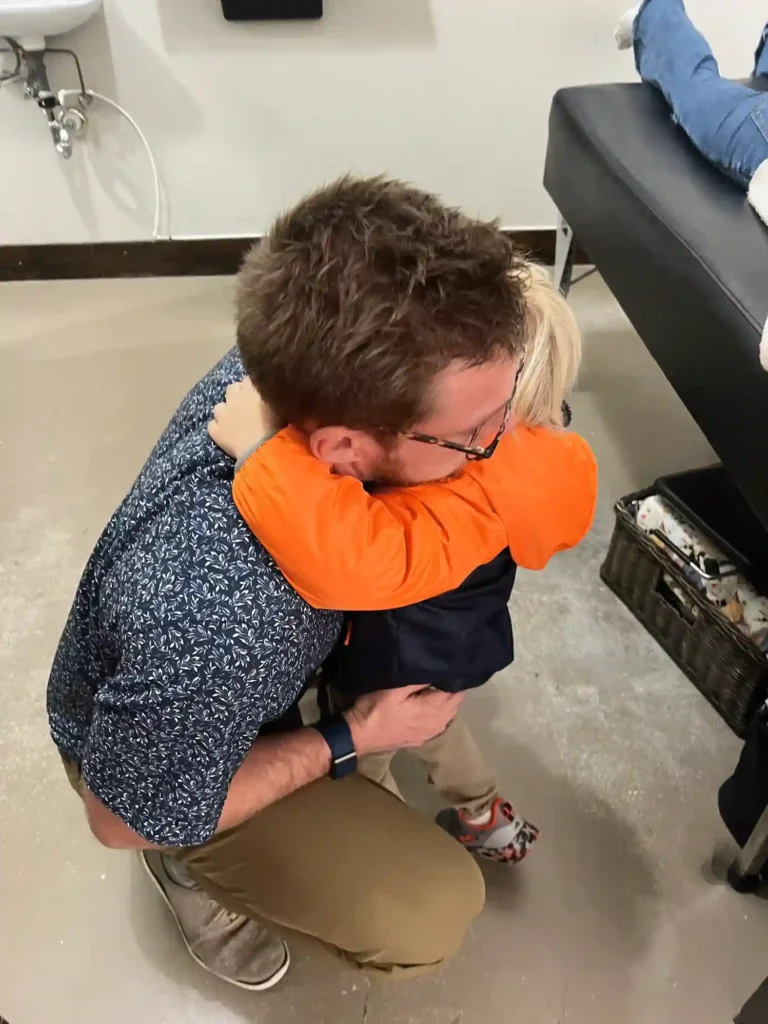
Is Chiropractic
Safe for Babies?
Yes, when the chiropractor is trained to care for babies. If you are asking, you are probably picturing an adult adjustment on a tiny baby, and that picture would worry anyone. A baby visit looks nothing like it. Our doctors use about the pressure you would use on your own closed eyelid, while your baby lies in your lap or right beside you. Parents tell us the same thing afterward: no cracks, no pops, and often a baby who fell asleep halfway through.
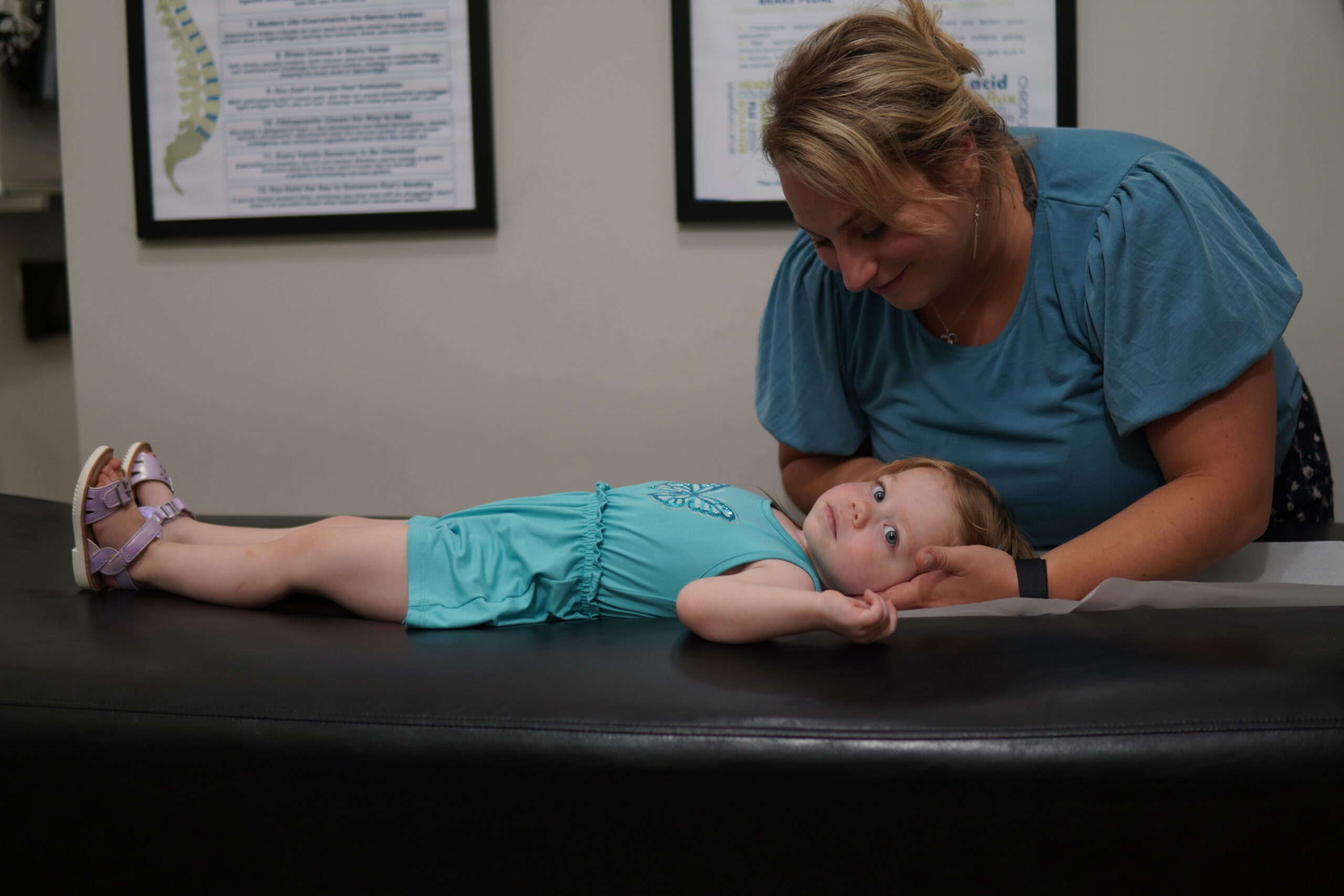
What we look at in a baby exam
Many parents come to us after hearing that everything looks fine, while their gut says something is still off. Our exam looks at four things, and at how they work together:
Tongue function
How your baby's tongue moves, not only how it looks. We check how it lifts, reaches and moves during a suck, because the tongue drives the latch and the swallow, and it rests against the roof of the mouth as your baby grows.
Head, palate and jaw
The shape of your baby's head and the roof of the mouth, and how the jaw opens and moves. A flat spot, a high palate or a jaw that pulls to one side can make feeding harder than it needs to be.
The nervous system
Reflexes, muscle tone and how easily your baby shifts from alert to calm. We think of it as a gas pedal and a brake. A baby stuck on the gas startles easily, fights sleep and has a hard time settling.
Growth, development and adaptability
Where your baby is with head control, tummy time and rolling, and how well they handle feeds, sleep and new things. These early skills build on each other, so we look at them early.
These pieces affect each other. A tight neck can show up as a latch that only works on one side. A nervous system stuck on the gas can show up as short naps and hard feeds. When we see how the pieces fit, we can show you what is behind what you see at home, and how we would help.
What we will never do with a baby
The fear we hear most from parents is that a chiropractor will treat their baby like a small adult. So here is exactly what does not happen in our office.
No twisting or cracking.
There is no twisting, cracking or popping of your baby’s neck or back, and no quick movements of any kind.
You stay with your baby.
Your baby stays in your arms or right beside you the whole time.
We never brush off what you see.
You know your baby. If you feel something is off, we take it seriously and look until we can explain it, even when you have been told everything is fine.
Nothing happens without your okay.
We explain each thing before we do it, and we stop whenever you or your baby need a break.

Some babies do best with more than one set of hands. When a lactation consultant, feeding therapist or pediatric dentist would help, we work alongside them while your baby's care goes on, and we keep everyone in the loop.
How gentle is it, and how will you know it is helping?
Most parents brace for something dramatic and then watch their baby relax, or fall asleep, halfway through. The touch is light and slow, and we follow your baby’s cues, stopping for a feed or a cuddle whenever they need one. Because it is so quiet, it is fair to wonder how you will know anything changed. So before we start, we ask what you most want to see: a calmer feed, an easier latch on both sides, a longer stretch of sleep, a head that turns both ways. We check those same things with you at every visit, and if we are not seeing a change, we tell you. You can also read about how we help babies with reflux and colic.

What a first visit looks like
It starts with a free 15 minute call with one of our doctors.
01
We start by listening.
Tell us what feeds look like, how your baby sleeps, which way they like to turn and what you have already tried. Bring your questions and your worries. Nobody is rushing you.
02
Then we gently check.
We check tongue function, the head, palate and jaw, your baby's nervous system and where they are developmentally, all with very light hands. You are right there the whole time, and we pause whenever your baby needs you.
03
We tell you what we found, in plain words.
You will leave knowing what we found, what we think is behind it and how we would help. If you want to know more about the gentle cranial work we use, here is how craniopathy works. When another provider would add something, we tell you who and work with them.
Why parents bring their babies in
Most parents call us after noticing a few of these:
Arching the back or pulling away during feeds
Always turning the head to one side, or a flat spot on one side
Latching well on one side but not the other
Fussing or crying when laid flat on their back
Short naps and a baby who wakes often
Reflux or spit up that has not settled with feeding changes
A long or difficult birth
Being told it is just colic, with a feeling that something is still off
You know your baby better than anyone. If a few of these sound familiar, a short call is an easy way to talk it through. Here is more on why babies arch their back while feeding.
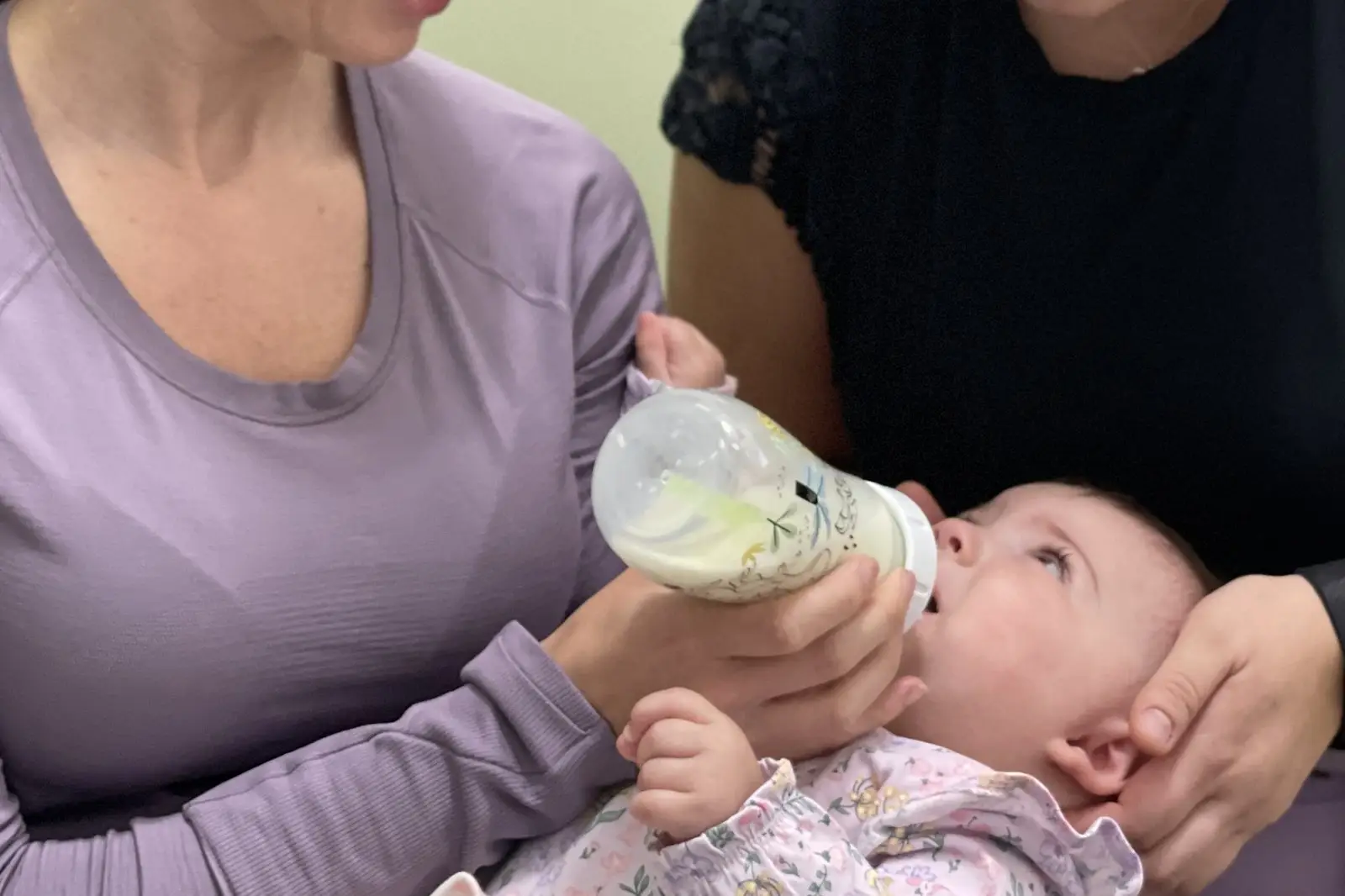
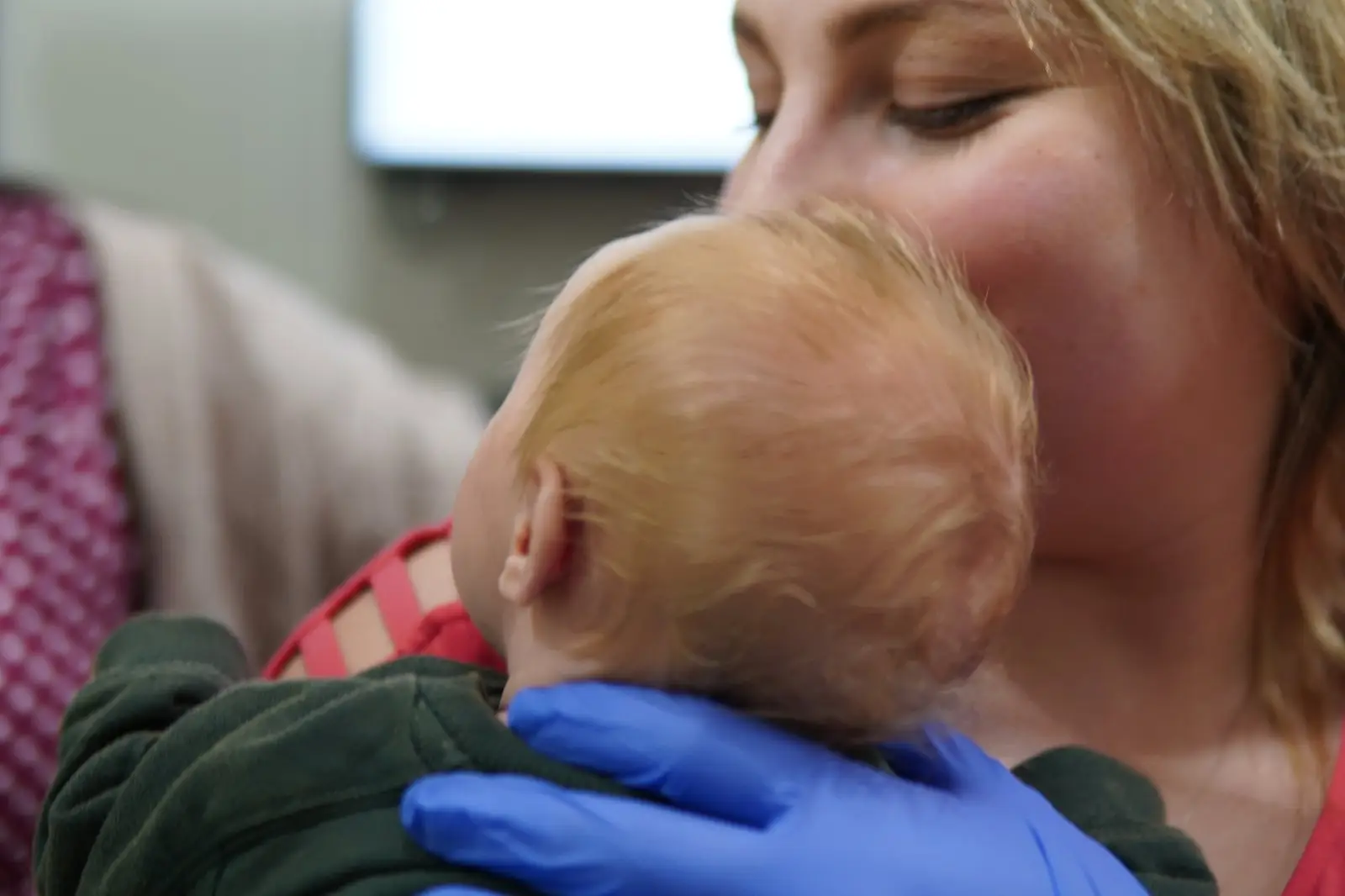
Credentials to ask about for your baby
Not every chiropractor is trained to care for babies. Chiropractic school spends years on the adult spine and very little time on newborns. Caring for babies well takes years of extra training after school. Our guide on how to choose a chiropractor lists the questions to ask.
Before you book anyone for your baby, ask about:
Pediatric chiropractic training, and certification beyond the basic degree
Gentle cranial training for babies
How often they see babies, every week or now and then
Whether their exam covers tongue function and the nervous system, along with the spine
A chiropractor who works with babies should be glad to answer all of these. Our team includes a Diplomate of the Academy Council of Chiropractic Pediatrics (DACCP), the highest certification in pediatric chiropractic, and two of the eleven Certified Pediatric Craniopaths (CSCPP) in the world work here. If you have questions, book a free 15 minute call and ask one of our doctors.
Questions Parents Ask Us About Babies and Chiropractic
Yes, with a chiropractor trained to care for babies. The work is light and slow, about the pressure you would use on your closed eyelid, with no twisting or cracking. Every visit starts with an exam, so we know what your baby needs before we begin.
Four things: how your baby's tongue moves and works during a suck, the shape and motion of the head, palate and jaw, how the nervous system handles alert and calm, and where your baby is with growth and development. We look at how they connect, because a problem in one often shows up in another.
No. There is no cracking, popping or twisting. Most of the work is done with a fingertip, and plenty of babies fall asleep during their visit.
Our doctors see newborns in their first weeks. A lot of parents call after a long or hard birth, or when feeding has been a struggle from day one. Ask about your baby's age on your free call.
If your gut says something is still off, yes. Colic is a name for a lot of crying, and parents often want to know what is behind it. On the call we ask about feeds, sleep and how your baby moves, and we tell you honestly whether a visit makes sense.
No, x-rays are not routine for babies. We only image when something specific in the exam tells us we need to, and we explain why first.
No, and many parents come to us for a second look. We are glad to share what we find with your pediatrician. One thing never waits: call your pediatrician or get medical care right away if your baby has a fever, is not feeding, is losing weight, has blood or green color in their spit up, or is having trouble breathing.
Mostly gentle touch. Some babies fuss for a moment when we check a tight spot, the way they might during a diaper change. We pause and you comfort them.
Ask about their pediatric training and certification, how often they see babies, and whether their exam covers tongue function and the nervous system. Someone who cares for babies every week will answer all three without hesitating.
Some do and some are unsure, often because they have not seen what gentle pediatric chiropractic looks like. You do not need their okay to come in, and many parents come to us for a second look after hearing everything looks fine. We are glad to share what we find with your pediatrician. Our exam looks at tongue function, which matters for latch, swallow and the palate, the shape and motion of the head, palate and jaw, the nervous system, and growth and development, and care is light and gentle, with no cracking.