
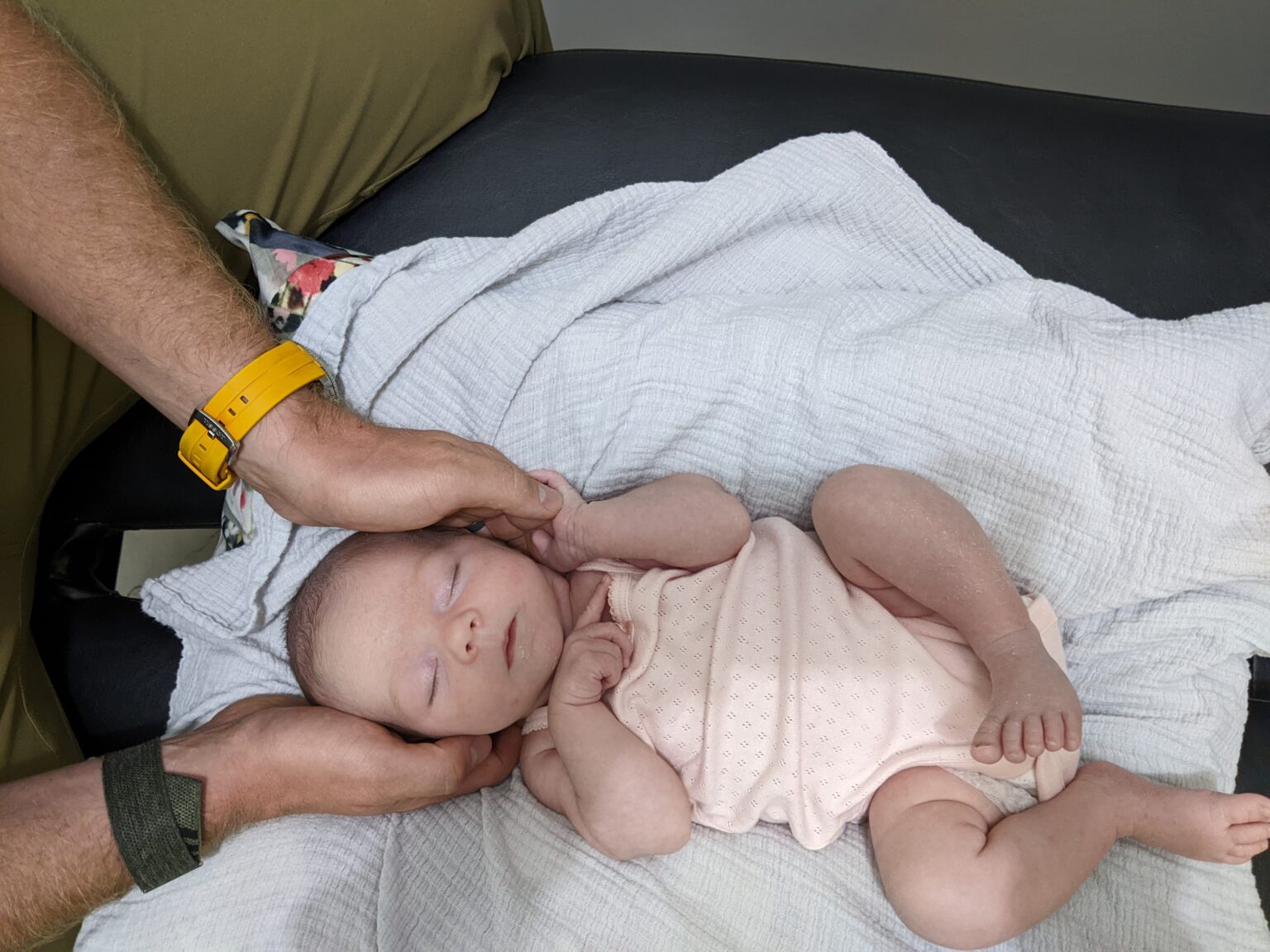
Gentle, Nervous-System Focused Care for Flat Spots, Head Turning, and Cranial Imbalances
When you’re looking at your baby every day, you notice everything — including the little things that don’t look quite “even.”
A flat spot on one side. A head that always turns the same way. A shape that doesn’t match what you expected.
And while this is incredibly common… that doesn’t make it any less stressful.
Parents tell us all the time:
“I just want to make sure I’m not missing something.”
“I don’t want it to get worse.”
“I’m scared I waited too long.”
You’re not alone. You’re not late.
And most importantly — there’s a reason your baby’s head is shaping the way it is.
Our job is to help you understand it, ease the underlying tension, and support healthy, comfortable development.
Why Head Shape Changes Happen (In a Way That Finally Makes Sense)
A baby’s head isn’t just soft — it’s incredibly responsive to tension, comfort, and position.
Most head shape concerns come from one or more of these patterns:
✔ Neck or upper-body tension
If a baby prefers one side, they’ll spend more time resting on that area — which can lead to flat spots.
✔ Cranial strain patterns from pregnancy or birth
Long labors, fast labors, vacuum/forceps, breech positioning, or even just being “snug” inside the womb can create compressions that the body struggles to unwind on its own.
✔ Reflux, gas, or discomfort
If it hurts to turn one way or lie flat, babies naturally avoid that position.
✔ Tongue tie or oral tension
Yes — how the tongue moves impacts head and neck tension, which impacts head shape.
✔ Sleep position habits
Back-sleeping is safe and important, but babies also need variety and movement.
None of this is your fault.
None of this means anything is “wrong” with your baby.
It simply means the nervous system needs a little help unwinding and moving freely.
Why Nervous-System–Based Chiropractic Helps Head Shape So Much
Flat spots aren’t just about the skull — they’re about how the nervous system controls movement, comfort, and muscle tone.
When tension eases in the:
Neck
Jaw
Cranial sutures
Upper back
Diaphragm
…babies suddenly move more freely. They turn their heads both ways. They settle better. They feed more comfortably. And they stop lying on the same spot over and over.
Parents tell us:
“Her head started rounding out after she finally let go of that tension.”
“He’s turning both ways now — I didn’t realize how stiff he was until it changed.”
This is why chiropractic is so powerful here:
We don’t just chase the flat spot. We help the whole system relax and work better.
How We Evaluate Your Baby’s Head Shape
Your baby’s first visit is gentle, slow, and focused on understanding their unique pattern.
We look for:
● Preferred head-turning direction
(Almost always linked to neck or jaw tension.)
● Cranial motion and flexibility
Are certain areas tight, compressed, or restricted?
● Symmetry across the parietals, frontal bone, and occiput
● Signs of oral tension
Tongue tie, lip tie, shallow latch, or jaw tightness.
● Neck range of motion
Can they turn comfortably both ways?
● CVAI & CI measurements
Simple, quick assessments to help us track progress clearly — without stressing your baby.
● Comfort and regulation cues
Because a calm baby heals best.
You’ll understand everything we see before we even begin care.
Our Approach: Gentle, Specific, Baby-Led
We use light, sustained contacts — about the pressure you’d use to check a peach — to help ease tension in the:
Neck
Occiput
Jaw
Cranial bones
Upper back
Diaphragm
Nothing forceful. Nothing scary.
Most babies relax, melt into it, or fall asleep.
Parents often say:
“I’ve never seen my baby so calm.”
“She finally turned her head both ways on the ride home.”
Does This Replace Helmeting?
Not necessarily.
We work with families who:
Want to avoid helmeting
Want to try conservative options first
Are using a helmet and want the best results possible
Want to continue supporting head shape long after the helmet comes off
Chiropractic + helmet therapy together often lead to faster and more complete changes, because both comfort and symmetry improve at the same time.
When to Get Help for Baby Head Shape
Reach out if you notice:
A flat spot on one side or the back
Baby prefers looking one way
Baby hates tummy time
Feeding is uneven on one side
Baby arches or seems uncomfortable lying flat
Head shape seems to be getting more asymmetrical
You’re unsure or just want clarity
You don’t have to wait for a referral. Trust your instincts — they’re usually right.
What Parents See After Care Begins
Every baby is different, but common changes include:
Turning their head both ways
More comfort lying on their back
Better feeding (especially when oral tension is involved)
Easier tummy time
Less fussing or “arching”
A more relaxed jaw and neck
A more rounded head shape over time
The earlier we start, the easier it is — but it’s never “too late.”
Ready to Understand Your Baby’s Head Shape?
We’ll walk you through every step, help you make sense of what you’re seeing, and give your baby the best chance at comfortable, healthy development.
Let’s talk about what you’re noticing — and what’s possible.
Frequently Asked Questions
What are cranial adjustments for infants?
Can chiropractic help with flat spots or plagiocephaly?
Is infant chiropractic safe for babies with head shape concerns?
What causes my baby to always turn their head the same direction?
A head-turning preference is usually linked to neck tension, jaw tightness, or discomfort from reflux or oral restrictions. When one side feels easier or less stressful, babies default to it — which can lead to flat spots. The goal isn’t to force movement, but to make both directions feel equally comfortable.
Do cranial adjustments replace helmet therapy?
Not always — but they can often reduce the need for one when started early, or improve outcomes if a helmet is already being used. Helmets change shape from the outside; cranial work helps from the inside by easing tension and improving movement.
What is a craniologist for babies?
What is cranial therapy for babies?
Cranial therapy is gentle work that helps the bones, tissues, and sutures of the head move more freely. Babies with flat spots, tight necks, or difficulty settling often benefit because better cranial motion leads to better comfort, feeding, sleep, and head shape development.
