
Jaw Grinding, Chronic Fatigue, and Cranial Compression: A Pattern Most Providers Miss
Many people who grind or clench their teeth have been told it is a stress habit. They get a night guard, maybe some physical therapy for their neck, and are sent on their way. Years later, they are dealing with fatigue that does not resolve with rest, immune challenges their doctors cannot fully explain, and snoring that has gotten progressively worse. The jaw is rarely part of that conversation.
At Absolute Chiropractic in Sea Girt, NJ, this pattern is one we see regularly. The connection between chronic jaw loading, cranial bone compression, cerebrospinal fluid drainage, and systemic fatigue is well-established in neurologically-based chiropractic and cranial research. It is also one of the most overlooked findings in patients who have been to multiple providers without clear answers.
What Happens to the Cranial Bones When You Grind Your Teeth
The skull is not a fixed, solid structure. It is made up of individual bones that have sutures between them, and those sutures allow for a small but significant degree of motion that supports normal brain and fluid function. When a person grinds and clenches over months and years, that repetitive force is transferred upward through the jaw into the cranial vault.
The parietal bones sit on top of the skull and meet each other along the sagittal suture, a joint that runs front to back along the top of the head. Under normal conditions, this suture has slight mobility that supports the rhythmic circulation of cerebrospinal fluid, or CSF. CSF is the fluid that surrounds and cushions the brain and spinal cord, removes metabolic waste, and carries nutrients. Its circulation depends partly on this cranial motion.
When the parietal bones are compressed together by years of jaw loading and bracing, the sagittal suture loses that mobility. CSF drainage through the cranium slows. This stagnation is not just a mechanical curiosity. It has real downstream effects on how the brain clears waste, regulates inflammation, and sustains energy over time.
The Jugular Vein, the Vagus Nerve, and the Jugular Foramen

Venous drainage from the brain runs primarily through the jugular veins, and those veins exit the skull through an opening called the jugular foramen. This foramen sits at the junction between the occipital bone at the base of the skull and the temporal bone on the side of the head, specifically at what is called the occipitomastoid suture.
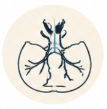
Three important cranial nerves share this opening alongside the jugular vein: the vagus nerve, the glossopharyngeal nerve, and the spinal accessory nerve. The vagus nerve in particular governs heart rate, digestion, immune regulation, and the body’s capacity to shift out of a stress state. When the occipital bone or temporal bone is subluxated, meaning restricted from its normal position and motion, the jugular foramen can be compressed. That compression impairs venous drainage from the cranium. Impaired venous drainage compounds CSF stagnation, because CSF cannot drain efficiently when the venous system it drains into is under pressure.
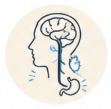
The neurological effects of vagus nerve compression at this level are broad. Patients often describe a sense of being stuck in a low-grade stress response, digestive irregularity, difficulty recovering from illness, and a baseline fatigue that sleep does not touch. These are predictable findings when the jugular foramen is chronically compressed, not vague complaints.
Chronic Fatigue and Autoimmune Patterns as a Cranial Finding
Patients with long-standing cranial compression and impaired CSF drainage frequently arrive with diagnoses of chronic fatigue syndrome, fibromyalgia, autoimmune conditions, or systemic inflammation that has been managed but never resolved. In most cases, no one has examined their cranium or connected their jaw history to their systemic picture.
The connection is consistent and the clinical presentation is recognizable. A person who has clenched and ground for ten or fifteen years, who has never been told their skull shape has changed, and who is now cycling through rheumatologists and neurologists looking for answers often presents with exactly the cranial pattern described above. Parietal compression at the sagittal suture. Occipital restriction. Temporal bone rotation. Jugular foramen narrowing. Slowed CSF dynamics.
We are not claiming to treat chronic fatigue syndrome or autoimmune disease directly. When the mechanical drivers of CSF stagnation and vagal compression are corrected, many patients report significant improvements in energy, cognitive clarity, and systemic symptoms that had previously been attributed solely to their medical diagnoses. The cranial pattern was contributing to the picture, and no one had addressed it.

Snoring, Airway Narrowing, and Palate Compression
The same forces that compress the parietal bones and restrict the jugular foramen also compress the palate. The palate, or roof of the mouth, is formed by two bones that meet at the intermaxillary suture running down the center. Years of grinding and jaw bracing narrow the arch of the palate, and that narrowing has a direct effect on the airway.
A compressed palate means a narrower nasal passage and a higher, more restrictive oral airway. The tongue has less room. The airway softens more easily during sleep. Snoring is the audible result of that tissue vibrating in a passage that has been structurally narrowed over time.
On examination, we can see and measure intermaxillary suture ridging, which is a visible elevation along the center of the palate that reflects years of compression. Patients are often surprised when we point this out because no one has ever mentioned it before. It is not a subtle finding on exam. It is a direct record of how the palate has responded to years of jaw loading, and it connects directly to the airway and sleep picture they have been trying to address.
This means snoring is often a structural finding with a cranial component, not simply a weight or sleep position issue. It is part of the same compression pattern we are evaluating and addressing.
How the Face and Palate Change Over Time
Long-standing grinding and cranial compression do not just affect internal structures. They change the visible shape of the face and the architecture of the palate in ways that can be observed directly on examination.

The face can appear asymmetrical in ways that have gradually developed over years. One side of the jaw may sit differently than the other. The palate may be visibly narrowed or arched higher than expected. The midface can shift as the temporal bones rotate in response to repeated loading. These are not dramatic changes in most cases, but they are consistent and documentable findings on examination.

We point them out during examination because patients deserve to understand the physical record their body has been keeping. It helps them connect the history of grinding and clenching to the symptoms they are experiencing now, and it makes the clinical picture concrete rather than theoretical.
What We Look for on Examination
A thorough cranial examination at Absolute includes assessment of compression at the sagittal suture between the parietal bones, restriction at the occipitomastoid suture affecting the jugular foramen, temporal bone rotation and its effect on both the jaw joint and the structures sharing that space, overall palate architecture including arch width and intermaxillary suture ridging, facial symmetry changes that reflect the history of the pattern, and airway indicators that suggest structural narrowing contributing to snoring or breathing changes during sleep.
This exam does not require imaging in most cases. It is a hands-on assessment that follows the anatomy of how these structures connect. The findings guide the adjustment plan.
How We Address the Cranial Compression Pattern
01
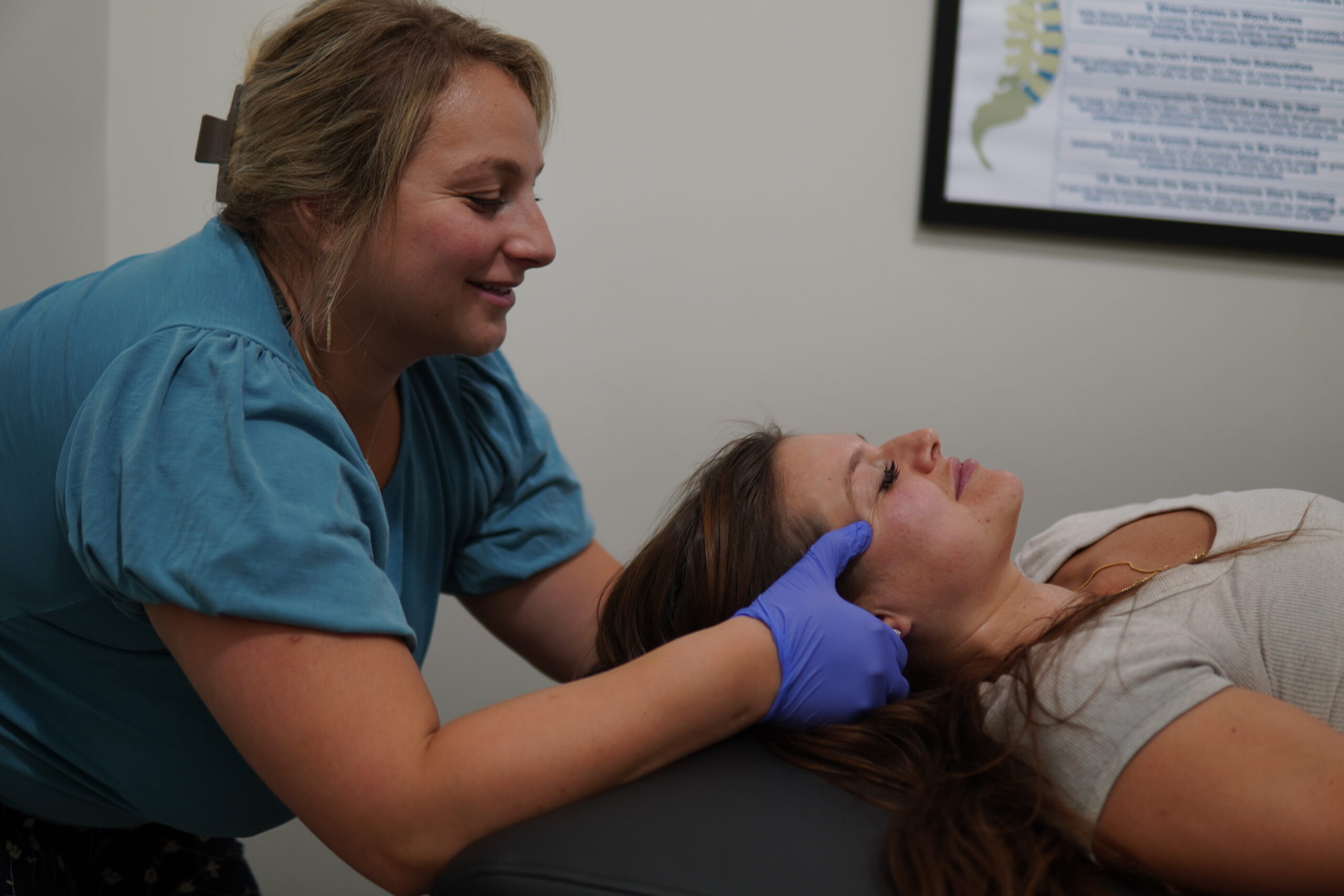
Cranial care at Absolute focuses on restoring normal motion and position to the bones that have been compressed or restricted. For the pattern described on this page, that means working with the occiput, the temporal bones, and the parietal bones as an integrated system.
02
The occiput is addressed first in most cases because restrictions there directly affect the jugular foramen and the upper cervical spine. Temporal bone corrections address both the jaw joint mechanics and the foramen itself. Parietal work restores sagittal suture mobility and supports improved CSF dynamics.
03
We do not approach CSF drainage in isolation from the mechanical pattern driving it. Addressing drainage without correcting the compression that caused it produces temporary improvement at best. The goal is to restore the normal relationships between these bones so the body’s own drainage and regulation systems can function as they are designed to.
04
This work requires specific training. Dr. Anthony Pellegrino is one of eleven Certified Pediatric Craniopaths in the world, and the practice holds two of those eleven certifications. Cranial adjusting at this level is precise, low-force, and focused on specific sutures and bone positions rather than general mobilization.

Schedule a TMJ and Cranial Evaluation
If you have been dealing with chronic fatigue, snoring, jaw grinding, or systemic symptoms that have not fully resolved with other care, the cranial pattern described on this page may be contributing. We work with adults and teens experiencing exactly this picture.
A TMJ and cranial evaluation at Absolute gives you a clear look at what we find in your specific pattern and what an appropriate care plan would involve. To schedule, visit our booking page.