
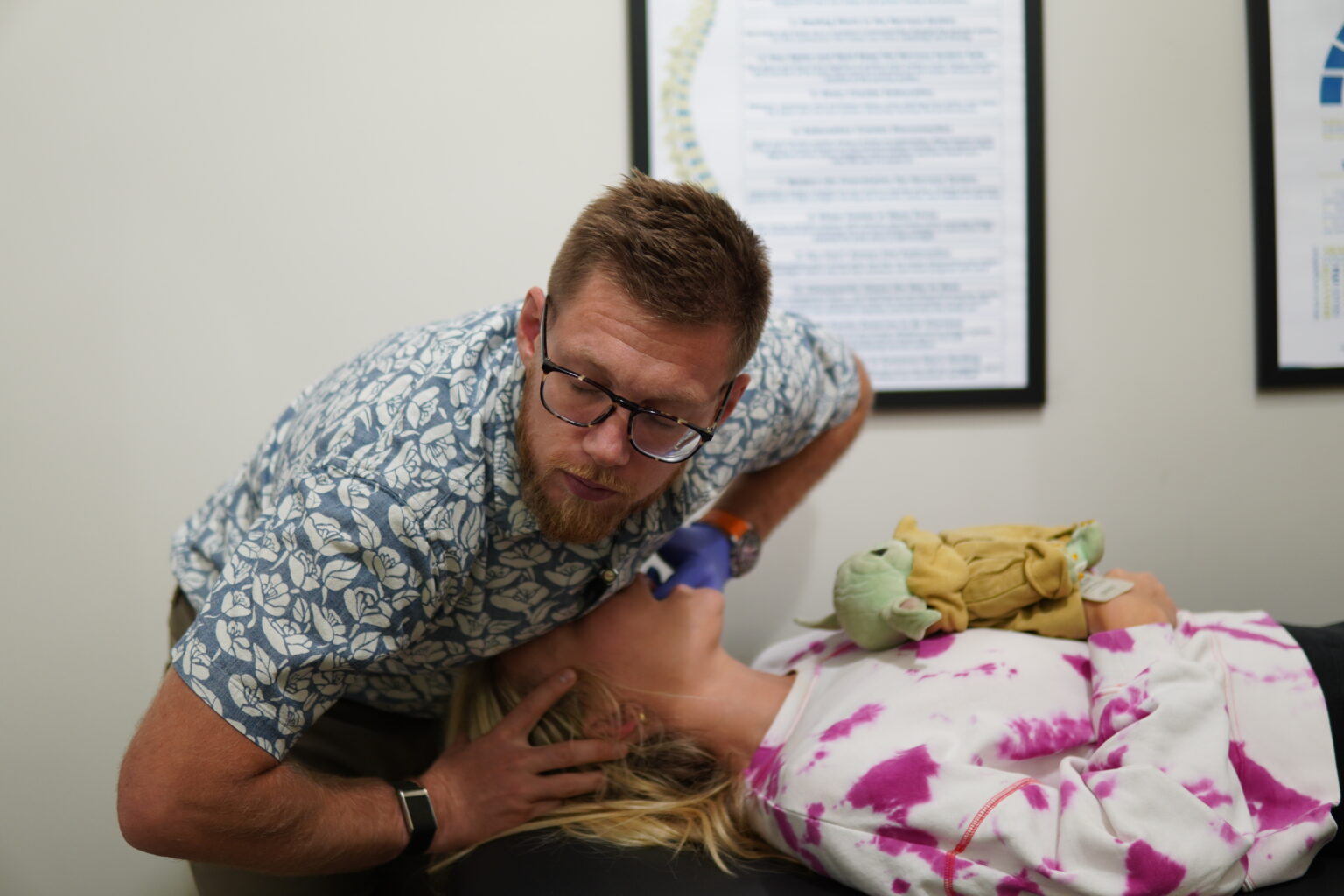
Many people in Spring Lake start searching for “cervical and TMJ alignment” because they’ve noticed something other providers often overlook — their neck and jaw problems seem connected.
And they’re right.
Here’s what most people don’t get told:
If the upper neck isn’t functioning well, the TMJ almost never moves the way it should.
Once that connection is clear, your symptoms finally start to make sense.
Why Your Neck Has So Much Control Over Your Jaw
Your jaw doesn’t work independently.
Every movement is guided by the upper neck, cranial system, and the nerves that run through them.
This means:
Neck tension → jaw tension
Neck misalignment → uneven jaw pull
Cervical stress → clenching + grinding
Neck inflammation → ear pressure + headaches
You can stretch your jaw, massage it, or wear a night guard…
…but if the upper neck is irritated, the TMJ is constantly being pulled into the same painful pattern.
Signs Your TMJ Pain Is Actually Coming From Your Neck
Spring Lake patients often describe the same patterns:
1. Jaw pain that worsens when your neck feels tight
The jaw tries to compensate for neck instability.
2. Clicking or popping when you turn your head
Neck tension changes how the disc inside the TMJ moves.
3. Ear fullness or ringing
The TMJ sits directly beneath the ear canal — cervical tension affects both.
4. Pain that jumps between the jaw, neck, and temples
This is a nerve-pattern issue, not just a “jaw problem.”
5. Headaches that follow jaw tension
Upper cervical nerves and the trigeminal nerve overlap.
If even one of these sounds familiar, the upper neck is almost certainly involved.
Why Spring Lake Residents Search for This Connection
Spring Lake attracts busy parents, professionals, and active individuals — people who are often juggling a lot and running at a fast pace.
Many have tried:
Bite guards
Muscle relaxers
Physical therapy
Dental splints
Heat or icing
Massage
Most of these bring temporary relief, but the discomfort returns… because none of them address the origin of the problem:
the upper neck, cranial strain, and your nervous system’s stress load.
How the Upper Cervical Spine Directly Influences the TMJ
Here’s the simple breakdown:
The top of the neck (C0–C2):
Guides jaw opening and closing
Influences muscle pull on the TMJ
Anchors head posture
Houses nerves that control jaw movement
Impacts inflammation around the ears and jaw
So when this area becomes overloaded — through stress, tech posture, old injuries, or everyday tension — the jaw becomes the first area to show symptoms.
Most people assume the jaw is the problem.
In reality, the jaw is reacting to what’s happening above it.
Cervical–TMJ Symptoms We See Most Often in Spring Lake
1. Jaw pain + neck tightness
These two almost always show up together.
2. Clicking or popping during stressful days
Cervical tension shifts day-to-day, pulling the jaw with it.
3. Pain that grows through the afternoon
Sign of loading patterns, not “weakness.”
4. Ear pressure with jaw tension
Classic upper cervical involvement.
5. Headaches that settle behind the eyes or at the base of the skull
Often mistaken for “sinus” issues.
What Our Evaluation Looks Like (Gentle, Clear, Not Rushed)
Most patients tell us it’s the first time anyone has explained their jaw and neck symptoms in a way that actually makes sense.
We assess:
Upper-neck mobility
Cranial tension patterns
TMJ tracking
Jaw opening
Nervous-system stress patterns
Facial and jaw muscle guarding
The goal is to understand, not guess.
How We Treat the Neck + TMJ Together
Our care is gentle, precise, and intentionally calming — especially for the upper neck and jaw.
We focus on:
Light upper-cervical adjustments
Cranial and TMJ release
Reducing nerve irritation
Relaxing the jaw’s guarding pattern
Restoring smooth, balanced jaw movement
Helping the body out of “fight-or-flight”
When the neck calms down, the jaw finally has permission to relax.
Why Spring Lake Families Make the Short Drive to Our Office
We’re just minutes from Spring Lake, and families come to us because:
They’re tired of temporary fixes
They want care that explains the “why”
They want gentle, neurologically-focused treatment
They want answers, not rushed appointments
They want relief that actually lasts
And once we address the neck-jaw connection, most patients say things finally start to change.
Final Thought
Your jaw pain isn’t random — and it’s not something you have to “work through” or ignore.
When the neck, jaw, and nervous system get the right support, everything starts working the way it’s meant to.
