
When you’re dealing with Inflammatory Bowel Disease (IBD) in New Jersey — whether it’s Crohn’s disease or ulcerative colitis — your life revolves around one question:
“What can I do to reduce flare-ups and help my body feel more stable?”
You’ve likely already explored:
medication
dietary changes
supplements
stress management
flare tracking
specialist visits
These are all essential pieces of medical care.
But there’s another piece almost no one talks about — even though it has a massive impact on inflammation, pain, and flare timing:
Your nervous system.
Most adults with IBD sense that stress makes everything worse.
But very few have ever had someone explain why that happens — or how to support the system behind their digestive health.
This article isn’t about replacing your GI treatment.
It’s about helping you understand the part of your body that influences everything else.
What Traditional IBD Treatment in NJ Focuses On
In New Jersey, most gastroenterologists and IBD specialists focus on:
lowering inflammation
reducing immune activation
managing flare-ups
monitoring the digestive tract
preventing complications
improving quality of life
This care is crucial.
IBD is a serious medical condition and requires medical management.
But it doesn’t explain something every IBD patient notices:
Why symptoms flare during stressful seasons…
and calm when life calms.
It’s not coincidence.
It’s physiology.
And the missing link is the nervous system.
Your Nervous System Is the “Hidden Driver” of IBD Symptom Patterns
Your digestive tract is part of a larger communication network — the gut–brain axis.
This network includes:
the vagus nerve
the enteric (“gut”) nervous system
the sympathetic nervous system (fight-or-flight)
the parasympathetic nervous system (rest-and-digest)
This system influences:
gut motility
inflammation
immune activity
pain sensitivity
how your body responds to stress
how quickly you recover from a flare
IBD isn’t caused by the nervous system.
But the behavior of IBD — how intense, how frequent, how reactive — is heavily shaped by it.
That’s why:
stress → flare
sleep issues → more pain
overwhelm → gut tightness
emotional strain → motility problems
tension → abdominal discomfort
Your gut isn’t acting alone.
It’s following the signals your brain and nervous system send.
Why Stress Makes IBD Symptoms Spike
Stress doesn’t just “make things worse.”
It changes the operating system your digestion runs on.
Here’s what happens:
1. The body shifts into fight-or-flight
This slows digestion, tightens the gut, and increases inflammation.
2. The vagus nerve becomes less effective
And the vagus nerve is the body’s primary tool for calming inflammation and coordinating digestion.
3. Immune and inflammatory responses become more reactive
Meaning flare-ups hit harder.
4. Pain sensitivity increases
Which makes symptoms feel amplified.
5. Recovery slows down
Your body has a harder time returning to baseline — even after a flare resolves.
So when people say,
“I know stress plays a role, I just don’t know how,”
this is the “how.”
Where Our Office Fits In — Without Overstepping
At Absolute Chiropractic:
❌ We do not treat IBD.
❌ We do not replace your GI specialist.
❌ We do not diagnose digestive diseases.
Our role is something different — and complementary.
We focus on the system that determines:
how much stress your gut absorbs
how reactive your inflammation becomes
how your body regulates discomfort
whether your vagus nerve is overloaded
how well your gut–brain connection functions
That system is your nervous system.
And when it’s overwhelmed, IBD symptoms often feel louder, sharper, and harder to predict.
How Gentle, Nervous-System-Focused Care Helps
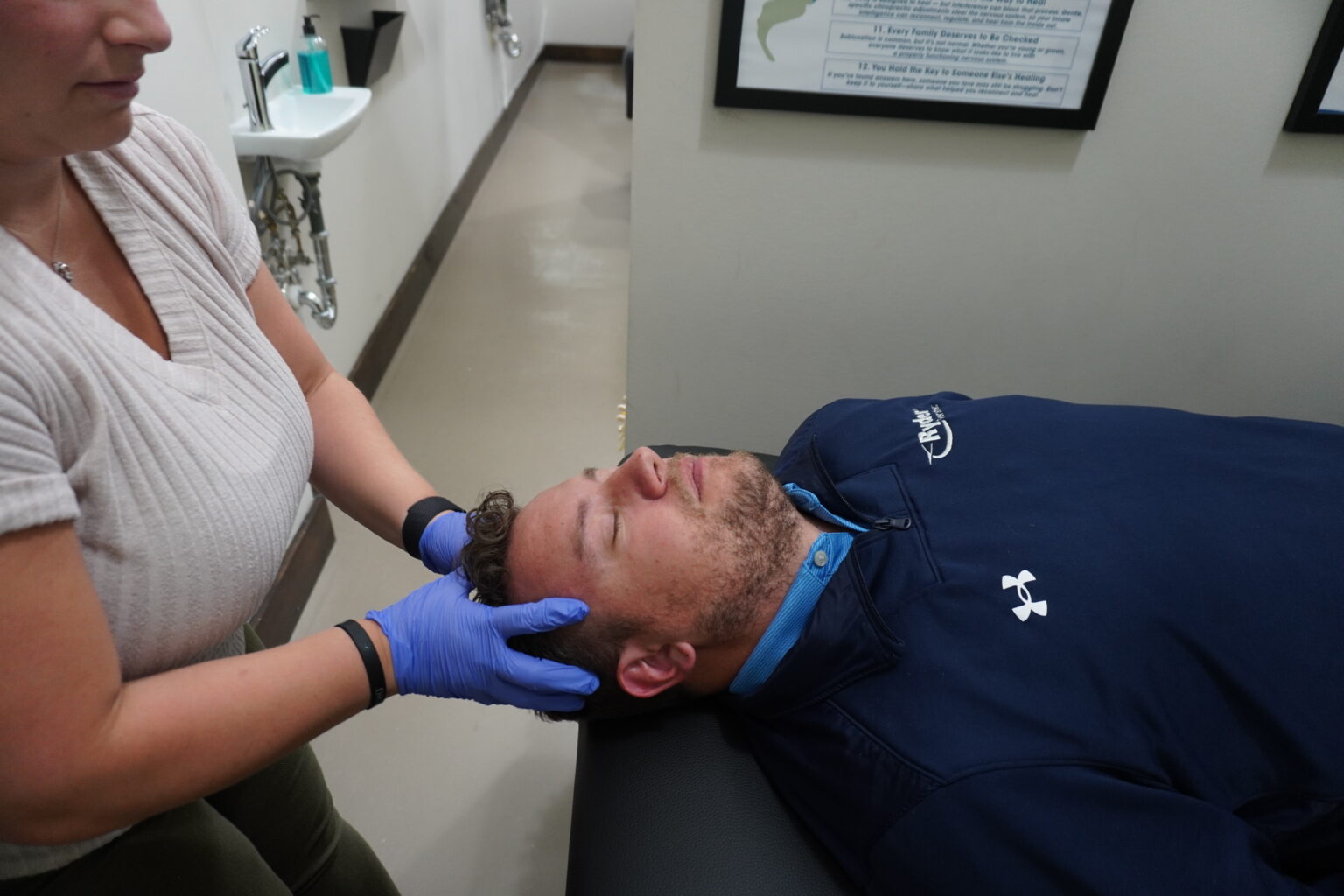
Our care is gentle, precise, and designed to calm a system that’s living on high alert.
Adults with IBD often notice:
fewer stress-triggered flares
less abdominal tightness
more predictable digestion
better sleep
less pressure or discomfort
improved energy
a clearer sense of “body calm”
easier recovery during flare cycles
Not because chiropractic “treats IBD” — it doesn’t.
But because a calmer nervous system improves the environment your gut lives in.
And for many adults, that’s a missing piece that finally brings everything together.
Why This Matters for IBD Treatment in NJ
New Jersey has some of the best GI specialists in the country.
But even with excellent medical care, many adults still feel:
unheard
overwhelmed
confused
emotionally drained
scared of the next flare
unsure what their body is trying to tell them
Traditional treatment focuses on inflammation.
We help you understand the regulation — the “why” behind your day-to-day experience.
Once you understand how your nervous system influences your gut, everything becomes clearer:
why symptoms fluctuate
why stress matters
why sleep changes everything
why flare timing “makes sense”
why your body reacts the way it does
Your body has a logic.
You just haven’t been shown it yet.
If You’re Navigating IBD, You Deserve Real Clarity
IBD takes enough from your life.
Your sense of control shouldn’t disappear with it.
You deserve answers that feel human, simple, and grounded — not rushed or confusing.
If you want to understand your symptoms better…
If you need someone to explain the gut–brain connection clearly…
If you want support that complements your medical care…
We’re here to talk.
Bring your questions. Bring your story.
We’ll help you make sense of what your body is trying to tell you.
